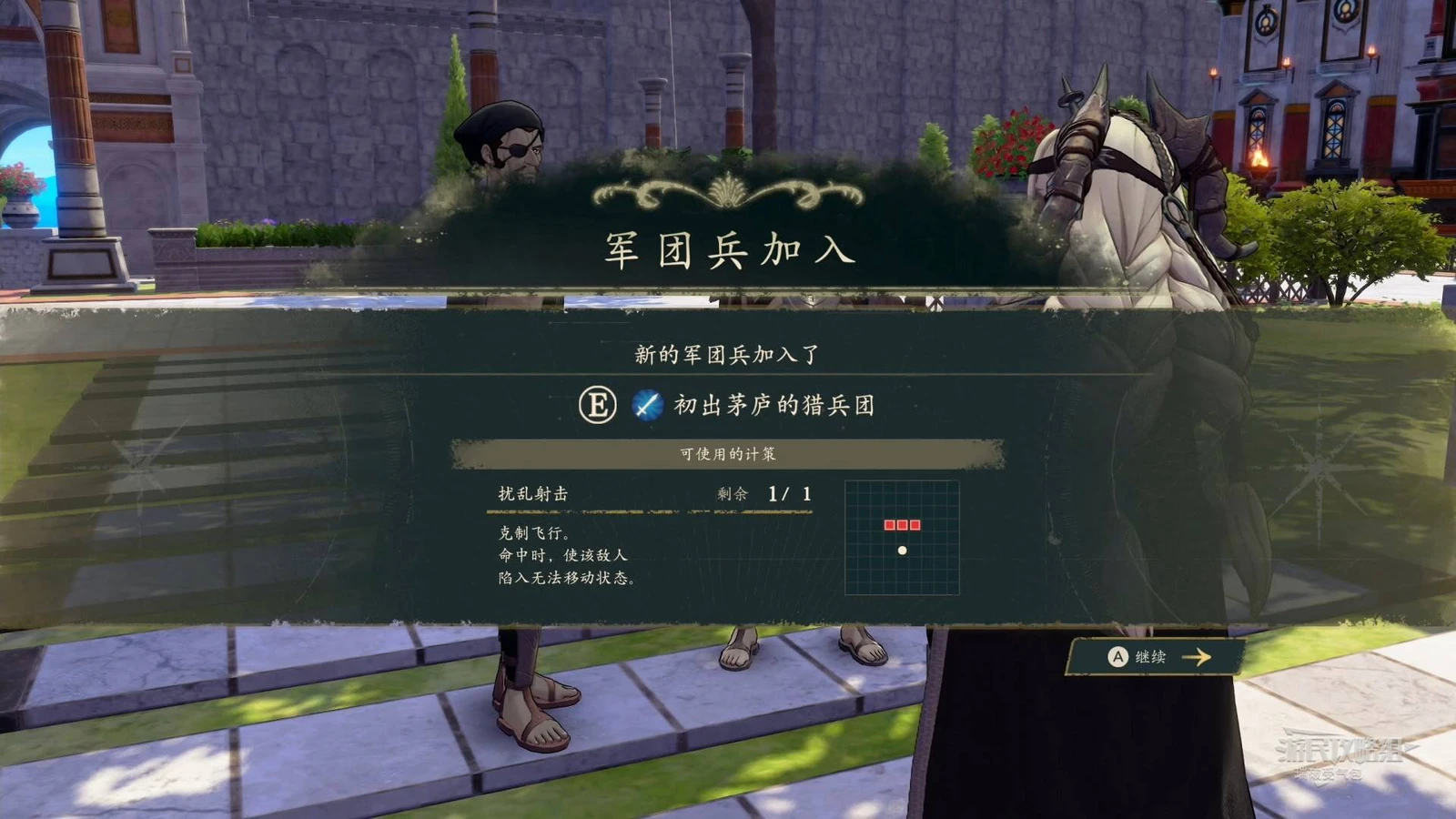
Stats
HP determines how much damage you survive. Strength and Magic determine attacks; Speed controls follow-ups. Dexterity affects Hit and combines with Luck for critical hits. Defense and Resistance reduce damage. Luck also prevents critical hits. Charm affects Gambit accuracy, masks, and Dante’s activation rate.

For damage, check Strength or Magic; for survival, Defense or Resistance. Follow-ups use Attack Speed after excess weight is deducted.
The nine stats at a glance
| Stat | What it affects |
|---|---|
| HP | How much damage you can take; reaching 0 removes you from battle |
| Strength | Physical attack; also determines Build, or how much equipment weight you can carry |
| Magic | Magical attack and healing |
| Speed | Attack Speed: exceeding the opponent by 4 enables a follow-up; physical Avoid |
| Dexterity | Physical Hit; combines with Luck for critical hits and magical Hit |
| Defense | Reduces damage from physical attacks |
| Resistance | Reduces damage from magical attacks |
| Luck | Prevents enemy critical hits; combines with Dexterity for your own critical hits |
| Charm | Battalion Gambit accuracy; activation rates for some masks and  Dante’s ability |
Keep three rules in mind when calculating:
- Damage, Hit rate, and critical rate cannot fall below 0.
- Discard decimal portions whenever a formula uses division.
- Strength, Speed, and other stats in these formulas are the values currently displayed on the status screen. They already include class, equipment, and mount bonuses. Do not add them twice.
Current stats and level-up growth rates are different
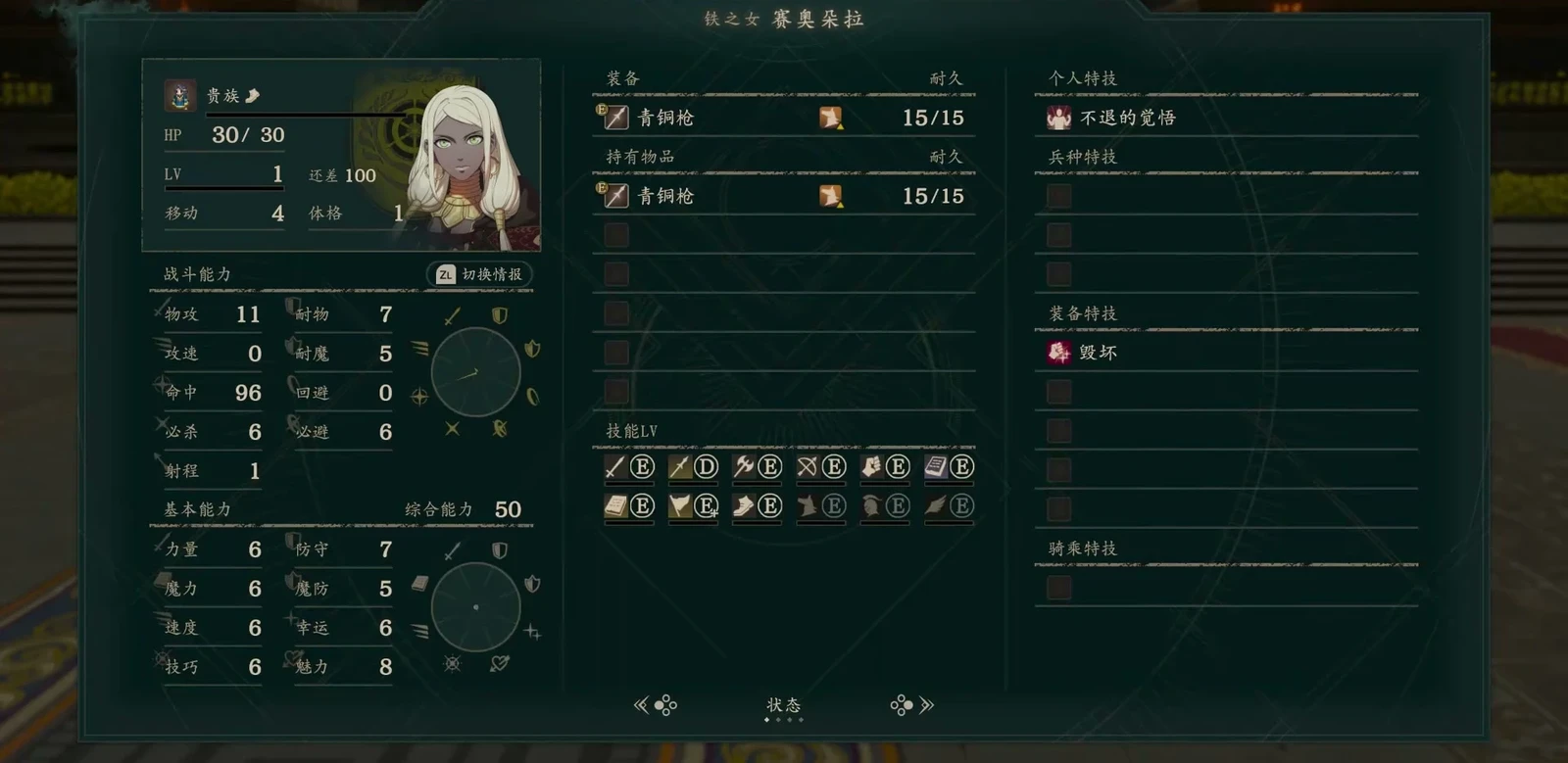
A stat is your current value. Its growth rate is the chance of gaining 1 point when leveling up. A 60% Strength growth means a 60% chance of +1 each level, rather than +0.6 per level.
Level-up growth rate = Personal Growth Rates + Class Growth Rates + mount growth bonus
Example: Cai has a personal HP growth of 45%. As a Gladiator, with +10 HP growth, his level-ups use 55%.
Classes have two other bonuses. Stat modifiers apply only while in that class and disappear after changing. Class base stat floors raise low stats to a minimum when passing a class qualification, and remain after changing away.
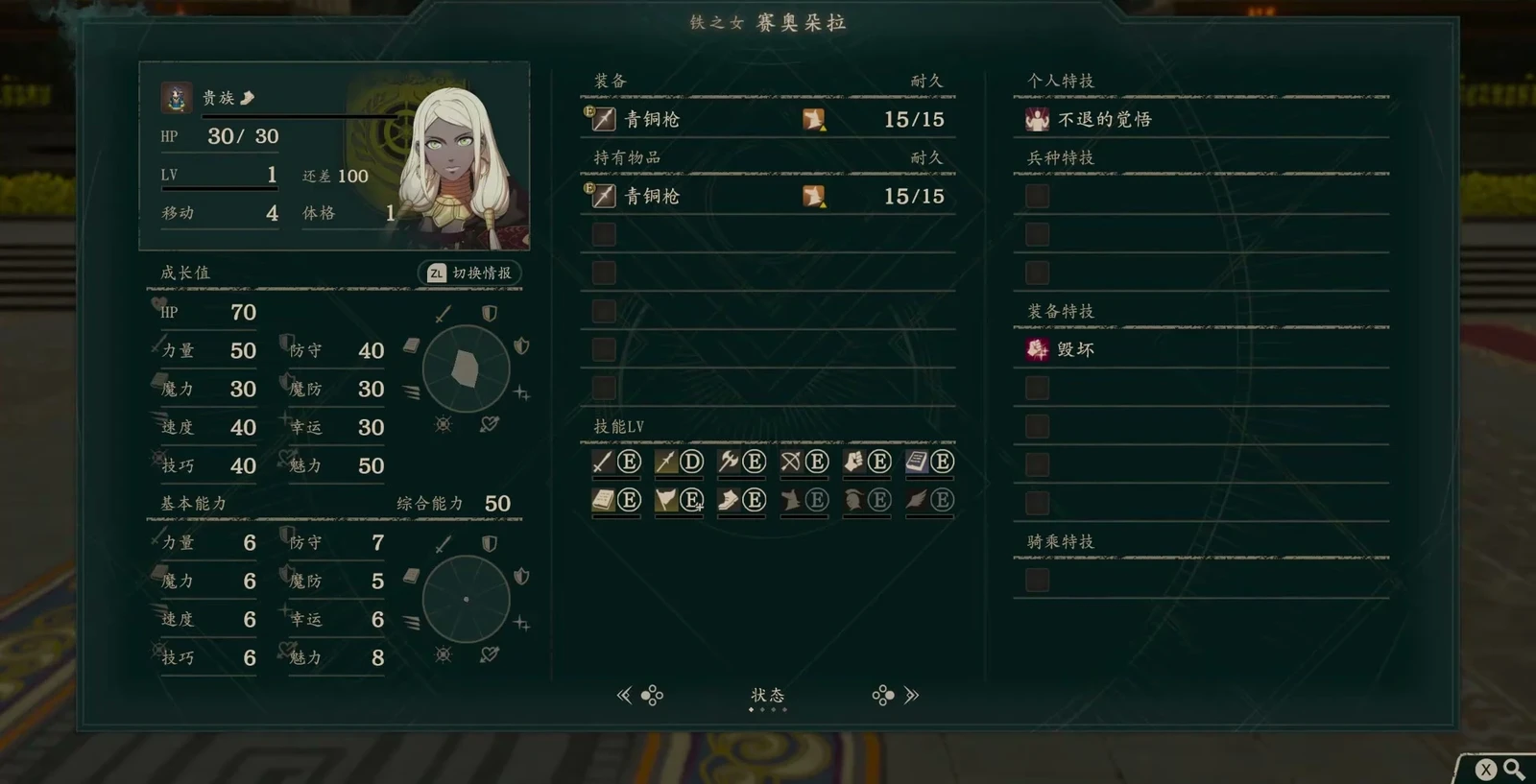
Level cap and additional bonuses
Once a stat's bonus is capped, use battalions and equipment to improve other stats.
- Stat boosters: Seraph Robe adds 4 maximum HP. Energy Drop, Spirit Dust, Speedwing, and Secret Book permanently add 2 Strength, Magic, Speed, and Dexterity respectively.
HP
Damage reduces HP. At 0, the unit leaves battle. Blaze Arts also cost HP to activate.
Remaining HP = current HP − damage taken
Critical damage = normal damage × 3
Example: A unit with 40 HP takes 22 damage and has 18 left. Another identical hit defeats them. Be especially careful with critical hits: a normal 10-damage strike becomes 30, defeating a unit with 30 HP in one hit. It takes 31 HP to survive.
For frontliners and units that regularly take counterattacks, count how many hits they will take this turn and add up the damage. Their HP must exceed that total. Dining restores HP but does not increase maximum HP.
Strength
Strength determines physical damage and how much equipment weight you can carry.
Physical Attack = weapon Might + Strength
Damage dealt = Physical Attack − target Defense
Build = Strength / 5
Attack Speed penalty = total equipment Weight − Build
Example: 25 Strength with a 9-Might Iron Sword gives 34 Physical Attack. Against 12 Defense, that deals 22 damage. Raising Strength to 26 raises damage to 23.
Effectiveness multiplies only weapon Might: effective attacks, such as spears against cavalry, use ×2 weapon Might; highly effective attacks, such as bows against fliers, use ×3. Strength is not multiplied. With 25 Strength and a 9-Might Iron Bow against a flier, Physical Attack = 9 × 3 + 25 = 52.
Every 5 Strength adds 1 Build. At 24 Strength, Build is 4; at 25, it is 5. With 20 Speed and a weapon plus shield weighing 8, 4 Build gives 16 Attack Speed, while 5 Build gives 17. Crossing a multiple of 5 Strength is particularly valuable.
Magic
Magic determines magical attacks and healing amounts. Magical weapons such as Levin Sword also use Magic and target Resistance.
Magical Attack = spell Might + Magic
Damage dealt = Magical Attack − target Resistance
Healing = healing spell’s recovery value + Magic / 3
Example: 25 Magic with a Levin Sword of 12 Might gives 37 Magical Attack, dealing 25 damage against 12 Resistance. For healing, 20 Magic and a spell with 10 recovery restore 10 + 6 = 16 HP.
Every point of Magic adds damage for an offensive mage. A healer gains only 1 extra healing per 3 Magic, so if recovery falls short, first look for class abilities and equipment that increase healing.
Speed
Speed determines follow-ups, which add an attack, and physical Avoid.
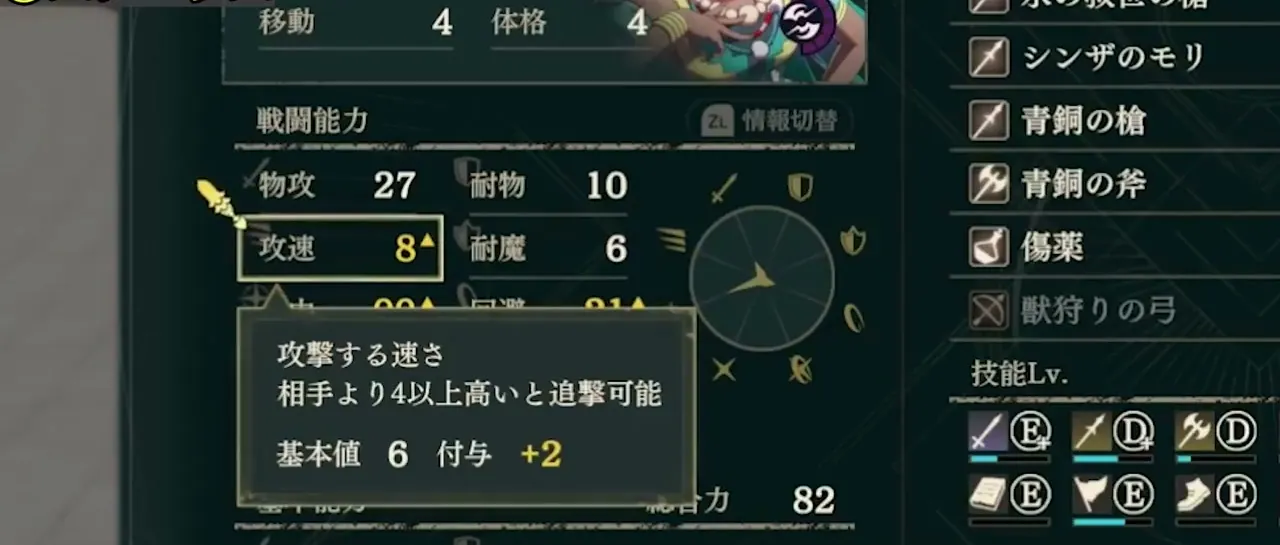
Attack Speed = Speed − excess equipment Weight
Your Attack Speed exceeds the opponent’s by at least 4 → follow-up, adding one attack
Physical Avoid = Attack Speed + Avoid bonuses from terrain, abilities, and supports
Enemy’s actual Hit rate = enemy Hit − your Avoid
Example: With 32 Speed, a weapon weighing 4, a shield weighing 4, and 5 Build, excess Weight is 3 and Attack Speed is 29. You can follow up against 25 Attack Speed, but not 26. Terrain granting +20 Avoid raises physical Avoid to 49. Against 100 Hit, the enemy’s actual Hit rate is 51%.
Work backward: To follow up against 20 Attack Speed, you need at least 24. To avoid being doubled yourself, you need at least 17.
If you cannot follow up, first check equipment Weight. Removing the shield in the example restores Attack Speed to 32. A sword’s follow-up hit deals ×1.2 damage, making Attack Speed especially important for a Myrmidon. Level 2 Kalla’s Blessing gives the whole army +5 Speed for one turn, helping secure follow-ups on a crucial turn.
Dexterity
Every point of Dexterity adds physical Hit. Critical hits and magical Hit combine Dexterity with Luck.
Physical Hit = weapon Hit + Dexterity
Magical Hit = spell Hit + (Dexterity + Luck) / 2
Crit = weapon Crit + (Dexterity + Luck) / 2
Actual critical rate = your Crit − enemy Luck
Example: An Iron Sword with 90 Hit and 25 Dexterity gives 115 physical Hit. Against 30 Avoid, the actual Hit rate is 85%. For critical hits, 10 weapon Crit, 25 Dexterity, and 20 Luck give Crit = 10 + 22 = 32. Against 12 Luck, the actual critical rate is 20%.
Add before dividing: 25 Dexterity plus 21 Luck totals 46, divided by 2 for 23. Dividing each separately first would incorrectly give 12 + 10 = 22.
Secure reliable hits before investing in critical hits. Accuracy matters most when an archer targets fliers: a miss wastes all that effectiveness damage.
Defense
Defense reduces damage from physical attacks: swords, spears, axes, bows, and gauntlets.
Physical damage taken = enemy Physical Attack − your Defense
An axe hit deals at least 5 damage
Example: An enemy with 34 Physical Attack deals 13 damage against 21 Defense. Raising Defense to 24 reduces that to 10. Across three hits, total damage falls from 39 to 30.
Defense works on every hit, so it grows more valuable the more hits you take. Shields have Weight, however. If a shield reduces each hit from 13 to 10 but causes you to take a follow-up for two hits totaling 20, you take more damage overall. Magical weapons such as Levin Sword target Resistance. Do not tank them with high Defense and low Resistance.
Resistance
Resistance reduces magical damage, including damage from magical weapons.
Magical damage taken = enemy Magical Attack − your Resistance
Example: An enemy with 25 Magic and a 12-Might Levin Sword has 37 Magical Attack, dealing 19 damage against 18 Resistance. Raising Resistance to 23 reduces that to 14. A unit with 30 HP previously fell in two hits; afterward, they survive with 2 HP.
Heavy armor has high Defense and low Resistance, making mages particularly dangerous. Against a group of mages, lead with a high-Resistance unit or equip Resistance-boosting equipment and abilities.
Luck
Luck mainly prevents enemy critical hits. It also combines with Dexterity for your own critical hits and magical Hit.
Enemy’s actual critical rate = enemy Crit − your Luck
Your Crit = weapon Crit + (Dexterity + Luck) / 2
Example: Against 35 enemy Crit, a unit with 20 Luck still faces a 15% critical rate. Raising Luck to 35 reduces it to 0.
Some personal abilities use Luck for activation rates: Yang Jie’s Monkly Havoc has a Luck / 2 chance to fully restore HP upon defeating an enemy, so 40 Luck gives 20%. When Fianna heals an ally with magic, Graceful Light has a chance equal to her Luck to avoid consuming a spell use.
For a frontliner facing high-Crit enemies, reducing the enemy’s actual critical rate to 0 is the safest approach.
Charm
The in-game description says Charm improves Gambit accuracy. Higher Charm makes a unit’s Battalion Gambits more likely to hit. Some equipment and personal abilities also use it.
Charm Mask activation rate = Charm / 2 (%); activation gives enemy Hit −20 for that combat
Beauty Mask: your Charm exceeds enemy Charm → enemy Hit −10
Dante’s Stage Direction activation rate = benefiting ally’s Charm / 2 (%)
Example: With 40 Charm and Charm Mask, each combat has a 20% chance of inflicting Hit −20 on the enemy. At 60 Charm, the chance rises to 30%, but the penalty remains 20. Beauty Mask only checks whose Charm is higher: 30 against 29 works; 30 against 30 does not.
Dante’s ability checks his ally’s Charm, not his own. If Dante has 20 Charm and the nearby main attacker has 60, the activation rate is 60 / 2 = 30%. On activation, the ally gains Dodge +10. At Dante’s level 20 it also grants Hit +10, and at level 35 it adds Crit +10. Position Dante within 2 spaces of your main attacker before that unit attacks.
Separate the Battalion requirements: Charm determines Gambit accuracy; Authority rank determines which Battalions a unit can equip; mounted and flying units cannot equip Battalions. Battalions can also add Charm, already included on the status screen. See Battalion assignment and bonuses and Gambit formations.
Raising Charm: Divine Dance, the Apsara mastery ability, adds +10 directly. Black Pearl permanently adds +2. Equipping Divine Dance at 40 Charm raises it to 50, increasing Charm Mask’s activation rate from 20% to 25%.