

Ten tips to learn early: Attack Speed, Sunday meals, support restarts, and skill setups
Check Attack Speed, class growths, support, restarts, Sunday meals, cheap gifts, automatic returns, carriages, temples, and equipped skills in these ten tips.
Original video: “Fortune’s Weave: ten more things I wish I knew sooner”; English gaming channel Jay Dunna; https://www.youtube.com/watch?v=HJcMG565bdo
Check equipment weight and class growths first, then plan weekly support activities. Gift shopping, carriages, temples, and skill setups can all reduce wasted preparation time.
1. Equipment weight lowers Attack Speed
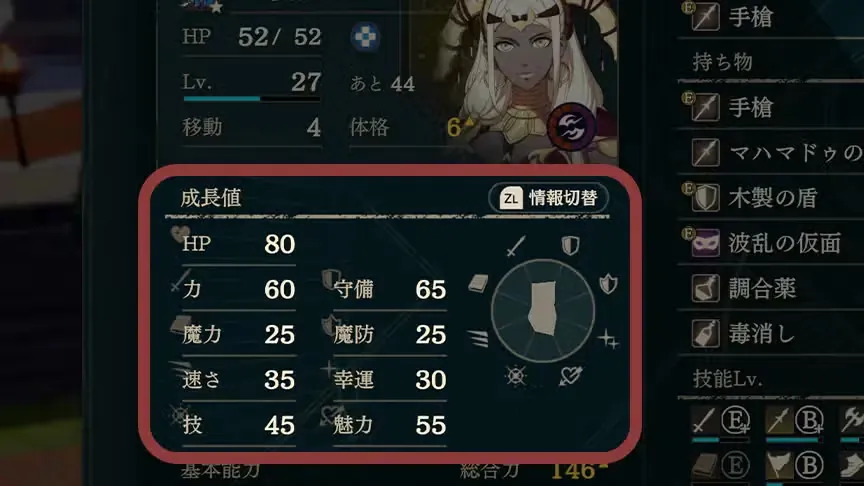
Select a character in the inventory, press X for detailed stats, then ZL to switch between growth rates and combat values. Displayed Speed is not necessarily actual Attack Speed: Build and equipment weight affect it too.
Check the weight of shields, staves, and orbs. One extra equipped item can lower Attack Speed. I have even seen my mages at 8 and 0 Attack Speed. You need 4 more Attack Speed than the enemy for a follow-up. Sometimes an item’s benefit is worth less than the extra attack you gain by removing it.
2. Check both growths and proficiency bonuses when choosing classes
Press ZL on the exam screen to see changes in growths too. For a mounted character who needs Speed, compare  Ornius Rider with cavalry options rather than simply following the current class’s progression.
Classes also affect proficiency EXP. Some grant extra lance EXP; others favor Riding. Check whether your current class helps the skill you want to train. Development is about more than the stat points gained at certification: consider what you want the next several dozen level-ups to grow.
3. Build support before reaching the recruitment Renown requirement
Open the character list on the map and check your target’s Renown and support requirements. Renown rises with progress, but support takes deliberate effort. Do not wait until your Renown is high enough to discover that the relationship is far behind.
Fast-travel to the character, check their profile and preference hints, give a gift, then dine at the inn. Try different meal groups to find a table with suitable returns. Check the support menu for conversations between the characters you want to develop, too.
4. Chapter restarts retain support
At a chapter’s start, do your available gift-giving and meals together. Then choose to restart the current chapter in the system menu. Your support progress stays, so you can repeat the activities.
This concentrates chapter time on relationships. If you want to recruit several people seriously, plan this at the chapter’s start instead of scrambling to raise support at the next story objective.
5. Eat at half price on Sunday, then wait for the weekly reset
The calendar in the adventure guide is useful. Weekend training is discounted, and Sunday meals are half price at 150 gold each.
| Meal timing | Cost per meal |
|---|---|
| Sunday, half price | 150 gold |
| Regular price | 300 gold |
Return to the inn on Sunday and use every available meal at half price. Then arrange Automated Activities and exploration, returning the next Sunday to keep building bonds.
6. Buy cheap sweets as well as tavern supplies
You can pick up gifts and ingredients on the tavern floor, and its merchant sells cheap gifts. Visit each week.
If you do not want to fight the enemies in front of you, return to the capital and head out again. This costs 1 turn but changes field enemy placement and may be easier than fighting.
Continue south to the royal capital, Megaira, where the market sells unlimited  Saraminian Sweets. Many characters like sweets, making these useful for buying in bulk as gifts.
7. Use exploration turns before an automatic return
When a story deadline automatically returns you to the capital, use the final turns to travel farther and explore. You do not need to end free time early.
8. Finish the carriage quest early to save travel time
A coachman near the capital’s arena offers a quest. Accept it, buy a 500-gold axle at the designated market, then deliver it to unlock carriage travel. The quest refunds the 500 gold.
Carriages make long journeys and enemy-blocked routes much easier. Finish this early task instead of walking everywhere, and future return trips will benefit.
9. Perform weekly Divine Service and equip useful Blessings
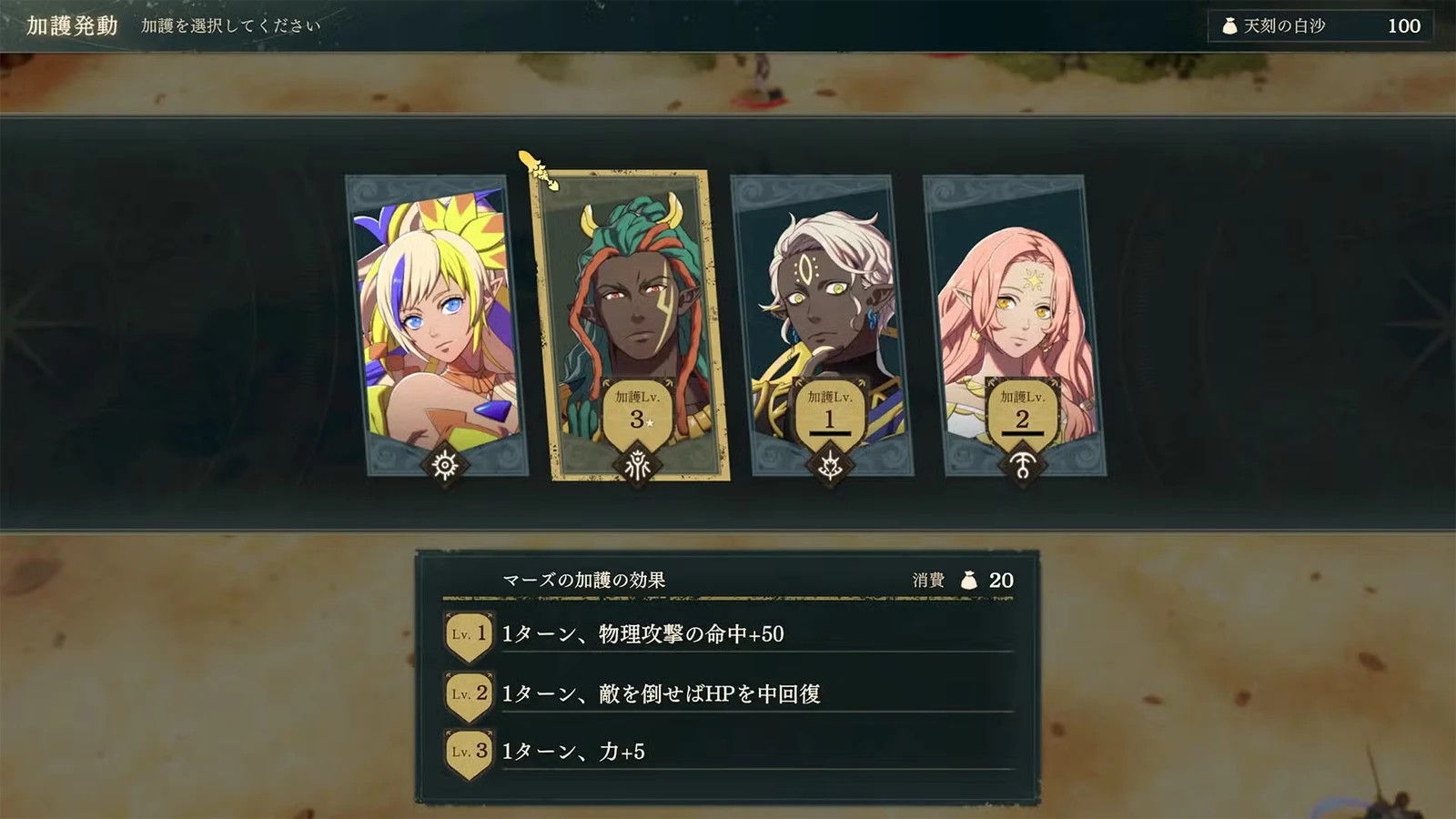
Visit a temple when it glows yellow for a new meeting. Schedule weekly Divine Service too, building bonds and preparing Blessings for battle.
Use the Blessings you obtain. Physical Hit +50 for one turn or reduced physical damage can directly change your plan for that turn. Divine Sand refills at major battle milestones, so do not save powerful Blessings until everything is over. Costs differ by Blessing. Choose your combination before leaving.
10. Adjust skills, Combat Arts, and mounts with your class
Learned skills and Combat Arts still need to be equipped. Replace options your current weapons cannot use.
Open the inventory’s skill menu and check everything you have learned. If you currently use swords and lances, do not let bow and axe skills occupy equipment slots. Combine personal skills, class abilities, and learned skills to understand the character’s role.
The same applies to Combat Arts. I like keeping an accuracy tool, a damage tool, and a defensive or healing tool. That gives you an answer when accuracy is low, when you need more Attack Speed for a follow-up, or when injured. Learning an art without equipping it, or equipping one your current weapon cannot use, leaves you unprepared.
Finally, check the assignment menu to change mounts. Whenever your class or approach changes, review skills, Combat Arts, and mounts together.