

Four converging routes reward patient preparation: why the late game differs from the openingMajor spoilers
After clearing every route on Normal, I prefer the late-game wars. The tradeoff is a delayed full ending and exploration, recruitment, and rebuilding that demand patience.
Original video: “Comparing Three Houses and Fortune’s Weave after clearing every route,” Japanese gaming channel KENT for Nintendo Game Reviews, watch the original.
The payoff for late-game army preparation
I prefer Fortune’s Weave’s late game. Early exploration and activities are fragmented and can feel slow. Once enemies, mechanisms, and reinforcements multiply, the people you recruited, abilities you trained, and supplies you gathered gain clear purposes.
Both games combine development with tactical combat, but suit different rhythms. Three Houses lets one completed route feel like a full stage of the experience. Fortune’s Weave feels like a long preparation that ultimately brings different people together.
Four routes converge later, delaying the full ending
Each Three Houses route has its own ending. After one, you can decide whether to continue. Seeing everything means replaying the shared first half.
Fortune’s Weave puts four parallel stories first and convergence later. Shared content sits toward the end, reducing repeated maps but delaying a complete ending. My run took 107 hours despite skipping some battle animations: a long journey.
You can challenge Part 3 relatively early, but an unprepared party struggles. Enemy levels and numbers are high, with mechanisms, special attacks, and reinforcements. Another completed early route adds allies and benefits, making the final battles much more comfortable.
The stories also move in opposite directions: one separates people who lived together; the other gathers people from different paths. Seeing destruction first, then returning to ask why, makes the four protagonists’ wishes a reason to continue.
Recruitment requires actively getting to know allies
Three Houses’ school life makes combatants more than pieces. People you shared meals and tea with may later stand against you, strengthening the emotional impact of separation.
Fortune’s Weave requires traveling, gifts, and conversation to recruit most allies. There are many characters, but support conversations vary in depth. Main-story characters get more, while some recruits get less. Your favorite may not receive equally extensive development.
Strong personalities still draw me in.  Dietrich looks beautiful but lives for battle,
 Fabio seems composed yet thinks outrageously, and
 Orchel hides behind a mask and mysteries. As the story progresses, someone always makes me want to know more.
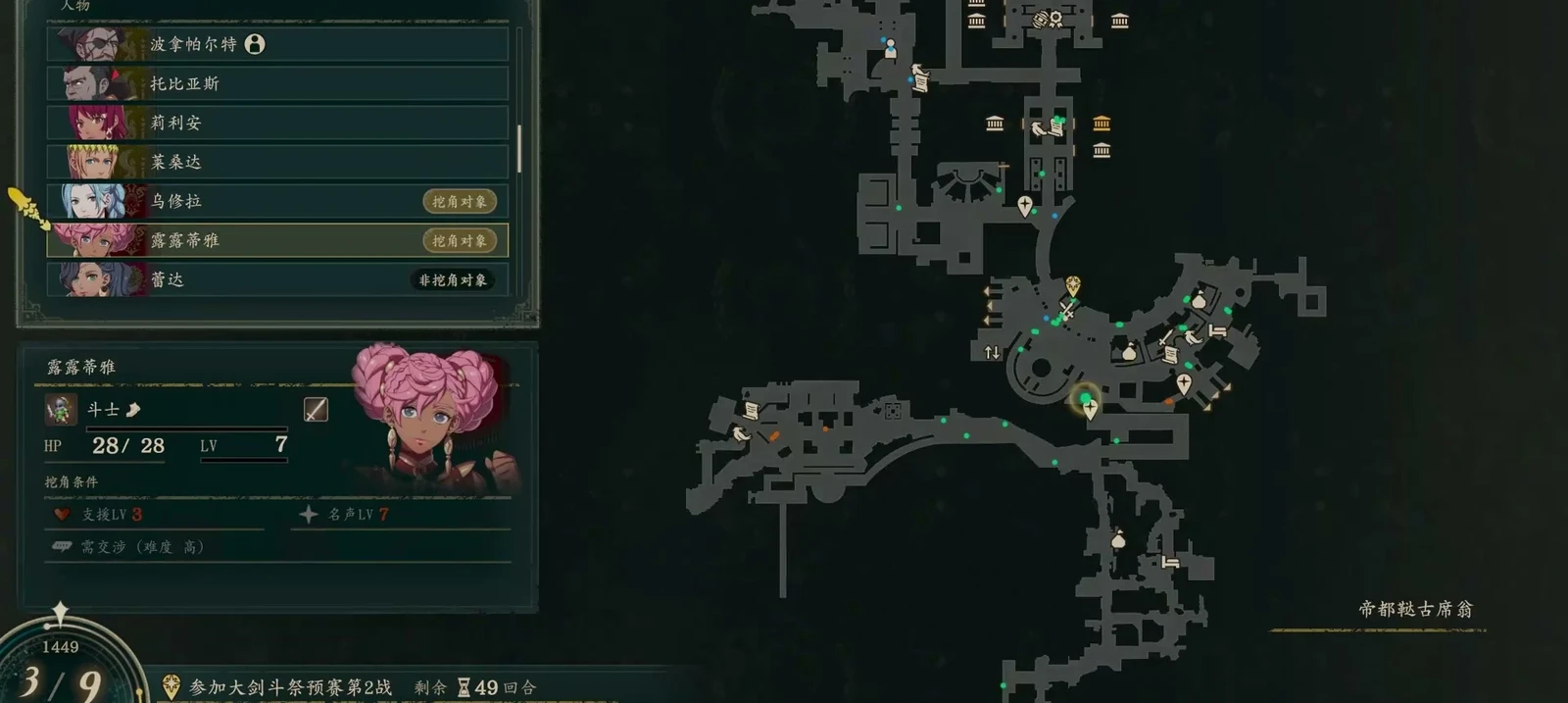
Image sources:
Use free time to build late-game resources
Early Normal-mode battles are easy, encouraging a rush through the story. Later, roster size and combat demands rise. Neglect recruitment and training, and the pressure catches up.
Free time offers dungeon exploration and shopping in other settlements. Part 3 also splits you into several groups to gather materials, rebuild towns within limited turns, and capture and defend multiple bases. Thorough preparation helps battles but lengthens the gaps between formal tactical maps.
If you enjoy gradual development, these preparations pay off. If you want the next battle quickly, they feel burdensome. I initially found them fragmented too. After struggling later, I started wanting detours for more resources.
Use Blessings to withstand large-scale assaults
Early Part 1 deploys few allies against manageable enemies. Later battlefields can have more than 20 allies and nearly 100 enemies including reinforcements. More than 20 turns is not unusual.
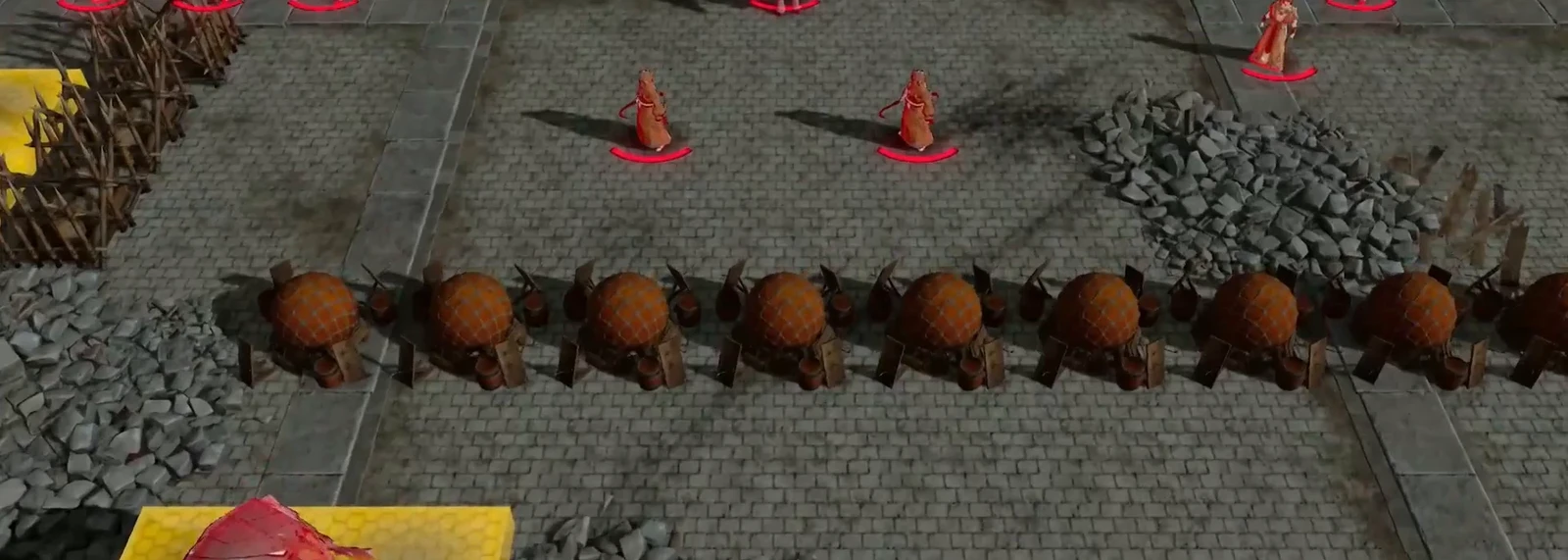
Maps include tournament scoring, mechanisms you activate before storming in, and harmful miasma. Blaze Arts trade HP for powerful effects, while Blessings spend Divine Sand on defense, Avoid, or Rewind. Limited resources make you consider whether and where to use them this round to survive the assault.
These changes give late combat greater tactical weight and make earlier preparation more than routine.
Weapon access and chapter replays
Raise proficiency and pass exams to change classes, but using a desired weapon still requires a class that allows it. Growth rates are visible in-game, making it easier to judge whether Strength and Speed fit a development path.
Replaying has tradeoffs too. You can freely switch routes, chapter checkpoints are saved, and repeated training carries results into later stages. But you cannot preserve arbitrary moments across several manual slots. If you miss an activity or dislike a level-up and want to return only a few minutes, it is less flexible than multiple saves.
This structure therefore suits patient preparation and long-term accumulation. The better you prepare, the more clearly late-game warfare shows the value of that investment.