
Durability and forging
Normal attacks do not use durability; only combat arts do. At 0 durability the weapon remains, with greatly reduced Might and Hit. Blacksmiths unlock in Chapter 6, and forging also refills durability. Spells have separate use counts that do not automatically recover after battle.

If the weapon can still be forged and durability remains above zero, use most of it before forging. Improve performance and refill durability together, saving a repair.
Ordinary attacks consume no durability. Only combat arts deduct the listed amount, one of the largest differences from Three Houses.
Durability 0 does not mean the weapon disappears. It becomes broken and cannot use combat arts. Ordinary attacks still work, but Might and Hit fall sharply. Repairing or forging restores it.
Each spell has its own use count, which does not automatically recover after battle. Restore uses at inns, through meals, or with ingredients at outdoor feasts and dungeon rest points.
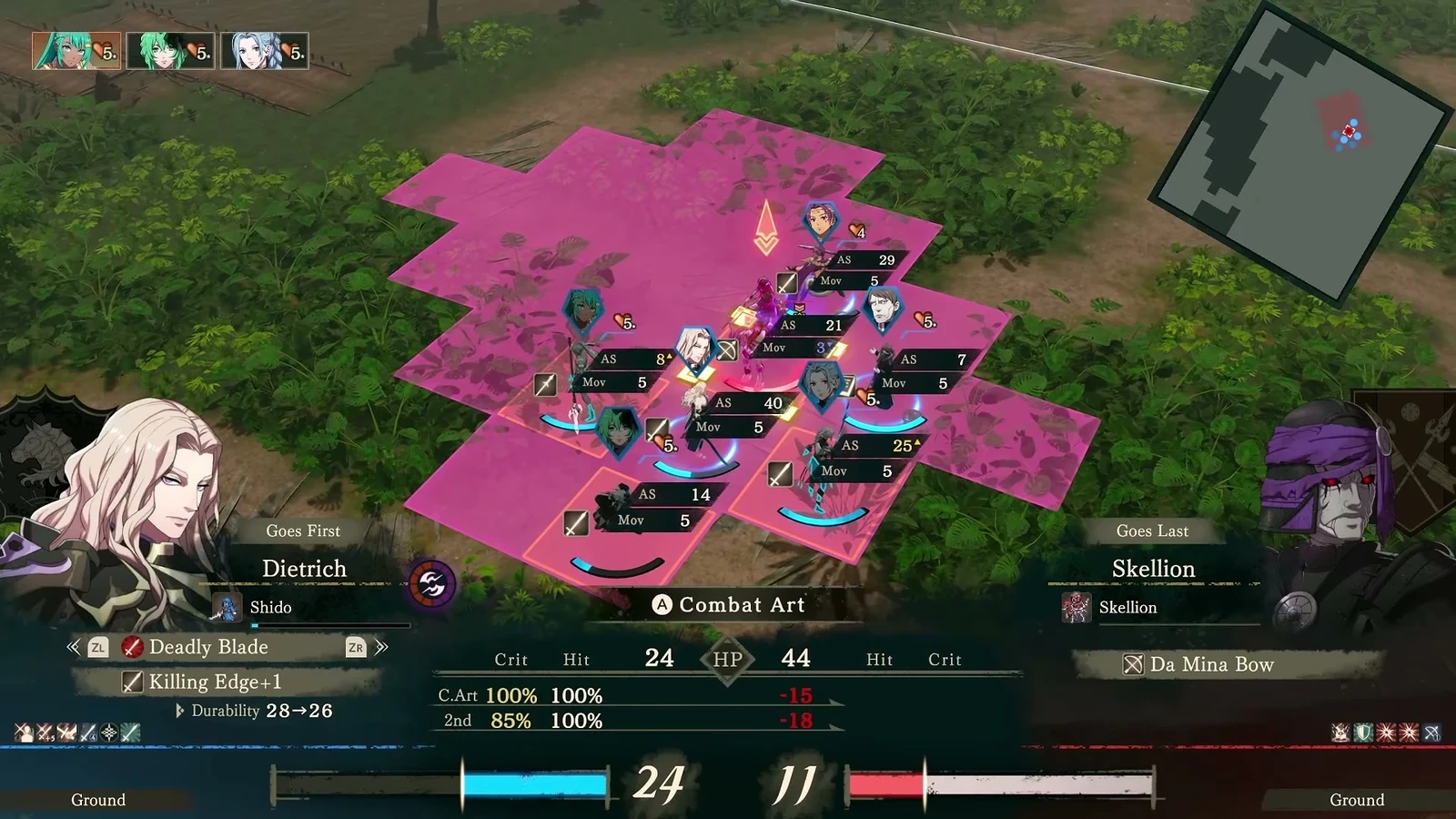
Image source:
Only combat arts consume durability
The rule. Durability determines how many more combat arts a weapon can use. Normal attacks cost none. Some weapon effects have also changed from passive bonuses to exclusive arts. For example, a killer sword’s high Crit requires its Deadly Blade art, matching the new durability rules.
Cost per art: the durability cost in the description is the amount deducted. An axe with 30 durability can use a 6-cost art 5 times. Killing Edge has 40 durability; some special gauntlets have so little that they permit only 1–3 uses per battle. Dietrich's route upgrades arts with Magic Echo Shards, sometimes reducing durability costs; see combat arts.
The cost of breaking. At 0 durability, Might and Hit drop substantially. The weapon stays in your inventory as a broken weapon.
Auto/skip in Clashes does not consume weapon durability. Those commands do not actively choose combat arts. They spend LP and spell uses, but no durability. Manually choosing an art follows its own cost: check each art’s durability before using it. Do not apply auto-battle’s rule to manual combat arts. See dungeons and Clashes for the different controls.
Free ordinary attacks change weapon-use habits. Effective weapons such as Ridersbane and Zanbato can handle everyday attacks instead of staying unused for fear of wear. Budget combat arts instead: spend durability on immediate high-damage kills or special effects. Equip effective weapons for the relevant roles and use ordinary attacks freely, reserving durability for essential kills and control. Weapon-specific arts still cost durability.
Repairing and upgrading at the blacksmith
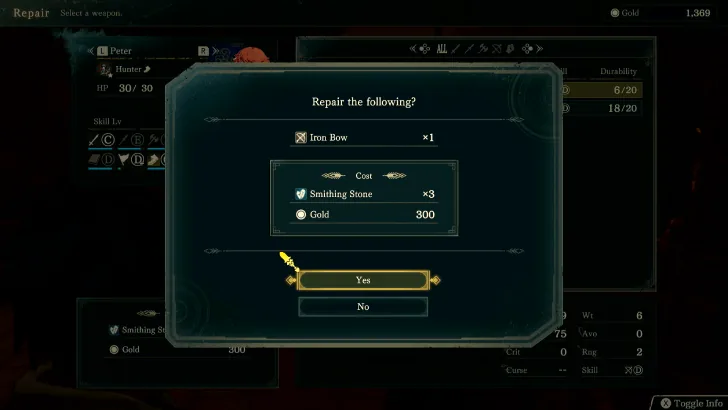
 Iron BowRequires
 Smithing Stone 3 items and 300 gold, with payment confirmation below. (English interface)
Unlock timing. Blacksmiths unlock when any protagonist reaches Part 1, Chapter 6, after clearing Chapter 5. There is no way to restore durability before then, so conserve arts in the first 5 chapters and carry several weapons. Besides the imperial capital’s shopping district, world-map minor settlements with a blacksmith icon also offer forging.
Spend gold and a small amount of ore, such as Smithing Stones, to refill durability and restore broken weapons.
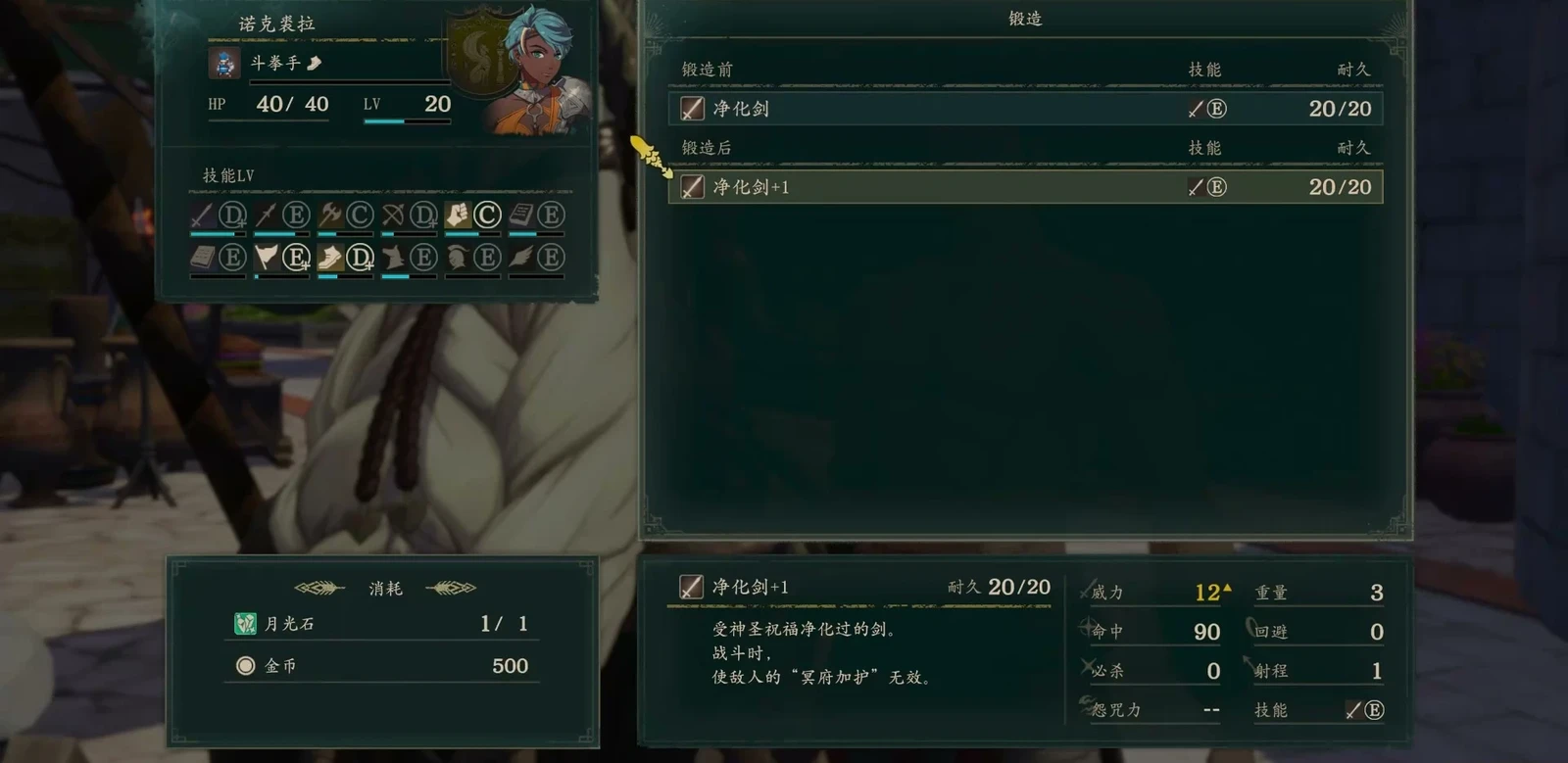
Spend more gold and specified ore to raise the weapon one upgrade level, improving Might and other stats while fully restoring durability. A weapon at 0 durability must be repaired first.
Forging limits follow Renown and story progress: Renown 7 allows +1; Renown 10 allows +2; after Part 3, Division 1 of the Promised One’s story, +3–+5 become available. Weapon shops also begin selling pre-forged +1 and +2 weapons at Renown 7 and 10.
The money-saving forging order: forging also refills durability, so do not repair first if the weapon can be forged and still has durability. Save money in this order:
- 1Check whether further forging is available, then confirm durability is above 0. A broken weapon needs repair first and cannot be forged directly. At the upgrade cap, maintain it through repairs and skip the next two steps.
- 2Use arts until durability is nearly depleted, then switch to a spare weapon for arts. Do not actually reduce the planned weapon to 0. Forging at full durability wastes a repair opportunity.
- 3Forge it to improve performance and fully restore durability.
A weapon at 0 durability remains in inventory but cannot be forged directly. Pay for repair first, then continue forging if it has an upgrade route.
Is forging worthwhile? Different weapon tiers have different curves. Wooden weapons gain a large Might jump at +5, then Speed with each level from +6. At +9 they give Speed +5 and weigh only 2. Fully forged wooden swords, lances, and axes have also been judged competitive with silver weapons. Battle Soul Stones in Part 3 let you raise basic weapons straight to their highest level. Wooden +9 gives Speed +5 with comparable Attack, making it practical. Silver weapons gain evenly with each upgrade and have no special effect.
Forging curves, using swords as the example; lances, axes, and bows follow the same pattern
| Weapon | Curve |
|---|---|
| Wooden | +5 raises Might 6→17; each level from +6 adds Speed +1; +9 has Speed +5, Might 20, weight 2 |
| Bronze | 5 levels; a jump at +3 with Defense +1–+3; maximum Might 22 |
| Iron | +3 jumps to 19; up to Dexterity +6; maximum Might 22, weighing 1 more than bronze |
| Damina | A jump at +2; +3 has Might 23; Crit +10 when using combat arts |
| Silver | +2 per level, maximum Might 24, no special effect |
Axes have higher base Might (wooden 22, silver 28), while bows have less (wooden 19).
Image source:
Spell uses and recovery
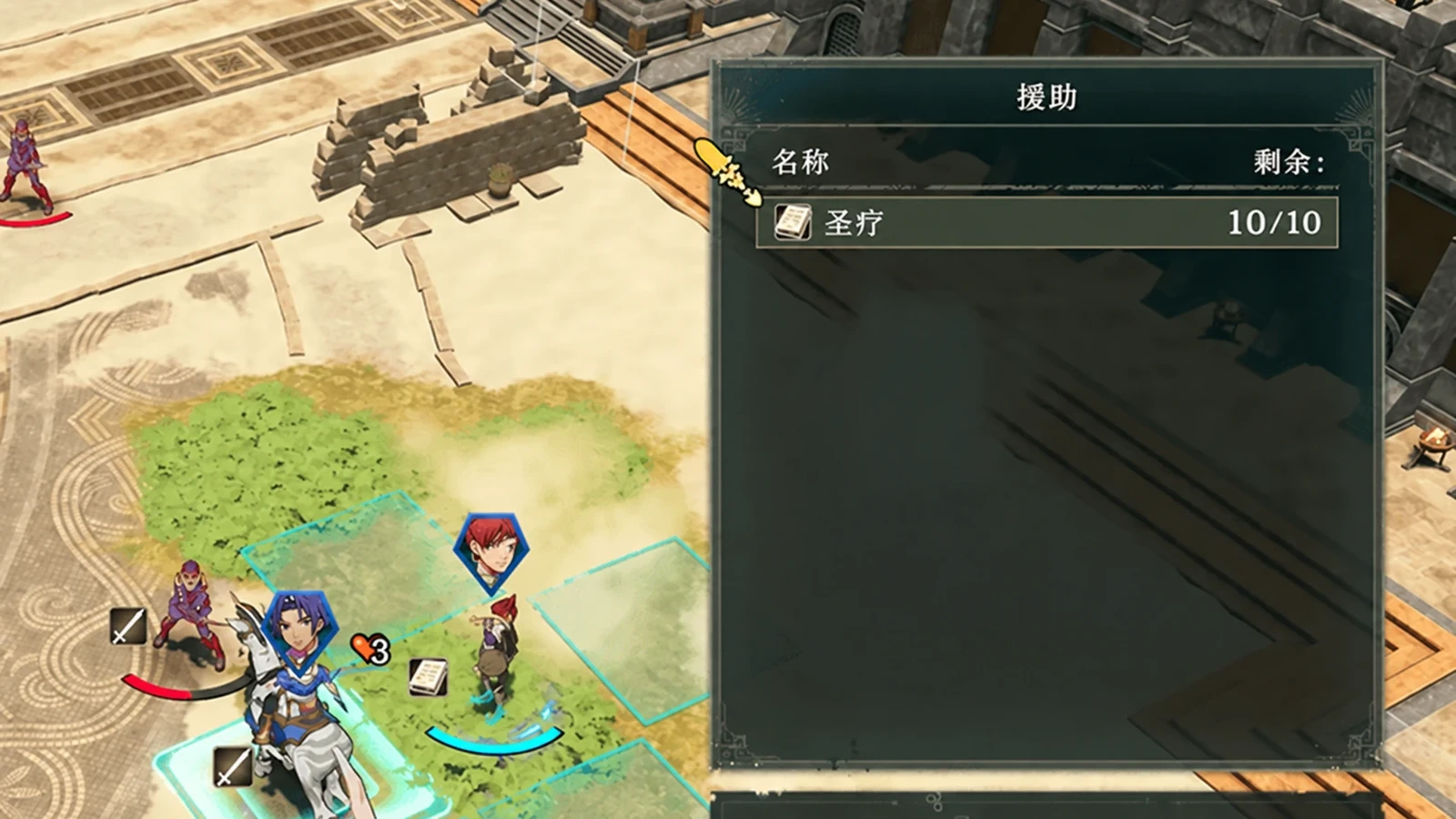
 HealShows 10/10 remaining uses, which can be checked before casting. (English interface)
- Each spell tracks uses separately. Attacks and counters both spend them. Running out of Fire still leaves Wind available.
- Battles do not refill uses. Three Houses restored all spells after each battle; this game automatically refills them only across chapters. During free time, HP and spell depletion carry through encounters and dungeons.
- Recovery options: stay at an inn, costing several hundred gold and 1 turn while also restoring Motivation and HP; dine at an inn; or spend ingredients at world-map Feast points or dungeon rest points.
- When free time ends and a main-story battle begins, HP, spells, and Divine Sand recover. There is no need to pay for a dedicated inn stay just before free time ends.
Repair broken weapons and replenish spells separately
- “A weapon disappears when durability runs out”: it stays as a broken weapon and recovers through repair/forging.
- “Normal attacks wear weapons down”: they do not. Only combat arts consume durability.
- “Forge at full durability”: the reverse is more efficient. Forging refills durability, so wait until nearly empty, without actually reaching 0.
- “Spells refill after every battle”: that is Three Houses. Here, they refill automatically across chapters; use inns, meals, or rest points in between.