
Mounts
Capture and raise mounts in Cai’s story. Bonds belong to each rider–animal pair. Choose the mount skill first, then raise the bond to 5; maximum bonuses are totals across stats.

Choose a useful mount ability first, then have a consistent rider raise its bond to Level 5. Switching riders does not transfer maximum bond.
- Only Cai's route can capture and raise mounts in Part 1. Capture and the Lowtown stable unlock in Chapter 5. Part 2 allows care only; capture returns in Part 3. Ordinary animals automatically supplied to mounted classes on other routes have no stat, growth, or mount-ability bonuses. Io's and Alexandra's special starting mounts do provide bonuses.
- Bonds are tracked for each character and individual animal; switching riders does not transfer maximum bond. Feed each animal once daily, resetting at 0:00. At Bond Level 5, ordinary mounts generally provide +5 total immediate stats and +25% total growth, not those amounts to every stat. Mount abilities unlock at Level 3 and become “+” at Level 5. Charioteer benefits from the growth bonuses of two horses.
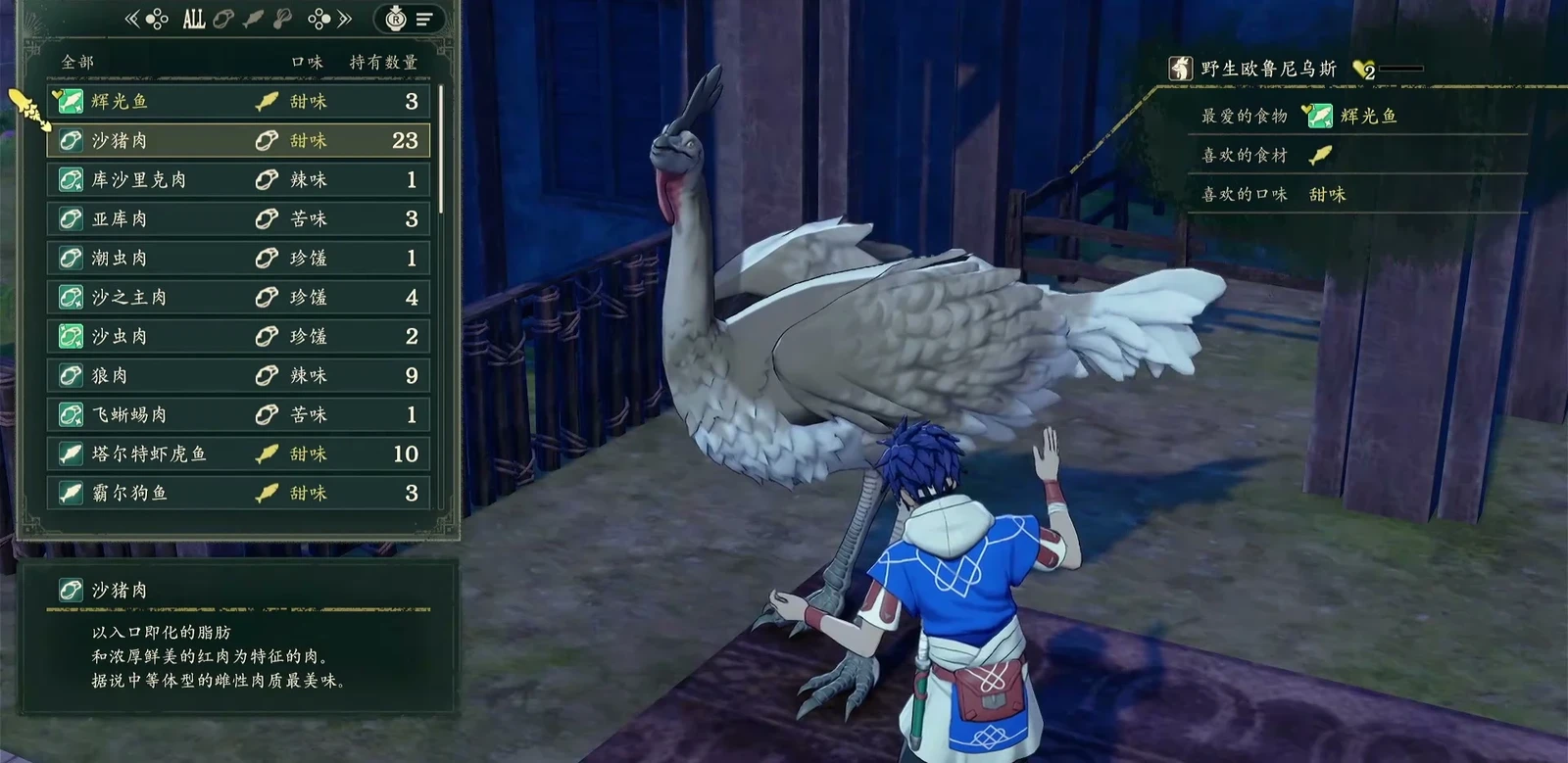
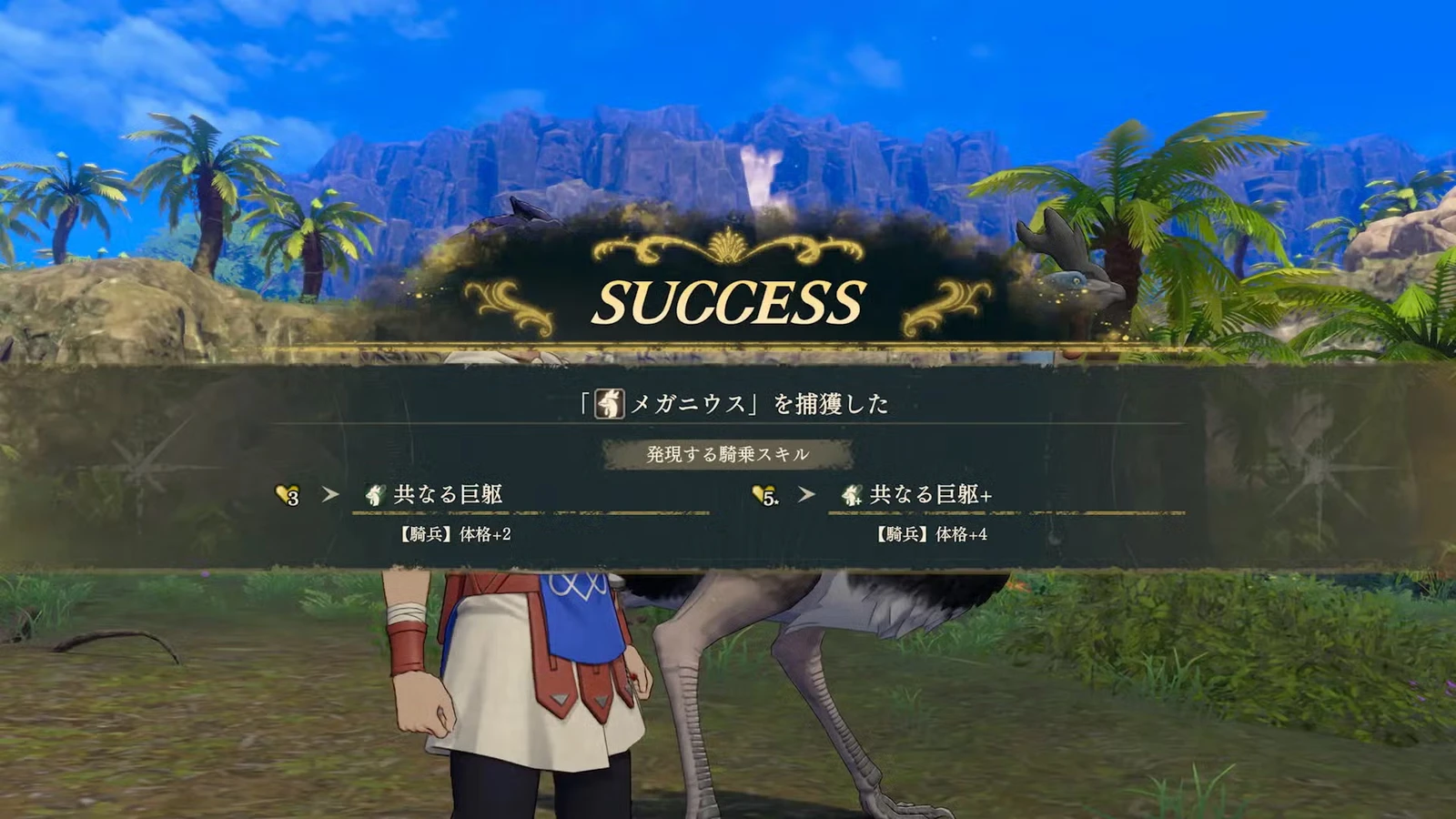
- Use the right bait category first: vegetables for horses/pegasi, fish for ornius, and meat for dragons. Existing tests find matching taste unnecessary for capture, while higher-grade ingredients improve rare appearances. Separate retries into species, capture success, and individual ability. Once a rare appears, reload and adjust actions to roll its ability.
Prioritize mount skills over rarity
Evaluate three things separately: immediate stats, growth rates, and mount skills. Movement +2 and Canto can change a fight more than a few stat points by reaching objectives, intercepting enemies, and clearing space after attacking. Most teammates attack only one or two tiles away, so a front-liner moving aside lets those behind continue attacking.
Common horses can have movement skills worth keeping; do not judge only by rarity. Select mount abilities separately from immediate stats. Decide whether the unit needs travel distance, post-combat retreat, accuracy, or sustain, then choose an individual with that ability. Check rare animals' abilities too; catching a rare does not automatically give the best choice.
Individuals of the same species can have different skills. Inspect the actual animal at the stable. Movement +1 or +2 expands movement before acting; Canto moves one or two tiles after combat. The shared idea of movement does not make them equivalent.
Choose a mount for the training goal, then prepare food. Pick Strength, Magic, or mobility bonuses based on the rider. For post-combat retreat, prioritize Canto on a ground mount. After capture, check the individual’s favorite vegetables and flavors, then plan cultivation and daily feeding around those preferences. This avoids stockpiling random ingredients that your usual animals do not like.
How do you adjust after a failed capture?
- 1Visit an animal-icon tile on the world map and check the animal types available there; location determines the candidate pool.
- 2Place the appropriate ingredient category and wait several turns. One demonstration waits about 5 turns; follow actual map progress.
- 3Return to the animal's tile and select capture. It can fail; after failure or an unsuitable individual, place bait again.
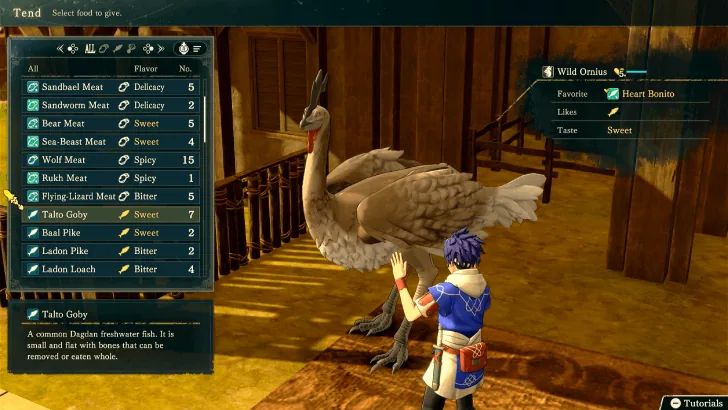
- 4Inspect its mount ability at the stable before choosing a rider. Avoid spending days feeding it before discovering the skill does not fit.
| Desired category | Bait |
|---|---|
| Horse, pegasus | Vegetables |
| Ornius | Fish |
| Dragon | Meat |
The wrong ingredient category can trigger monster encounters. Existing tests favor higher-tier ingredients over flavor matching for rare individuals; another recommendation uses one- and two-star ingredients to improve rare chances. Capture bait categories and favorite stable foods are separate. Preference matching matters more for raising the bond through feeding.
Three points to distinguish when retrying capture
| Checkpoint | Existing records | Practical interpretation |
|---|---|---|
| Which animal appears | One explanation fixes the species when bait is placed and recommends saving beforehand and changing bait; another set of records changes actions after baiting. | Save before baiting, then change bait as needed. |
| Capture succeeds or fails | Compare capture results after changing exploration or movement. | Record the save point and change one action at a time. No fixed successful step count has been established. |
| Which ability the individual has | Confirm the rare icon, then save and change actions to roll abilities. | This selects an ability after the rare appears; it does not prove the species is being rerolled. |
Feed the intended rider’s mount to unlock at 3 and upgrade at 5
The stable is in the imperial capital’s lower district. Assign a caretaker, then feed the animal to raise that character’s bond with that specific animal. Giving another rider a mount Cai has maxed does not transfer full bond to them. Riding it in battle and defeating enemies also raises the bond, alongside feeding.
| Rider–mount bond | Total immediate stats for ordinary mounts | Total growth bonus | Mount skill |
|---|---|---|---|
| 1 | +1 | +5% | Locked |
| 2 | +2 | +10% | Locked |
| 3 | +3 | +15% | Unlocked |
| 4 | +4 | +20% | Retained |
| 5 | +5 | +25% | Upgraded to “+” |
These totals are distributed among the animal’s specified stats. An ordinary horse at level 5 gives Speed +1, Dexterity +3, and Defense +1 immediately. Its growth bonuses are 5 percentage points each to HP, Speed, Dexterity, Defense, and Resistance. Immediate stats and growth rates are not the same table. Io and Alexandra’s starting mounts are exceptions, totaling +6/+30%.
Check Ferghanan Horse growth separately. Level 5 immediate bonuses and growth are listed separately below; growth values are percentage points.
| Category | Level 5 Ferghanan Horse bonus |
|---|---|
| Immediate stats | Strength +2, Dexterity +1, Defense +2 |
| Growth rates | HP +5, Strength +5, Dexterity +5, Defense +10 |
Each animal can be fed again after 0:00 daily, unless full. This is not weekly; the early weekly claim was later corrected. Mount bonds do not retain gains through Replay chapter like character bonds do. Do not copy character bond-farming methods directly.
Charioteer’s doubled growth and the elephant exception
Charioteer’s core benefit is growth bonuses from two horses. Ordinary max-bond horses’ total +25% becomes +50%, while special horses’ +30% becomes +60%. Only the mount growth component doubles. Personal growths do not double, and becoming a Charioteer does not automatically provide two max-bond bonuses. The class also has its own level-dependent growth modifiers; do not count those twice. Compare routes with the class growth simulator.
War elephants are not captured in the wild. Relevant Part 3 quests give two Saramis War Elephants. Their immediate bonuses are Strength, Dexterity, Defense, and Luck +5 each. HP +5% belongs to the growth column; it is not an immediate HP +5. Dismount before using Blaze Arts. War elephants do not follow the ordinary-mount total +5 summary above.
When is dismounting useful?
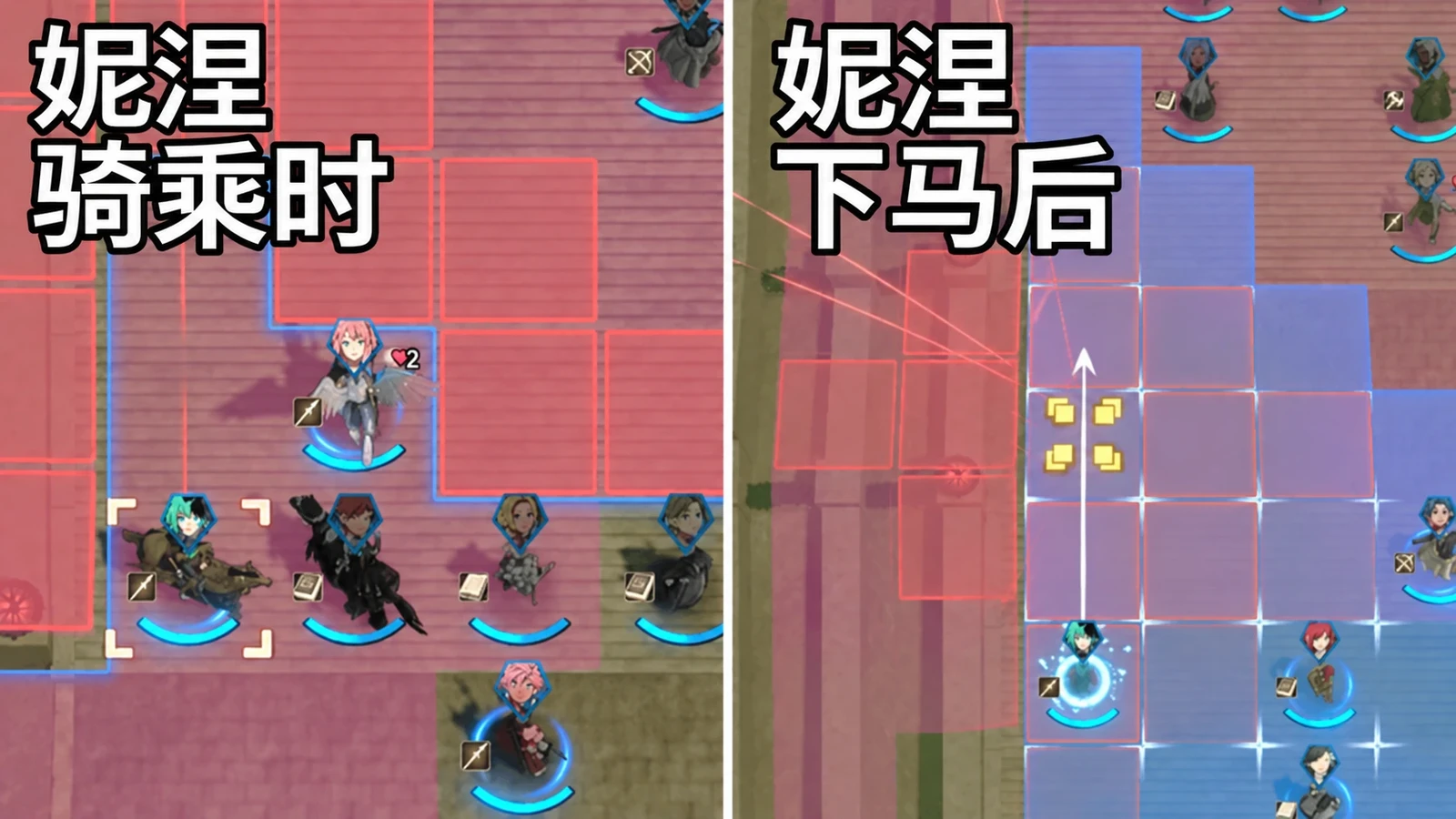
Mounted classes with mounting/dismounting can dismount during your phase before finishing their action. Dismounting itself does not consume the action. You can remount afterward, but cannot add this operation once the unit has ended its action.
- Keep immediate mount stats, mounted movement, and the ability to cross rivers and ditches.
- Horses may suffer movement penalties in woods and on stairs. Cavalry must watch for effective lance attacks; fliers must watch for effective bow attacks.
- Improve horse movement through woods and stairs, remove cavalry's lance weakness, and remove fliers' bow weakness by landing.
- Lose immediate mount stats, movement, and river/ditch-crossing capabilities. Fliers must land on terrain infantry can occupy; water and impassable tiles are invalid.
Stats already gained through growth are not subtracted when dismounting. Existing demonstrations also show Canto working while dismounted.
Plan Part 3 mount roles before checking transfer records
On Cai's route, list Part 3 mount needs first: who needs Canto, extra movement, or post-combat healing? Then decide which individuals to catch and bond with. Later catches may enter the Sacred Ark and cost Karma Shards. Catching horses only for immediate leveling in Part 1 can mean paying more resources when changing teams in Part 3. Plan around the final roster, choosing numbers and species for the units you will use.
One conservative carryover approach organizes animals near the end of Part 1 and unequips them before the War Arc ends for redistribution in Part 3. Another explanation says mounts are recorded at Part 2 completion, later character updates also carry the latest mount state, and unequipped mounts from the first completion are available in Part 3 storage. This model has not established priority for every field, including mount bonds. Character stats taking the highest value does not guarantee animals use the best version; ordinary equipment rules do not establish mount rules either. See New Game Plus for the full disagreement.
Separate mount growth, individual skills, and assignment
- Bonds are tracked for each person and individual animal. Recheck assignment after changing class.
- +25% is the sum of several growth bonuses, not +25% to every stat. Charioteer doubling also applies only to the corresponding mount component.
- Individuals of the same species may have different abilities. Check before investing time in care.
- Ordinary mounts supplied automatically on other routes give no bonuses; Io's and Alexandra's special starting mounts still do.
- Release rewards depend on bond. An animal released without any interaction may give no reward; do not count every unraised duplicate as fixed income.