

The sun and covenants: the same lance need not mean the same soulMajor spoilers
Use Mithras’s alliance with the sun god, the rock-born god, and Pale Raven imagery to understand Eshmel’s inherited power and the theme of covenants.
Original video: Mithras and Solel working together? Eshmel’s mysterious connection to Mithras! Fortune's Weave analysis, later installment; Bilibili creator Tianluo luo. Watch the original
A shared lance may mean inherited power
 Eshmel’s lance turns gold when he activates Blaze, resembling the lance in
 Solel’s statue. Combined with the mission to restore light to the land, it is easy to imagine that they share a soul. I favor another explanation: the lance lets Eshmel temporarily assume Solel’s power while retaining his own soul. To understand this, first consider how Mithras acquires the sun god’s authority.
The sequence of the sun gods’ alliance
In the Roman mysteries of Mithras, Mithras does not occupy the temple alone. The sun god Sol and other gods appear too. A relief sequence first shows Sol kneeling before Mithras, then the two gods standing and shaking hands, feasting on a bull’s hide, and finally ascending together as Mithras boards Sol’s solar chariot. The kneeling scene can suggest submission or investiture. The later handshake and shared chariot establish an alliance.
Read through these images, the Order of Mithras and Solel may be collaborators. The order possesses a ritual through which solar authority is recognized, granted, or shared. This explains why receiving the same power need not mean originally being the same person.
Comparing the two lances’ patterns
The lance on Solel’s character card and the battle interface when Eshmel uses a lance both show Noa’s Bloodmark motif. This interpretation treats it as the weapon maker’s mark, rather than evidence that Solel himself bears Noa’s Bloodmark.
The rock-born youth and a prepared body
Images of Mithras’s birth do not show a mother holding a baby. A young man emerges directly from rock, carrying a torch and dagger. Another story follows in which he strikes rock to release water. Rock can produce both a god and life-sustaining water.
Eshmel also lacks an ordinary birth. His soul enters a prepared body and can act as a young man. Those who manufacture the body connect to the name “Nuwa.” Together, unnatural birth, an adult body, and solar authority form a mutually reinforcing sequence of images.
The Pale Raven messenger brings light
The first initiation grade in the Mithraic mysteries is Raven. The raven in the bull-slaying image is also often interpreted as a messenger from the sun god. Its white coloring, however, can be explored through other stories.
In Metamorphoses, a white raven reports a lover’s betrayal to Apollo, bringing a truth the god rejects. Its feathers are blackened by his anger. Raven stories from North America’s Northwest Coast describe it transforming to reach boxes containing the sun, moon, and stars, then returning light to the sky. In other stories, it brings back water. East Asian white ravens connect to the sun, auspicious signs, and kingship. Applied to Eshmel, delivering messages, revealing truth, and bringing light and life-giving resources share a direction.
Initiation grades and changing identities
The Mithraic mysteries’ second grade is “Bride.” Members wear veils to symbolize leaving an old identity behind and forming a new covenant with the god and order. The sixth grade, Sun-Runner, represents Sol, wearing a solar crown and carrying a torch and solar-chariot whip. This progression from messenger to bride to bearer of a solar identity can be compared with Eshmel’s symbolism.
Conflicting covenants and erased history
Mithras’s name centers on agreements and covenants, and marriage is a covenant too. Solel has obligations on two sides: governing the country on another’s behalf and his marriage. If his wife saves people the emperor wants destroyed, choosing either side could damage the other covenant. That gives the sun-and-covenant imagery a concrete conflict.
Then consider disappearing names and history. Survivors remain alive, but their people’s name, country, and culture are taken away. Even their rescuer becomes taboo, making it difficult to prove who they once were. Roman memory condemnation likewise attacked more than bodies: names were chiseled away, statues destroyed, and public images removed, stripping a person of social standing. This offers another way to understand 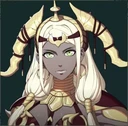 Theodora’s historical predicament. Eshmel’s mission to find truth in the past also connects to the Pale Raven bringing light.