
Temples and the gods: Why wishes, fate, and immortality could bring disasterMinor spoilers
Starting with temple Blessings, explore myths of the sun, fate, war, and dawn to interpret mysteries left by the prerelease material.
Original video: Speculating about Dagda’s gods and temple Blessings! A deep dive into the world of Fire Emblem: Fortune’s Weave; Bilibili creator Tianluo luo.
This analysis reads temples, names, blessing effects, and myths together. Characters’ powers may involve service and blessings as well as bloodlines. Wishes, immortality, and fate all point toward the price of gaining power.
Threads of cause and effect in the title
Threads have been hiding in the title all along: the thread radical in the Japanese characters, the countless strands in the Chinese title, and the weaving imagery of the English title all suggest tangled threads of cause and effect. The white-clad protagonist 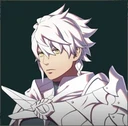 Eshmel travels five years into the past to change each of the four protagonists’ fates, giving that image a place in the story’s structure.
The Direct answered some questions and raised more, especially around temples. You can meet the gods who rule this continent, receive Blessings, and see corresponding symbols in the battle interface. This is an age when gods still walk among people. If so, could the powers characters carry come directly from divine gifts as well as inherited bloodlines? That could be an important way to read the temple designs.
Power in an age of gods may come from Blessings
Ancient Greek mythology divides humanity’s past into ages such as Gold, Silver, Bronze, Heroes, and Iron. The Heroic Age already has states, war, and death, but the gods have not withdrawn from human life. They advise heroes and form families with mortals.
I read the society shown in Fortune’s Weave’s promotional material in that atmosphere. From that perspective, a symbol on a character need not prompt only “Whose descendant are they?” You can also ask, “Which god do they serve, and where did their Blessing come from?” Temple imagery, names, and Blessing effects are worth considering together.
Compare names, temple imagery, and Blessing effects to see how they echo themes of wishes, fate, and life.
A sun god granting a wish can spell disaster
 Solel’s name recalls the Latin word for the sun and the Roman sun god Sol. Stories of Sol often blend with those of the Greek sun god Helios: he rises in his chariot from the east each morning, travels west, and returns east at night. That duty represents the world’s order, which must continue every day.
Phaethon’s story is especially relevant. To prove he was the sun god’s son, he asked to drive the sun chariot for a day. His father knew he could not control it, but had already sworn to grant his wish and had to agree. When the chariot flew too high, the earth grew cold. When it flew too low, mountains, rivers, and cities burned. Zeus finally had to strike him down with a thunderbolt.
Placed alongside the Heroic Games, this story gives “the champion may have one wish granted” a dangerous edge. If a god must honor a promise, a wish could save someone or push the world toward disaster. The reward for victory might begin a greater conflict.
The Wheel of Fortune and chance changes to fate
Fortuna brings the Roman goddess Fortuna to mind. The wheel, ship’s rudder, and cornucopia connect changing circumstances, shifting direction, and abundance. Unlike a sun god, she does not need a complete biography from birth to death. People give her different titles on different occasions as they seek hope or protection from calamity.
Someone of humble birth can reach a throne, and an insignificant event can change a life. That view of fate fits a story about returning to the past and changing outcomes one by one.
I am especially interested in the connection between a previous game’s Bloodmark and the Wheel of Fortune tarot card. The promotional material also links the power to rewind time with the progenitor god, suggesting another question: could this god have inherited part of Sothis’s power?
Brothers in conflict behind a nation’s founding
Mars's Blessing favors Strength, making the connection to the war god Mars direct. But Roman Mars is associated with more than combat: he also connects to the state, army, borders, and order.
His sons Romulus and Remus grew up from abandoned infants and later planned to build a city, only to argue over who would rule and where it should stand. Remus died in the conflict between the brothers, and Romulus founded Rome. War can protect a nation, yet its first wall may be stained with a relative’s blood. That contradiction is more interesting than simply equating a war god with aggression.
Transformation and birth in a myrrh tree
 Smyrnos’s name resembles Greek words associated with myrrh and also recalls Myrrha’s story. Fleeing her father, she begged the gods to remove her from both the world of the living and the dead. She became a myrrh tree, her tears turning to resin. The child in her womb continued growing inside the tree and eventually emerged through its split bark as Adonis.
After Adonis died, his blood became anemones. This family repeatedly transforms between people, plants, and death. Myrrh itself is used in perfume, medicine, religious rites, and funerals. Looking again at the temple’s boost to magical ability and its Magician-related imagery, it is easy to think of bodily transformation, healing, ritual, or resurrection.
The dawn goddess asked for immortality but forgot youth
 Aurora is the goddess of dawn. In myth, she opens heaven’s gates and disperses the night before the sun sets out. That imagery fits a Blessing focused on defense and fighting the undead.
She obtained immortality for her mortal lover Tithonus but forgot to ask for eternal youth as well. He kept aging without being able to die. In another story, her son Memnon fell in battle. She sought posthumous glory for him, and her tears became the morning dew.
Add the Hanged Man imagery of the corresponding symbol, and themes of suspension, sacrifice, and waiting for change connect with those stories. Rather than focusing only on “immortality,” ask how its recipient must endure it.
Kalla’s destruction and rebirth
Kalla’s name suggests mythological connections to time, death, and destruction. Destruction may also stop a demon that has lost control, ending an old order so a new one can emerge. Meanwhile, the temple’s song, dance, art, and Empress imagery point toward motherhood, abundance, and creation. Combining those sides could account for both life’s beginning and its end.
Night and death can also protect
Yu Phas, worshipped in Saramis, holds titles associated with death, night, and guardianship. In mythology, night need not mean evil. Fate, death, sleep, and dreams can all be born from night, forming the rules by which the world operates.
Consider Hecate as well. She guards boundaries, crossroads, and the dead, and carries a torch to guide people between the two worlds. Putting night and protection together helps explain why 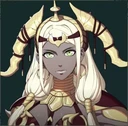 Theodora wants to clear her homeland’s faith of its stigma. I also connect her Gautier Bloodmark with its association with the Death card in the previous game: could this power also come from service and Blessings?
A god of crafts and weapon repair
The green statue’s name suggests an Irish god of crafts. When the gods went to war, the craft gods repaired their weapons through the night so they could fight with intact equipment the next day. If Credna’s design follows that thread, it would fit forging, shops, and equipment. Comparing names, imagery, and function together makes the design’s intent easier to read than searching only for a god with the same name.