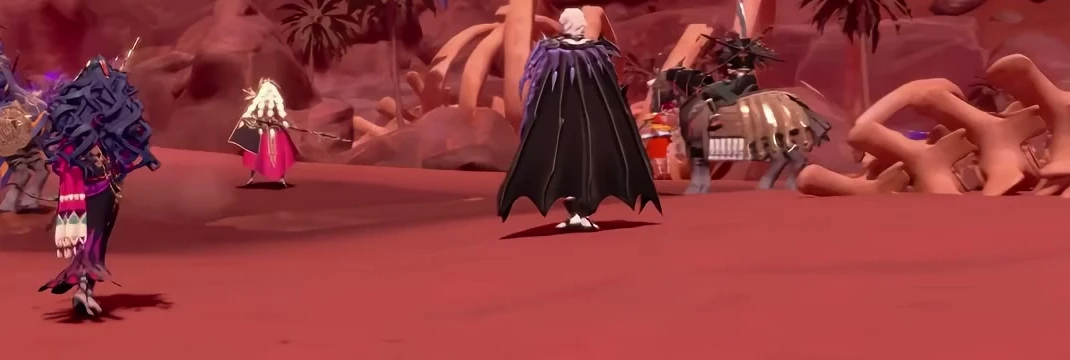
Third trailer analysis: Purple light, relics, and new looks five years laterMajor spoilers
Follow clues in the purple light on an arm, a harp, and beasts, then compare hairstyles, clothing, and army changes on later battlefields.
Original video: [Fortune's Weave] Five-year-later designs revealed! One last PV3 analysis before release; Bilibili creator Fenghua Chuixue ACC; https://www.bilibili.com/video/BV1R3Ye6BEUP/
Does the purple light signal a loss of control?
This is a pre-release analysis of the third trailer and Treehouse demonstration. What interests me most is the similar effect on several things:  Theodora's arm, the masked figure's prosthetic hand,
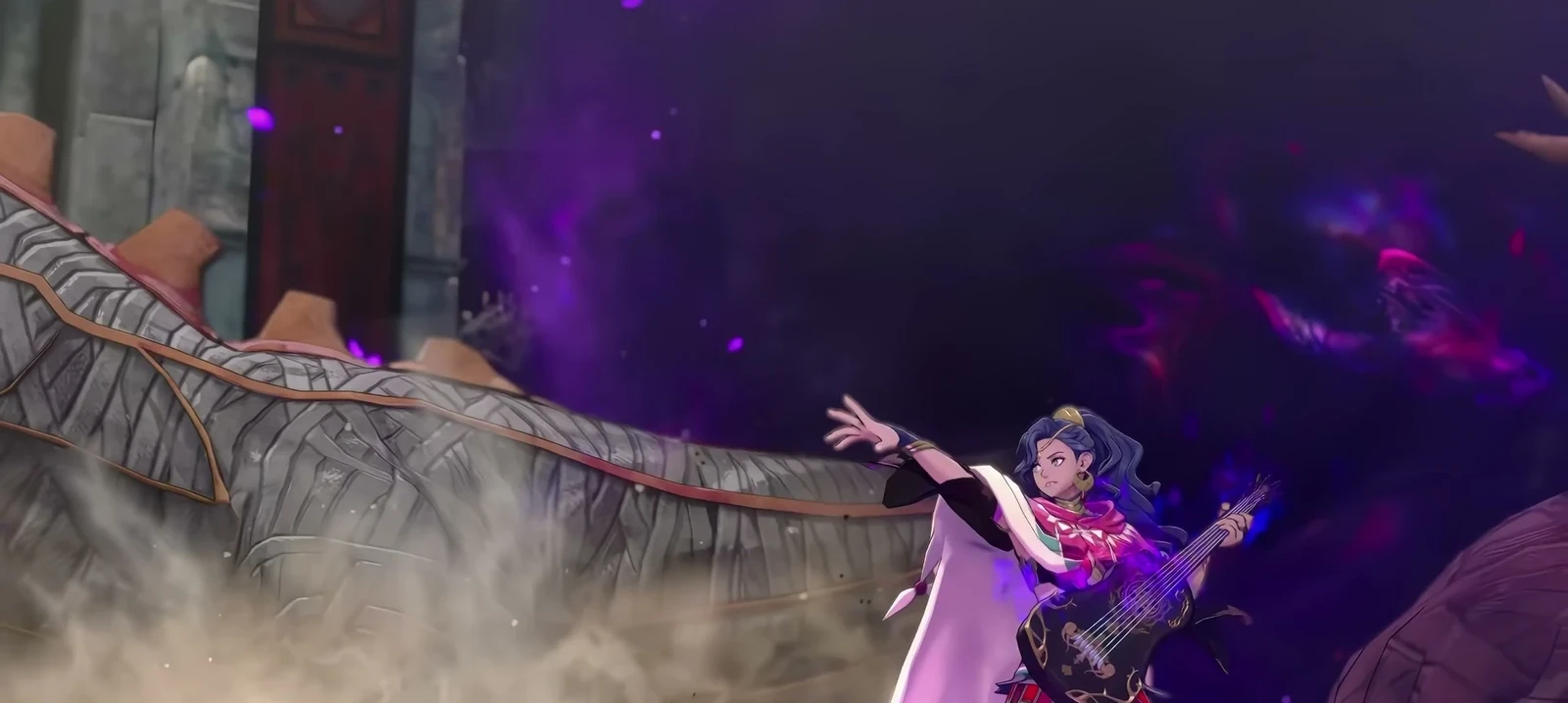
 Leda's harp, and the purple light on beasts.
The beast beside Leda glows purple, unlike her summon in the earlier demonstration; her instrument glows the same color. Linking this to footage of a full Blaze Gauge, I suspect it depicts uncontrolled power. On first using it, she may fail to control it and suffer backlash.
The story shows two beasts, but the battle interface allows only one summon per battle. The scene conveys the scale of her power, not proof that gameplay allows two summons.
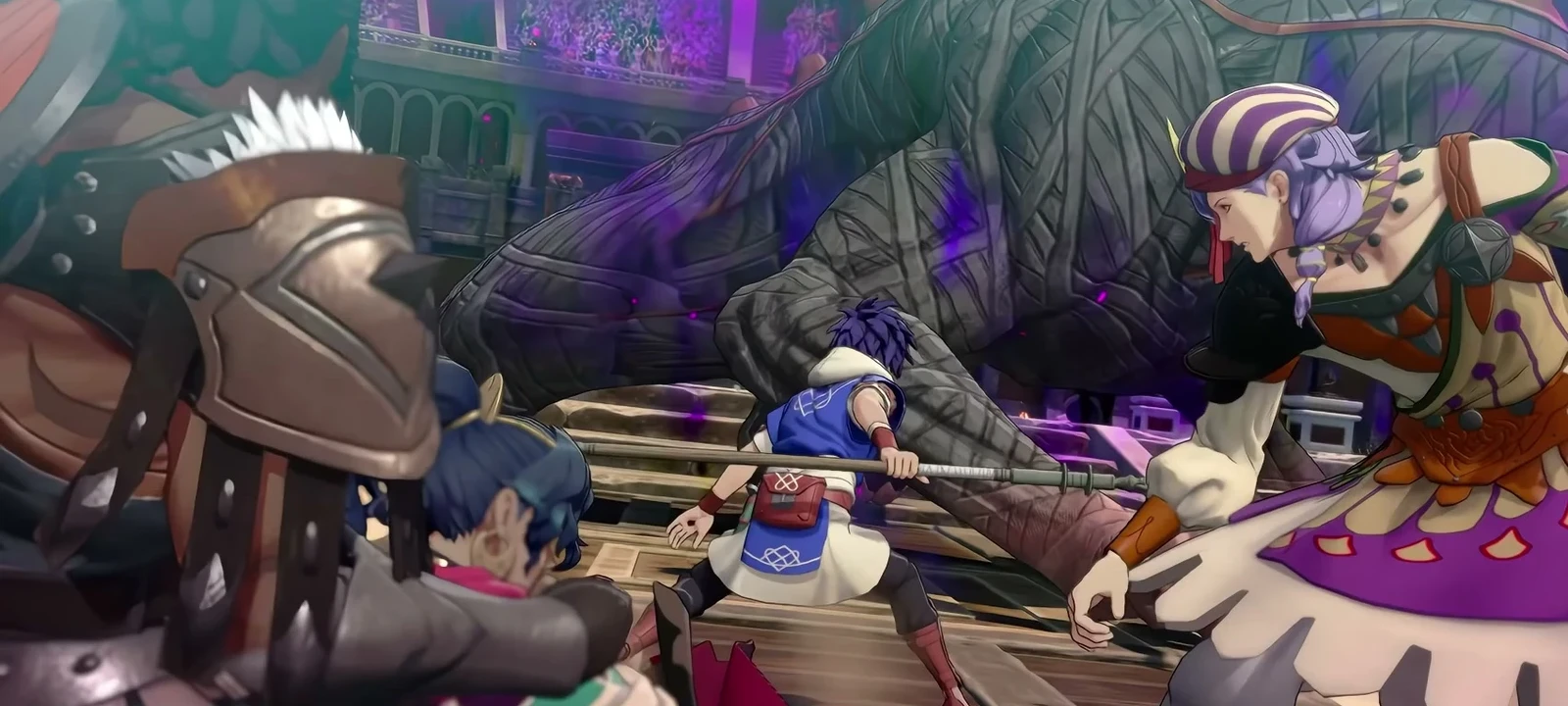
Gathering remains may point toward a resurrection ritual
The trailer mentions remains from different places being gathered in the imperial capital. I connect that line with the protagonists' special objects: a gem, an arm, a harp, a cloak, and the treasure  Talimun seeks may all relate to the same Underworld power.
Following that possibility, collecting relics looks like assembling the power of a dead deity, ultimately leading to some resurrection ritual. A red pattern appears in several scenes and differs markedly from other white patterns. I will keep following it as an important thread through the story.
Comparing scenes before and after battles
 Dietrich's sword turns red, black tentacles rise from the ground, and shops at night form the backdrop. Comparing that setting with other promotional footage readily suggests his battle involving Talimun and
 Maria, and the process leading to an eruption of power.
On Theodora's side, pink hair, arched windows, and hanging banners identify the opponent and setting. The full-body purple glow connects with the demonstration's loss-of-control state. These shots appear designed to link battle, Underworld power, and changes in the characters.
Does the current weapon change enemy labels?
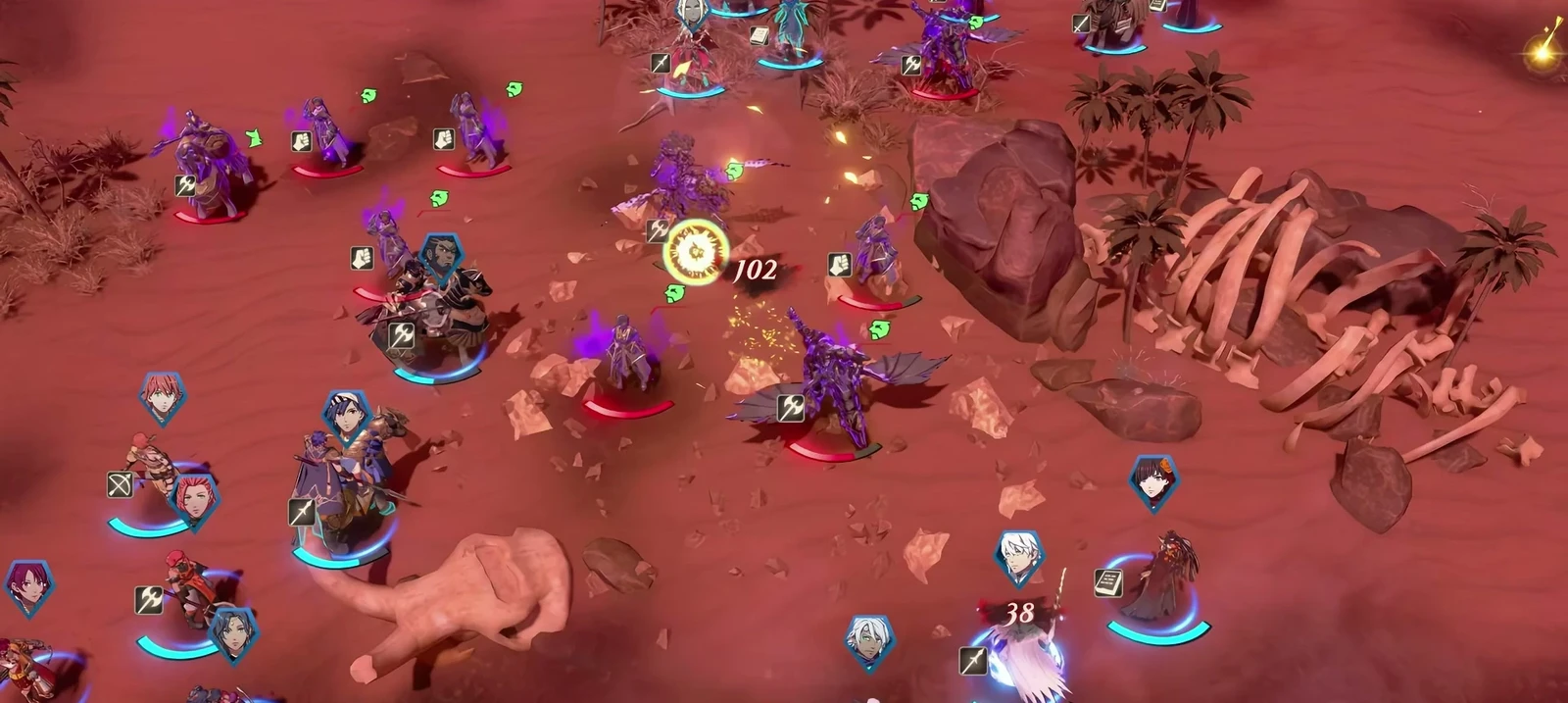
Another interface detail stands out: in the same battle, an armored knight is labeled cavalry, while others are labeled netherfiends. I suspect the labels may highlight effectiveness categories relevant to the current weapon.
For example, holding a lance makes cavalry effectiveness worth emphasizing. Switch to a bow, and flying-unit labels might stand out more. That reading explains why labels appear inconsistent in the same battle, and makes me want to switch weapons in the full game and inspect each change.
Clothing and hairstyles five years later
Many familiar faces appear on later battlefields. Leda trades her large braid for loose, shoulder-length hair and her short skirt for a long one. Dietrich's hair and cloak decorations change too. Theodora's braids, long skirt, and cloak covering her left shoulder stand out.
Among other members,  Tialla's twin tails become long hair, and
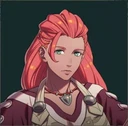 Mikaela's fur decorations become more prominent. With so many new designs in the same army, the passage of time is conveyed through more than the words “five years later.”