

The four protagonists’ mythological mosaic: an evil eye, a prosthetic arm, music, and a boundary-crossing cloakMajor spoilers
Read the protagonists’ powers through mythology. The most compelling shared thread is how scattered talents become one united force.
Original video: Five united make the complete whole: Fortune's Weave worldbuilding analysis | Bilibili creator Tianluo luo | Watch the original video
This prerelease mythology analysis connects the four protagonists to Lugh’s lineage, kingship, inspiration, and divine artifacts, with Eshmel as commander. The key is whether those four sets of abilities combine, rather than pairing each person with just one god.
Cai: the evil eye and bloodline clues
I prefer seeing the four protagonists as recombinations of several mythological motifs.  Cai’s name connects to Cai in early Arthurian stories, who has extraordinary endurance and hands that emit heat. Cai’s evil eye also recalls the Irish Balor’s eye, whose lid must be lifted by others.
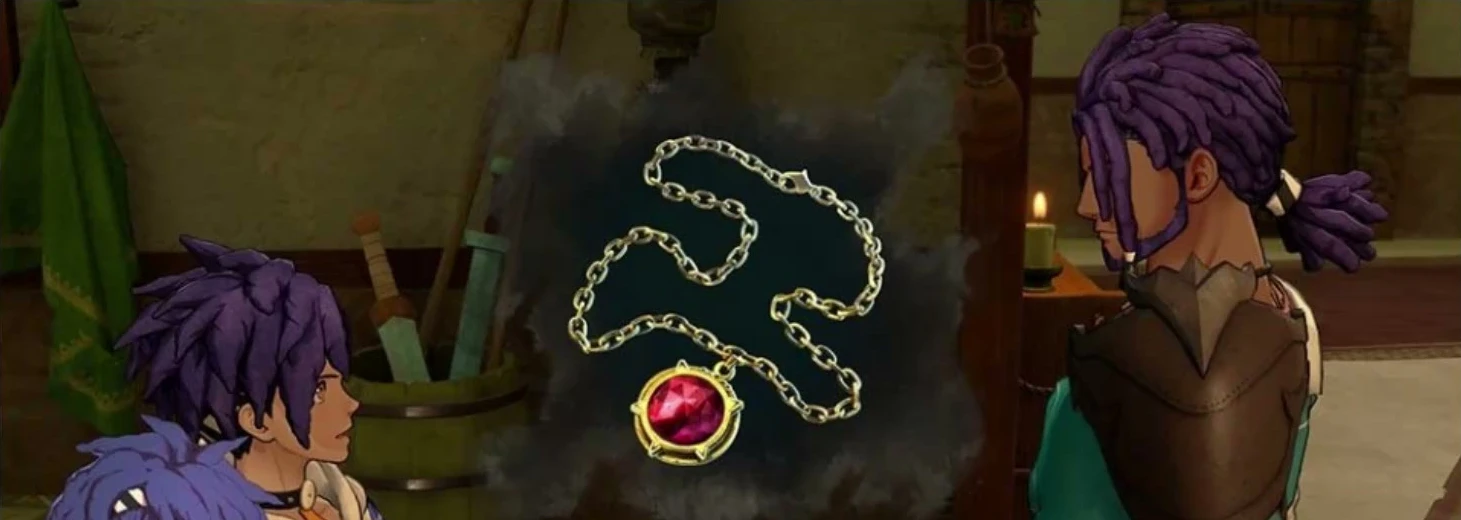
The connection among Cai’s mother,  Aurora, and the pendant is another thread I want to follow. When the pendant is recovered, its gemstone embeds in his palm, connecting family origins and special power through one object. If these family relationships align, they recall Balor’s daughter joining another people and giving birth to Lugh.
One person’s name, the heat of their hand, mystic eye, and upbringing by mortals can point to different stories at once.
Theodora: a prosthetic arm carries kingship
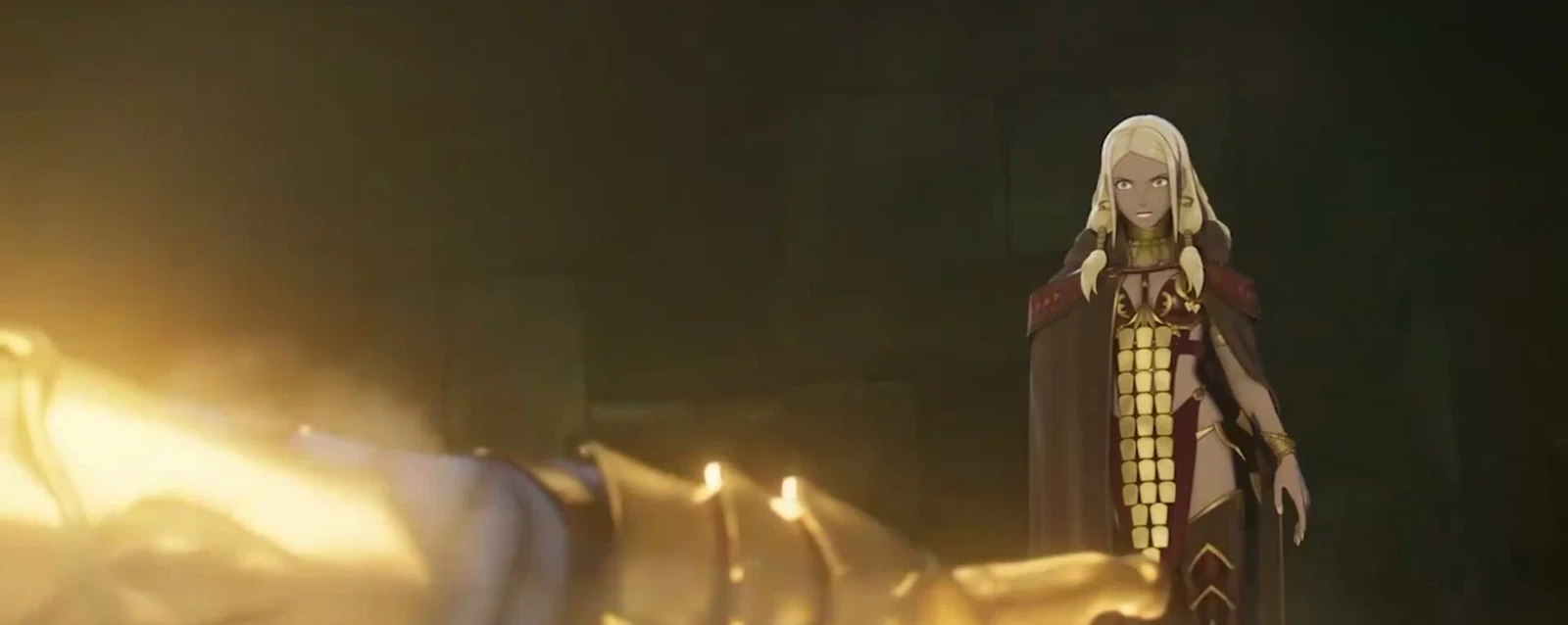
 Theodora lost her father and country on the same night she lost her right arm. Only after receiving a lance and new arm from an ancestor did she gain the power to reclaim her country. An inheritance is usually a weapon that can return to a rack. Hers becomes part of her body.
This recalls Nuada, who loses a hand in battle and his kingship through bodily incompleteness. After receiving a silver hand and restoring his body, he becomes king again. Losing a complete body echoes losing royal power in both stories.
Yet the ancestor has not truly vanished, with power continuing to reside in a descendant. That introduces the cycle of life and death. The arm helps reclaim her country but also erodes her mind. Inheriting power means bearing its cost.
Leda: music crosses the boundary of life and death
 Leda’s instrument, dark mist, and monsters recall Orpheus entering the Underworld, moving its ruler with music, and trying to rescue his wife. Music crossing the boundary of life and death is a direct association.
Her ally-strengthening performances also recall Lugh. Arriving at Tara’s royal hall, he lists skills in building, forging, combat, music, and medicine. The gatekeeper says someone inside already has each skill. Lugh then asks whether anyone has them all, finally gaining entrance.
Lugh’s music induces sleep, sorrow, and joy, changing listeners’ states. Before battle, he also asks smiths, physicians, artisans, and druids what they can do, placing everyone appropriately. Leda’s music can therefore combine Underworld imagery with collective inspiration.
The revenge list recalls proscription: once a name is listed, its bearer may lose protection. If someone manipulates the list, the avenger may become a tool for eliminating someone else’s targets.
Dietrich: a sword and boundary-crossing cloak
 Dietrich survives a shipwreck and assembles a temporary team, beginning differently from the others. His sword and cloak both connect to Manannán, one of Lugh’s foster fathers and the owner of many magical treasures.
Manannán’s cloak once separated lovers so they could not meet again. Later interpretations also see it as a boundary between the human world and the otherworld. Movement that becomes a dark shadow and crosses obstacles fits the idea of crossing a boundary and returning.
With the sword’s own mythological connection, this route seems to give the protagonist another set of divine treasures. I still want to follow ruins and temple clues to discover where the cloak came from.
Eshmel: organizer of the four directions
Lugh’s most important talent ultimately lies in leadership. He knows many skills, but also understands others’ abilities and turns scattered talents into a united force.
From this angle, Cai has evil-eye and bloodline clues, Theodora carries national responsibility, Leda inspires allies, and Dietrich holds divine treasures and crosses boundaries. Each has one part, scattered through individual lives.  Eshmel stands at the center and connects those powers.
The Irish pattern of four directions plus a center offers an elegant parallel. The four surround Tara in the middle, and a leader gathers them against the enemy. If the finale truly delivers a five-person combined attack, I would love that conclusion.