

Why alternating four routes works: Switch before shared match dates to make meetings matterMinor spoilers
After reaching chapter five on all four routes, the highlight is switching perspectives before shared events. Each cast’s goals, map actions, and weekly routines also have their own rhythm.
Original video: “Fortune’s Weave preview: A new experience through four routes,” English-language gaming channel Skill Up. Watch the original video.
Independent progress across four routes
This preview took all four protagonists through chapter five, totaling about thirty hours. What excites me most is more than the volume: all four routes can progress together, without locking you to one group after the opening choice.
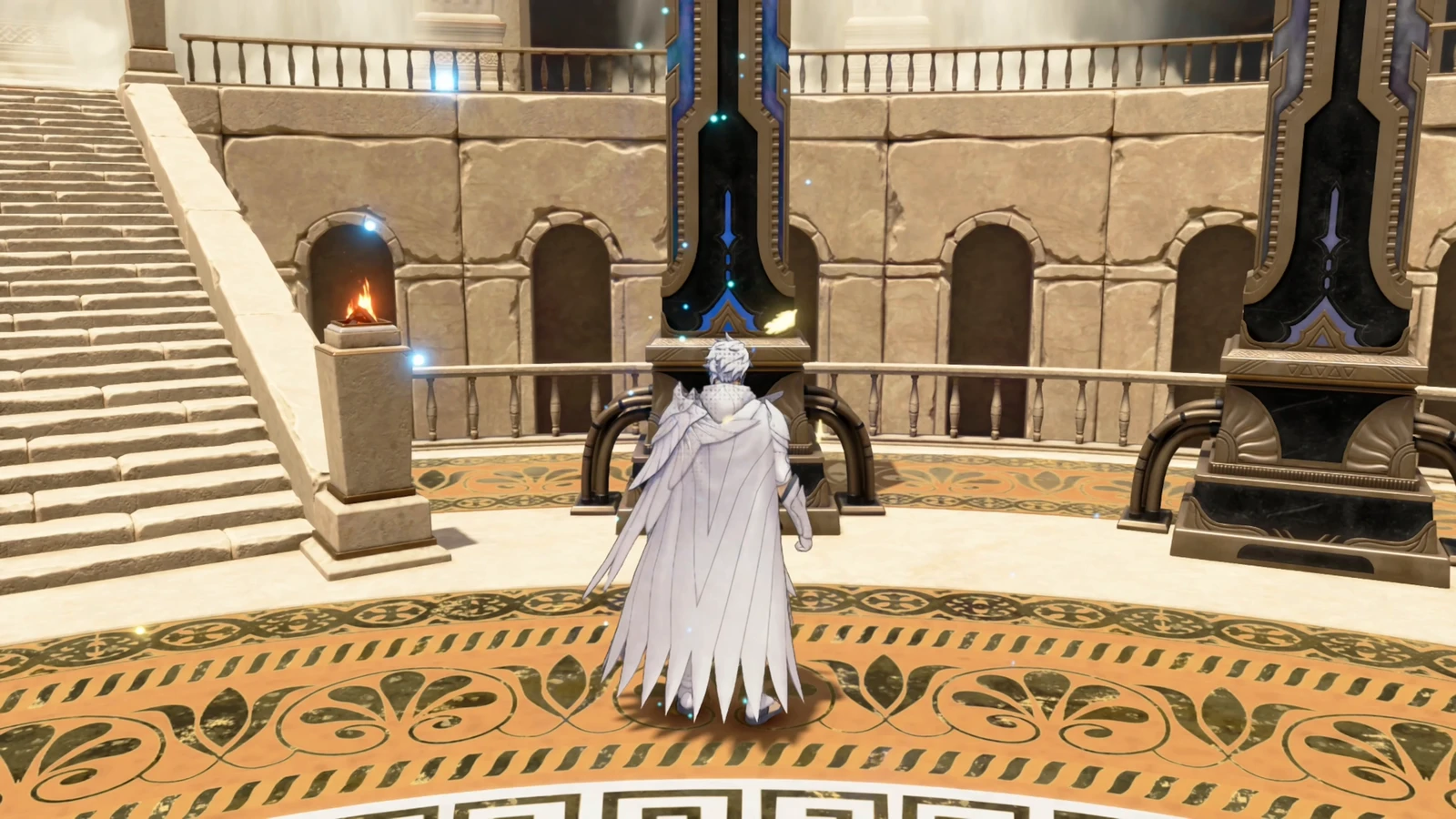
Once  Cai reaches the capital and the game opens up, find the perched Pale Raven to return to the obelisk chamber. Touch another obelisk to enter a different protagonist’s past. Cai’s progress remains intact, ready for your return.
You can sample whichever route interests you, or switch an entire cast and atmosphere after spending a long time with one group.
See both perspectives before matches on the same day
The Heroic Games last several months. The protagonists arrive in town and fight on different dates. I made a timeline of key matches, and whenever two routes have an event on the same day, I finish both sides’ preceding chapters first.
For example, Cai and  Theodora have qualifiers on the same day. I take Cai to the night before his match, then switch to the queen and play her earlier experiences. When both teams appear together in the cutscene, only half the field is no longer familiar. I have spent six or seven hours with each team and know why everyone is here.
Revisiting from another route thirty or forty hours later would make those memories less vivid. Seeing the meeting while both sides remain fresh gives the story more weight.
Four protagonists, four exploration loops
Cai enters to save his father, coming to the city with village companions in an intimate story. He gathers, fishes, and baits mounts on the map. A journey feels like searching for everyday supplies.
 Dietrich loves combat. Shipwrecked on Dagda, he hears about the competition and comes looking for strong opponents. Raising
 Answerer for blade challenges reveals nearby battles. He travels looking for fights rather than collecting things.
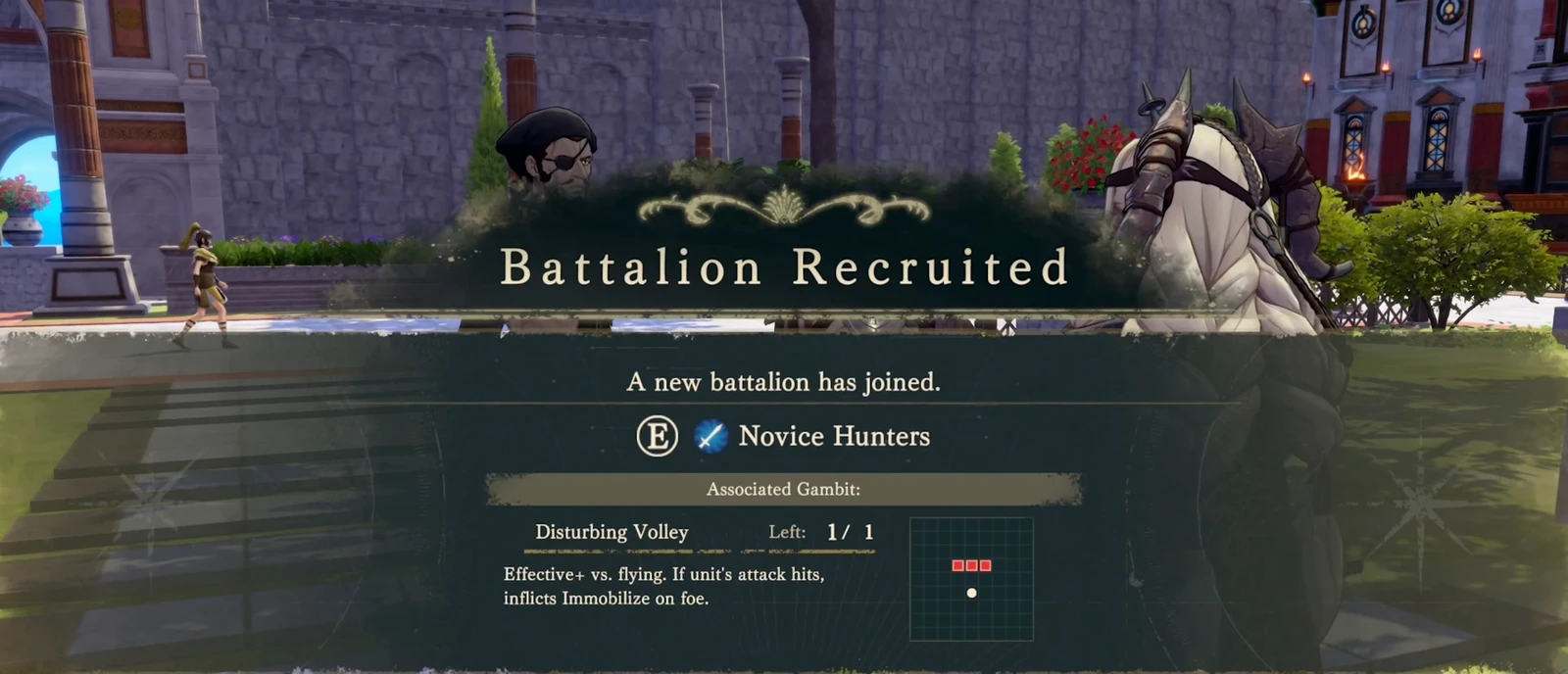
Theodora carries a coup, a throne, and the power of a new arm. She gathers supplies her country needs and sends them home for Battalions. She then deploys troops to gather resources or assigns them in battle for Gambits. The loop resembles a ruler directing a nation.
 Leda pursues a revenge list while also being an excellent
 Dancer. Given the next performance destination, she travels there with her team, earning experience, supplies, Renown, and stats afterward. Her map journeys feel like a performance tour. Bright shows beside cold revenge create a striking contrast.
Shared facilities unlock in different orders
Shared systems such as recruitment, meals, shops, and the arena unlock in different orders by route. Something available early on one may remain closed in chapter four or five on another. Earlier or later tools change how you plan the opening chapters.
The tone changes too. Dietrich’s route is dark and funny, with  Fabio’s vocal performance standing out. Leda’s is colder, combining revenge and stage performance. The queen’s involves coups, sailing, and a nation, with a longer opening setup. Cai’s centers on family and friends, smaller in scope but easy to root for.
Touching an obelisk therefore feels like wanting to see the next stop on that journey, rather than enduring the same routine again for another cutscene.
Finish weekly activities, then explore outside town
My experience divides roughly into thirds: tactical battles, world exploration, and social activity. Before the next match, visit temples, train, and spectate, then share meals and give gifts. Higher Support brings conversations and helps recruitment and combat teamwork.
The key is weekly refreshes. A week’s activities take only a few minutes. Then you leave the capital to explore instead of staying in menus. Social activity, exploration, and combat alternate, with another part arriving just as one starts to tire.
Clashes and main-story objectives
Meeting labyrinth enemies shifts to a Clash, with both sides in two lines using attacks and Linked Attacks. After a few fights, I enabled auto-battle. These encounters provide experience and treasure while exploring. Making every one as complex as a main-story map would weigh down the pace.
The main tactical battles are where I want to think carefully. Maps have more physical obstacles and varied victory conditions. One asks you to light more braziers than the opponent within ten turns, shifting priorities to movement, points, and route control rather than simply killing everything.
Portraits, voice acting, cutscenes, and music bring the four teams’ shared tournament to life. Watch a meeting, then return to see the other side’s journey there, and you keep wanting to understand why they said that line or made that choice.