

Three Houses lore refresher: Crests, Heroes’ Relics, and Seteth’s originsMajor spoilers
Starting with the war between Sothis and Agartha, trace the origins of Crests and Relics to connect the previous game with Dagda.
Original video: “Three Houses lore you need before playing Fortune’s Weave” | English channel Nagapedia | Watch the original
Fódlan’s borders and its ancient civilization
To understand the games' connections, start with their shared world. Fódlan is divided into an empire, kingdom, and alliance, with a Church-run monastery at its center. The Empire once ruled the whole continent; the Kingdom and Alliance emerged later.
Earlier history begins with Sothis’s arrival. She came from afar, could take human form, and used her blood to create the Children of the Goddess, also called Nabateans. Nabateans and humans once lived peacefully together, sharing knowledge and power. Humanity developed the technologically advanced civilization of Agartha from this exchange.
The Agarthan war and the origins of Crests
The Agarthans later went to war with Sothis and her children, wielding the devastating Javelins of Light. The war destroyed the land. Surviving Agarthans hid underground and passed their hatred down through generations; those who slither in the dark emerged from this history. After restoring the land, Sothis exhausted her strength and slept in the Holy Tomb.
Nabateans have human and dragon forms. Their Crest Stones provide power much like hearts. Even after physical death, power remains in their blood, remains, and Crest Stones. This became the root of the tragedy that followed.
Nemesis and his band attacked the Holy Tomb and killed Sothis. Her blood gave Nemesis the Crest of Flames, her bones became the Sword of the Creator, and her heart became its matching Crest Stone. The massacre at Zanado followed. More Nabatean remains became Heroes’ Relics, while their blood gave the Ten Elites their Crests.
Why the Church’s account hides the truth of the Red Canyon
The Church’s version says the goddess gave the King of Liberation a sword to end conflict, and that power and desire only corrupted him later. This account preserved Nemesis and the Ten Elites as heroes while concealing the Relics’ true origins.
Rhea is a surviving Child of the Goddess. Under a new identity, she gathered followers and allied with the Four Saints and the Empire’s founder. Her reason for hiding history also stems from the massacre: if humans knew Nabatean bodies could become sources of power, they might hunt them again.
The War of Heroes ended with Nemesis’s death. The Ten Elites’ families survived, and Crests continued down their bloodlines. Maurice lost control and became a Demonic Beast, then was erased from the history of the Ten Elites. The dangers connecting humans, Relics, and Crest Stones did not end with the war.
The overseas wars use a different calendar
Garreg Mach Monastery was built in Imperial Year 185. In 721, Dagdan forces attacked western Fódlan by sea and were repelled by the Empire. In 728, the Empire attacked the Brigid islands between the two continents. In 731, it invaded Dagda again, unsuccessfully.
These scattered records place Dagda within the previous game’s history. When comparing the games’ dates, keep their calendars in mind:
Fortune’s Weave does not directly use the Imperial calendar. You cannot compare its years by simply subtracting the numbers.
One Crest or Bloodmark can connect to several Relics
Crest inheritance is unpredictable. Children in the same family do not necessarily all have one. Fódlan ties Crests closely to family status, sometimes even abandoning children without them. The appearance of Bloodmarks and matching symbols in Dagda invites another look at the connection between these powers and the gods.
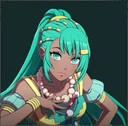 Esmeralda’s Bloodmark connects to the Crest of Blaiddyd, and her exceptional Strength echoes that association.
 Ninae corresponds to Gloucester, and
 Ursula to the Crest of the Beast.
 Dietrich comes from House Lamine, and his weapon also points to Lamine. These are entry points for understanding their backgrounds.
Do not assume each Crest can match only one Relic. The Crest of Charon connects to more than one weapon, and Lamine also has several associated Relics. Beyond the Ten Elites, Crest sources include the Four Apostles and Four Saints. The Four Apostles tried to revive Sothis using blood and a chalice. After failing, they dispersed, but their powers continued in different forms.
Seteth’s identity and Sacred Weapons
 Seteth is one of the Four Saints. He and his daughter present themselves publicly as siblings. He lost his wife in the War of Heroes, and his daughter was gravely injured and fell into a deep sleep. This explains his protectiveness, hidden identity, and cautious behavior.
Sacred Weapons and Heroes’ Relics both respond to Crests, but their origins differ.
| Weapon category | Source of power and materials |
|---|---|
| Sacred Weapons | Forged weapons infused with power |
| Heroes’ Relics | Nabatean remains and Crest Stones |
Transferring power through blood has a cost
Natural inheritance is not the only way to obtain a Crest. Rhea gave Jeralt her blood and extended his life. Sothis’s Crest Stone was implanted in an infant, saving the child and bringing another destiny into that body.
The Agarthans went further, using blood-transfusion experiments to force two Crests into one person. Edelgard was one survivor. White hair, shortened lives, and dead family members were the costs these experiments left behind. When you encounter Bloodmarks, divine blood, or newly made weapons, watch how power passes between people and who bears the consequences.
Those who slither in the dark also impersonate others to infiltrate positions of power and the Church. Finally, consider Shamir. She comes from Dagda and lost her companions in the war against the Empire. Her descriptions of a more relaxed, less restrictive homeland show life in Dagda beyond its war records.