

When four routes converge, exploration and army management come togetherMajor spoilers
Each route adds information. In the final chapter, exploration and recruitment become world-map warfare that gives nearly every ally a role.
Original video: Fortune’s Weave review: strategy and army management across four converging routes | English gaming channel IGN
Exploration pays off in commanding an army
Fortune’s Weave extends strategy beyond the battlefield. Who should train, who should dine together, and where should you explore next? Each demands choices. What excites me most is how these systems converge in the final chapter. The map you explored becomes the center of a war, and your accumulated army gains new management options. Almost nobody is left with nothing to do.
After a hundred hours, I still want to return to unfinished routes. New stories provide context, and new battles demand new approaches. That sense of constant expansion never stopped.
One save lets you switch routes and replay chapters
The story begins with a disaster caused by the risen dead. You return to the past to help four heroes survive the Heroic Games. How many people can return for the final chapter depends on how many stories you have followed.
I initially thought one save would limit replaying. In practice, the hub lets you switch protagonists’ routes freely and revisit completed chapters. Time travel becomes part of playing: seeing another story or revisiting content does not require a whole new playthrough.
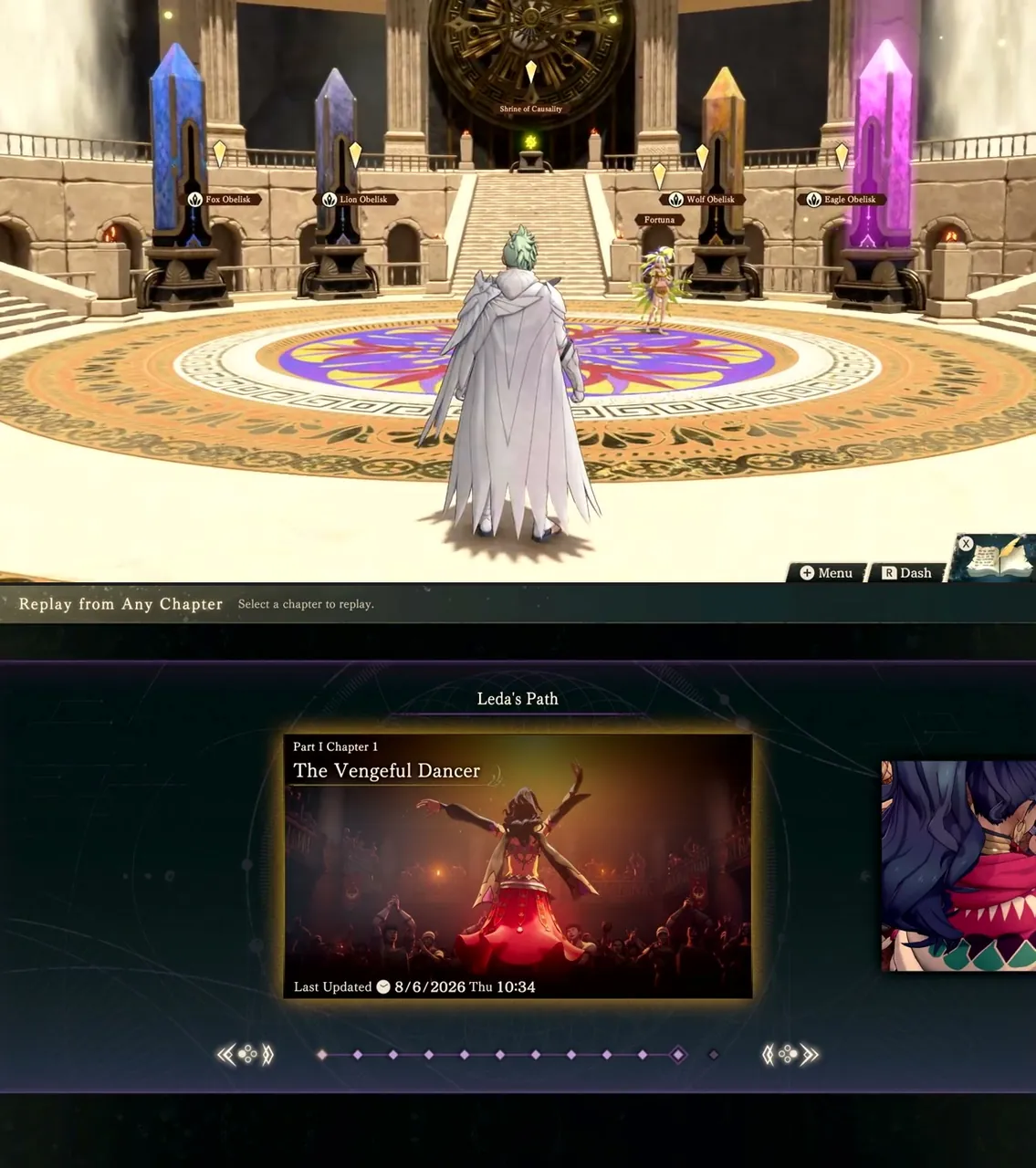
Four protagonists reveal different clues
 Cai,
 Dietrich,
 Theodora, and
 Leda come to Dagsion for their own wishes. Each route alternates tournament battles with personal experiences, revealing different sides of the same god-ruled city.
Hidden manipulation is nothing new. What interests me is which clues each protagonist finds. Another route adds another explanation to earlier events.  Eshmel’s retreat into the background in the first half works well: the heroes establish themselves first, while he appears at crucial moments to ensure they survive into the present. Otherwise, he stays in the city as a white bird, building connections.
Changing battlefields and the cost of Blaze Arts
Weapon traits change target selection: lances are more effective against cavalry, while gauntlets increase Avoid. As your party grows stronger, Combat Arts and skills multiply, but the main story keeps introducing sudden threats, terrain hazards, and obstacles. I have to rearrange formations and stay mobile.
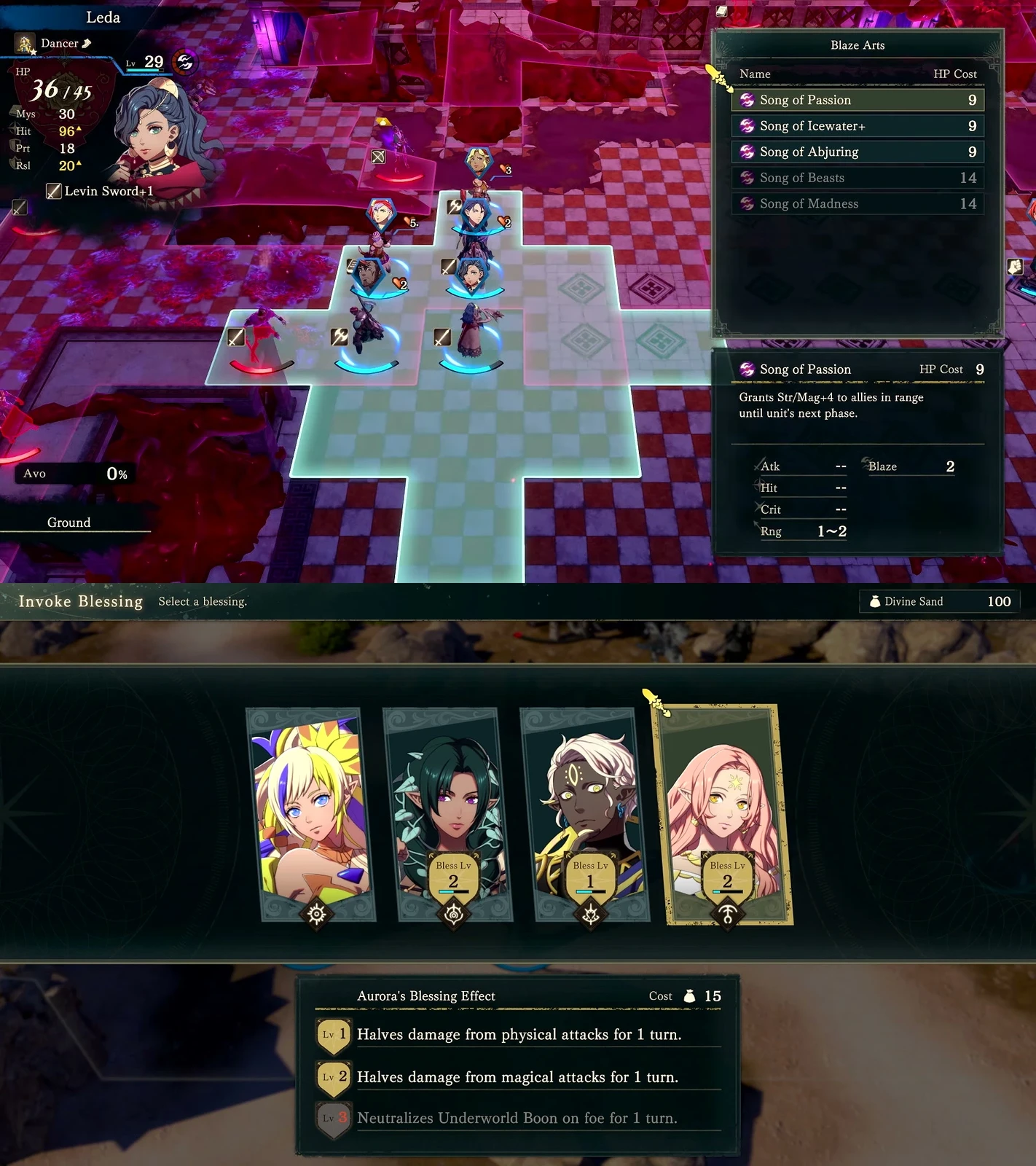
Blaze Arts are my favorite addition. Leda’s performance gives allies the power to fight the risen dead without everyone needing rare effective weapons. But using it costs HP and can leave her exposed to a lethal attack. The more attractive the payoff, the more carefully you must consider remaining HP and the next engagement.
Plan blessings and sand costs before battle
As combat grows more complex, divine Blessings offer temporary accuracy, Avoid, damage absorption, and other help. They can carry your team through the next round, but you must equip the right ones beforehand and decide when to spend limited resources.
Return for weekly activities during long journeys
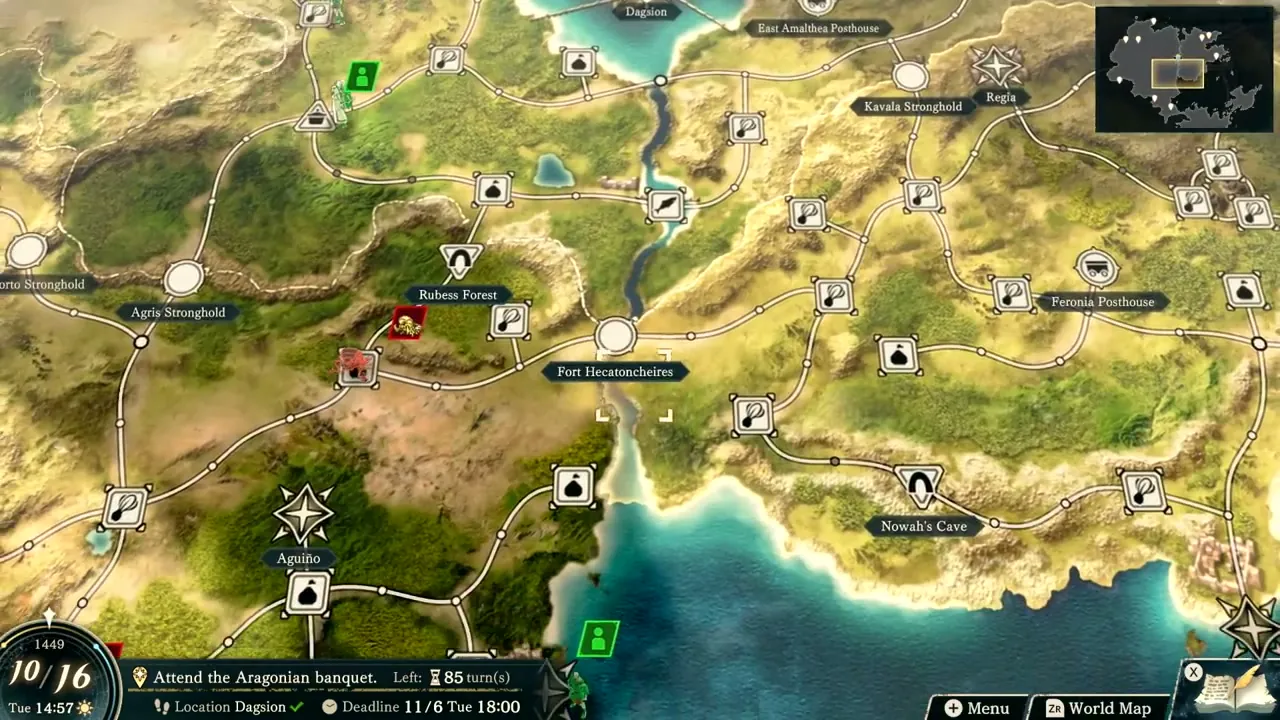
Training and bathing in town do not directly advance time. Once you leave, world-map travel opens up time management. Each chapter gives several weeks to over a month. While opening routes and finding side quests, I must plan when to return for activities.
Many resources inside and outside the city refresh weekly, making return trips meaningful. But new paths and hidden dungeons are tempting, and I often delay returning to uncover a little more map. Simplified turn-based cave battles feel like short minigames. Early on, a high-Defense character can sometimes absorb everything. As enemy types expand, your approach must change.
Choose recruitment and exploration targets first
Each protagonist arrives at the Heroic Games with a small party and needs recruits for larger contests. Renown, Support, and negotiation conditions can vary by protagonist. Reserve town time to build relationships and look for suitable gifts while traveling.
I initially worried freely recruited mercenaries would contribute little to the main plot. Instead, this gives core companions more space to develop relationships, while rivals show their strengths when cooperating in preliminaries. Completing their special tasks also has far-reaching consequences.
When I felt overwhelmed trying to do everything, I found a comfortable approach: treat it as a buffet and choose what you want first. Leave unrecruited characters and unvisited dungeons for another protagonist.
Late-game warfare and army management
Part 2 removes the calendar and exploration for a more focused stretch with larger maps and harder battles. The final chapter reunites the stories and gives the familiar world map a new purpose in war. Managing a large army connects directly to earlier exploration and development.
The last missions push “keep as many allies alive to the end as possible” to its limit. Earlier play trained both battlefield judgment and time management. Here, both face their test together, giving the ending its weight.
Why I gave it a perfect score
This is my first 10. What pushed me there was how often it exceeded my expectations for Fire Emblem and the genre. Just when I thought I understood what I could do next, another concept or challenge appeared.
The schedule grants more freedom too. Each day, you can choose training, socializing, supplies in a new town, or a dungeon. Revisiting chapters to inspect scenes and check quests is especially useful when writing reviews and guides. Even purely as a player, following your own priorities and trying another arrangement on another route is already compelling enough.