

Fifteen opening preparations: handle city business Sunday and visit story destinations earlyMinor spoilers
Fifteen preparations in video order, from modes, protagonists, and deeds to recruitment, training, Blessings, money, classes, and story deadlines.
Original video: Fifteen opening essentials: protagonists, Renown, recruitment, money, and classes; Japanese gaming channel Wight’s Game Guides.
Sunday suits training, dining, and Divine Service together. Visit outdoor story destinations once in advance, then allocate the remaining free turns.
1. Choose difficulty and mode, then adjust displays
Start with Normal/Casual if new. Hard increases enemy strength and numbers. You can lower Hard to Normal but cannot raise Normal to Hard. Casual returns fallen allies after battle; Classic permanently removes them. You cannot switch Casual and Classic midrun.
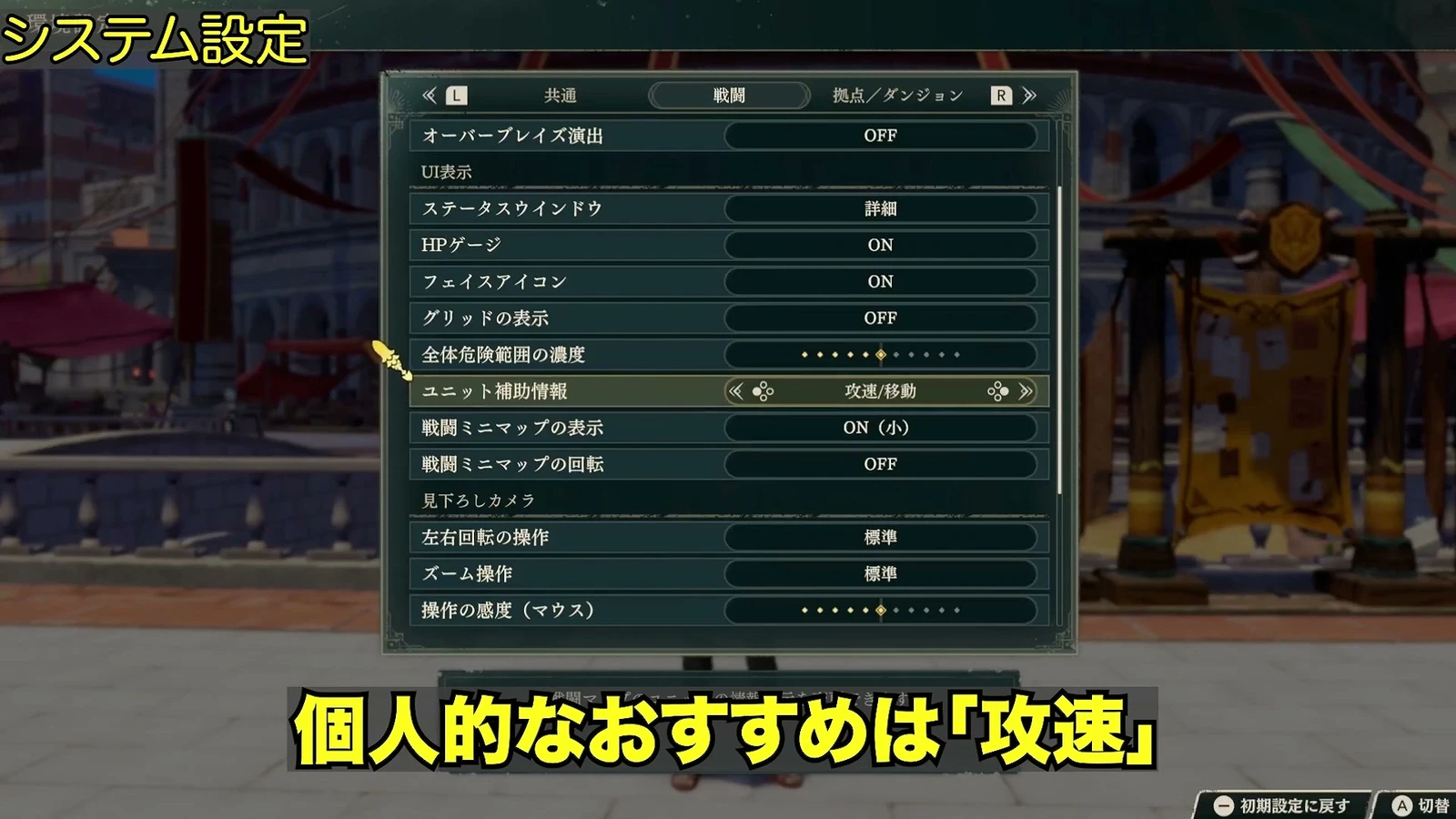
Increase game speed and choose battle animations to taste. Display Attack Speed in unit assistance information. Exceed an opponent by four for a follow-up.
2. The four protagonists’ unique systems
 Cai captures and cares for animals to strengthen mounted units, cultivates crops, and helps people.
 Dietrich finds enemies with Blade Resonance, learns Combat Arts through duels, then upgrades and teaches them.
 Theodora recruits Battalions, equips gambits, and delivers military supplies.
 Leda performs for money and Renown and hears about secret locations.
Cai offers a straightforward introduction. After some progress, the Pale Raven’s Perch lets you retain route progress and switch protagonists, so starting with your favorite also works.
3. Claim Notable Deeds for Boons of Salvation
Completed Notable Deeds award Karma Shards. Spend them on Boons of Salvation for permanent benefits shared by all protagonists.
Consider EXP first, then weapon or gift discounts according to spending. Weapons cost more individually, while gifts are bought repeatedly in bulk. Both save meaningful money.
4. Collect ground and dungeon materials along the way
Gather ground materials, dungeon containers, and minerals while passing. Quests, repairs, and upgrades need them, while valuables sell for money. Check tavern corners, the downhill path, shops, flowerbeds, and behind sheds. Cai also needs fertilizer.
Revisit material points weekly. Dungeon containers and minerals refresh too, but enemies return only next chapter. A material refresh does not mean enemies have respawned.
5. Raise Renown to expand your options
Renown affects recruitment, facilities, and map access. Beyond the main story, do side quests, available temple audiences, and route-specific activities. Cai helps people, Theodora prepares supplies, Leda performs, and Dietrich fights encounters. Prioritize deadlines.
6. Travel directly to facilities, characters, and quest givers
The map offers travel by district, facility, or character. Select a shop facility or gift recipient directly instead of arriving at a district entrance and running farther.
Accepted quests also let you visit their giver from the task list. More world-map travel points unlock later, saving repeated walks from the capital.
7. Explore dark areas for new paths
Dark map areas may connect to roads, and dungeon exits can lead to new regions. Settlement conversations and purchased maps expand your information too.
Some map discovery carries to later protagonists. Explore more on the first route to ease later runs. Along the way, find merchants, gathering points, encounters, and dungeons for equipment, materials, and levels.
8. Choose recruitment targets and steadily build support
Speak to orange character markers, then inspect stats, growths, personal skills, and recruitment conditions. Renown and support are the main gates; some require questions or quests too. Pick a few desired units and focus relationships.
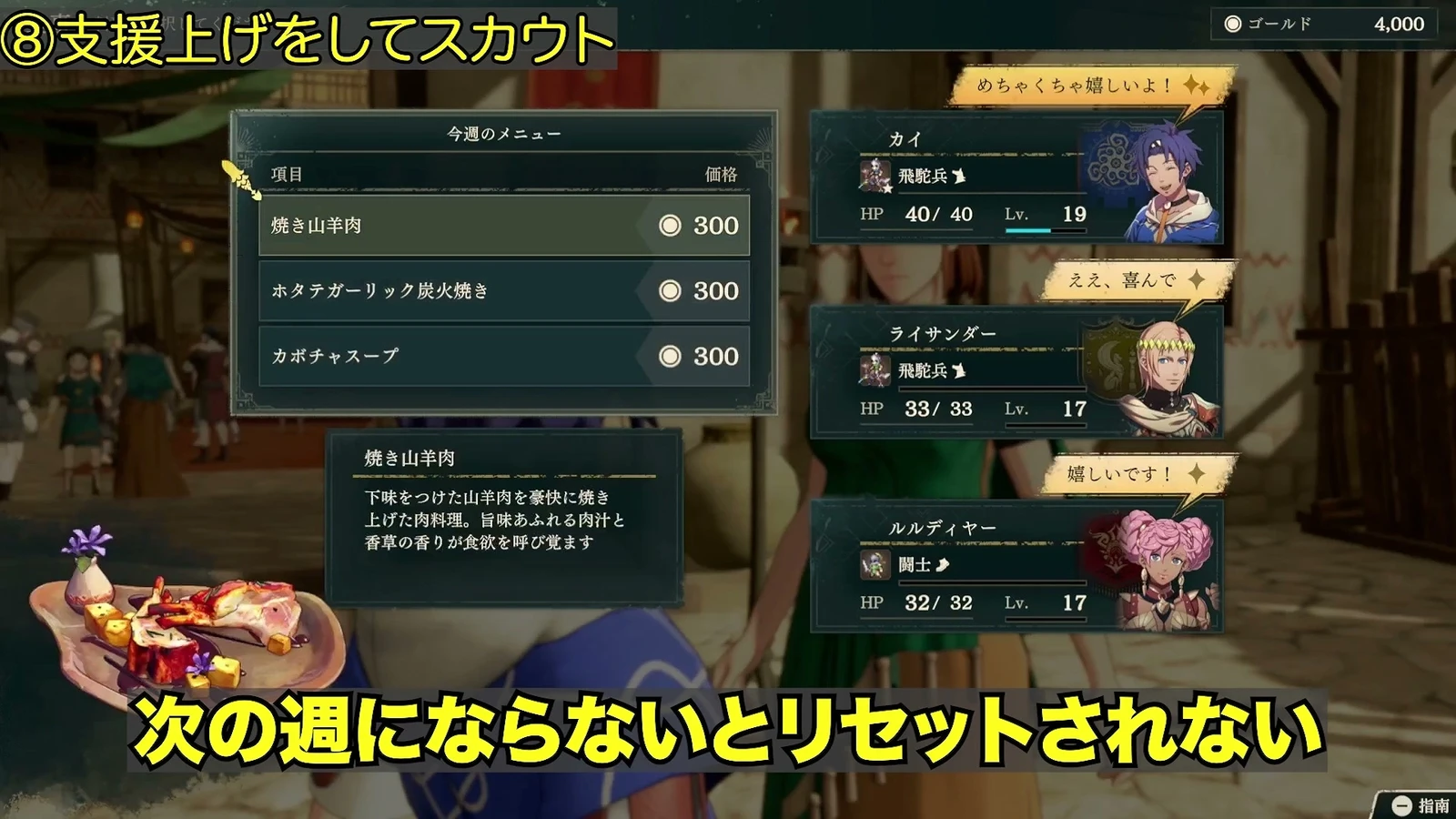
The first gift unlocks recruitment negotiations and meals, but joining still requires meeting the conditions in character information. Give preferred gifts, then have the protagonist take the target for a meal they like. More stars make a great success more likely. Gifts and menu choices have weekly limits, so start early to avoid having enough Renown but insufficient Bond.
Gift shops, taverns, field merchants, and settlement trades supply gifts. More recruits add combat choices and better returns from automated activities.
9. Stack strengths and class bonuses in skill training
Proficiency unlocks skills, Combat Arts, and stronger weapons. Each arena course is once weekly for up to two people, costing money and Motivation.
| Training day | Cost per session |
|---|---|
| Weekdays | 300 gold |
| Saturday and Sunday | 150 gold |
Combat trains the weapon used. Automated activities, manuals, and matches on specific dates help too. Use weaker weapons for more attacks before a fight ends. Overlapping character strengths and class proficiency bonuses speed training considerably.
10. Set calendar reminders for matches and birthdays
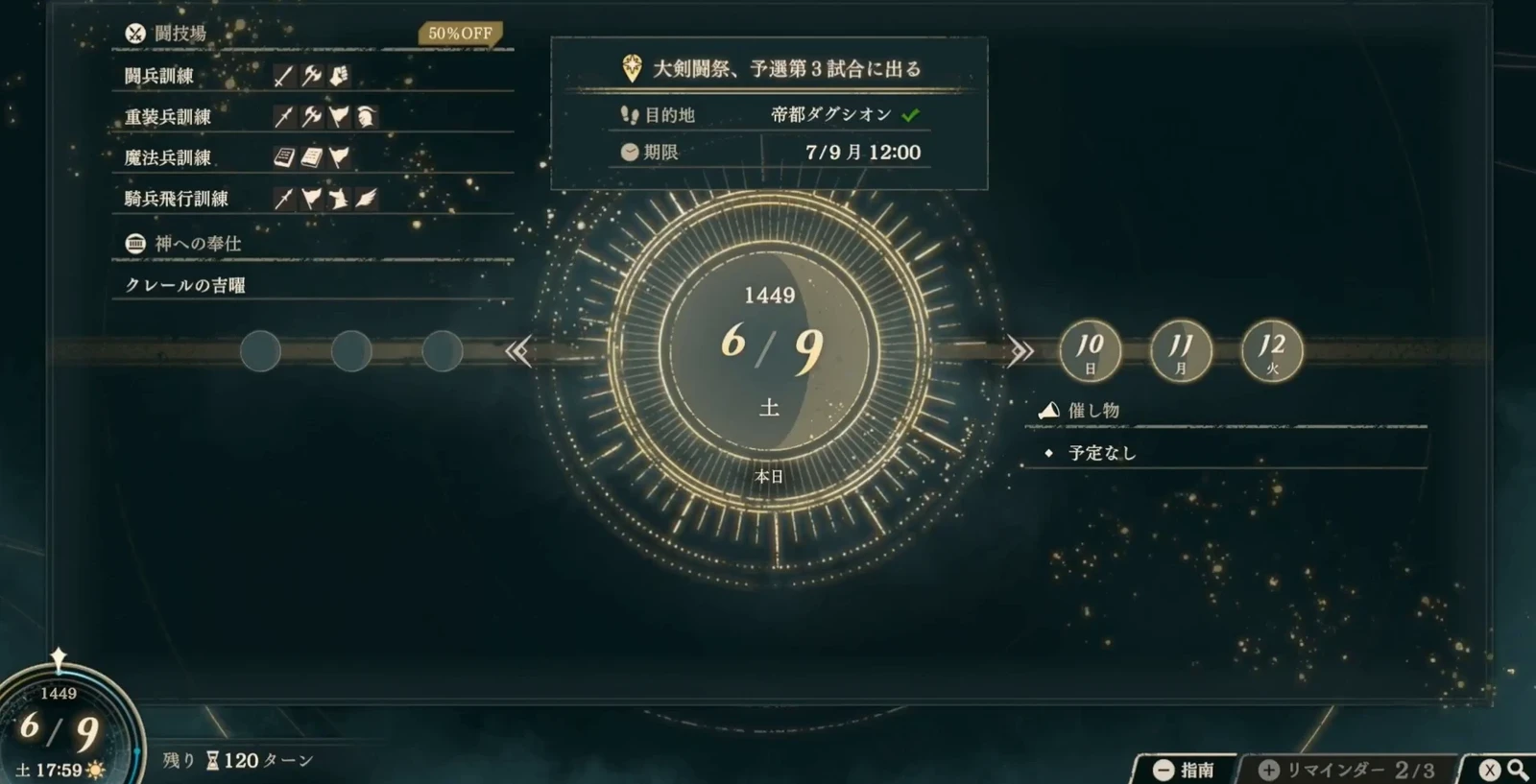
Matches are available only on specified dates and times. Check before an expedition and set reminders. Miss the return window and you cannot attend.
The calendar also shows training, Blessing bonuses, favorable gathering days, and birthdays. Prepare favorite gifts and plan travel around these activities.
11. Perform service on bonus days for Blessings
Weekly Divine Service spends Motivation to raise Blessing levels and unlock battle effects. Follow calendar bonuses; every temple receives one Sunday.
For offense, train Kalla's Blessing for Avoid, Speed, and Movement. Damage reduction and healing have value in hard battles too.
12. Group weekly city activities on Sunday
Schedule weekly training, meals, service, gifts, and Pale Raven’s Perch interactions. Attend available temple audiences for Renown. Have intended riders care for their chosen mounts, prioritizing favorite feed rather than raising every animal with everyone.
Training is half price on weekends, meals Sunday, and all temples gain service bonuses Sunday. When near the capital, returning for these activities together is worthwhile.
Prioritize recruitment support at meals. For Motivation alone, one turn of lodging restores everyone. Gifts restore it without spending a turn.
13. Do quests and sell valuables for income
When short of money, do side quests and sell items explicitly meant for cash. Weapons sell cheaply and may suit new allies, so do not rush to empty them out.
Valuable-material points and automated exploration also earn money, with better automated returns from more allies. Cai helps people and explores city dungeons; Leda performs; Theodora delivers supplies; Dietrich repeats encounters. Prioritize yellow enemies dropping valuables.
14. Certify, change class, and complete mastery
Exams consume licenses without refunds on failure. Levels and skills affect pass chances. Aim to develop toward levels 5, 20, and 35 for beginner, specialty, and advanced classes respectively. If success is low, train levels and proficiency first.
Classes change weapon access, stats, and growths. Consider needed stats, proficiency strengths, and the intended role together.
Skills learned when the class mastery bar fills remain equippable after changing classes. Master the class with the effect you need, then switch to your final role.
15. Visit the main-story destination once beforehand
Spend remaining turns on training, recruitment, equipment, exploration, and combat. Use automated activities when nothing else remains. For faster leveling, seek enemies and dungeons slightly above your level.
If the story destination is outside town, visit once while turns are plentiful. Afterward, you can start the story through the menu, or it advances automatically at the deadline. Never visiting before time runs out causes failure and a restart from chapter beginning.