

Before you start: the world of Fortune's Weave
You can start here without playing Three Houses. Remember Dagda, four wishes, and the dates 1449 and 1454. The game has Games, War, and Salvation parts; its four routes show different perspectives on the same period.
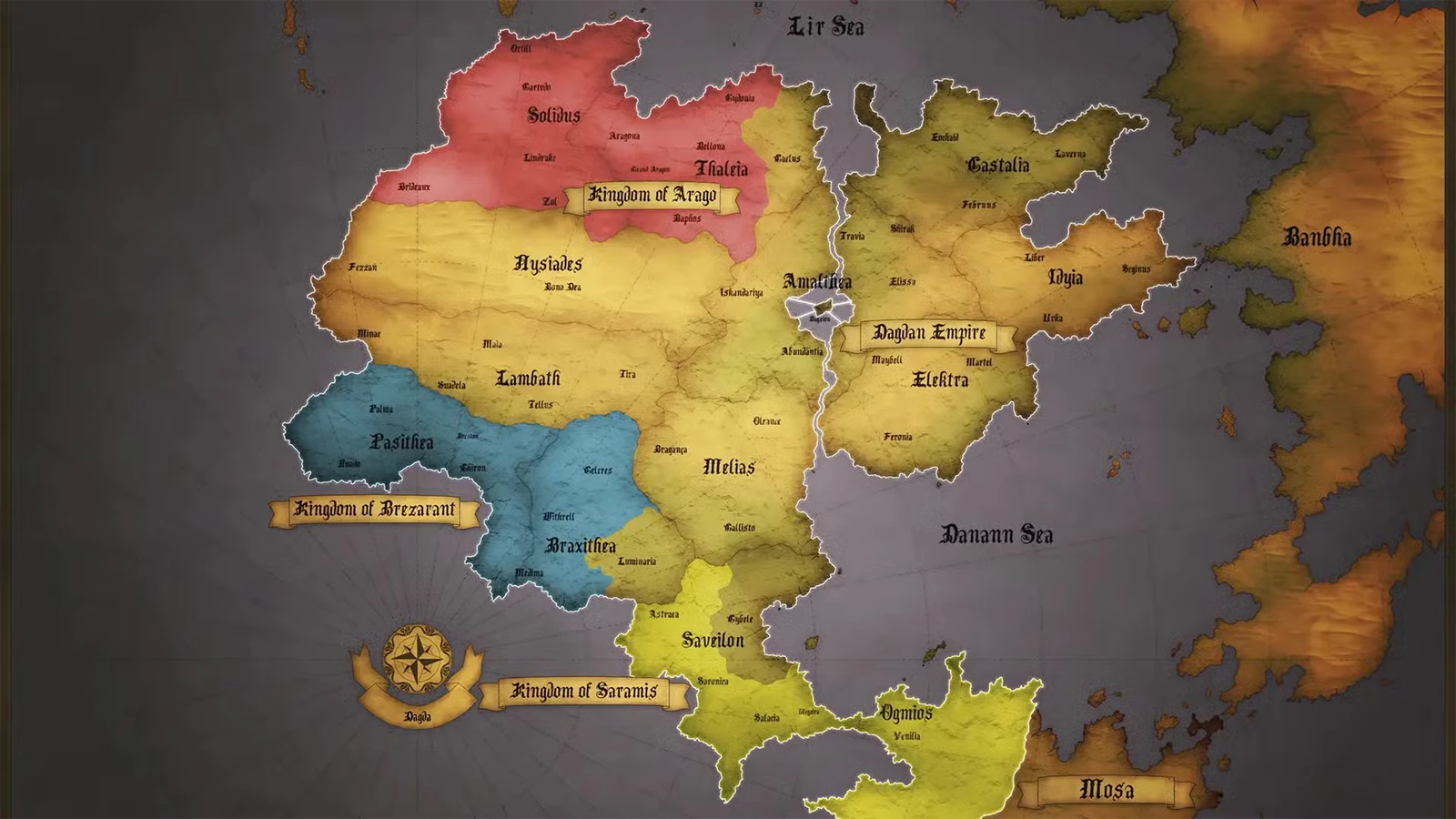
- Where: Dagda, across the sea southwest of Fódlan, the setting of Three Houses. The Dagdan Empire is suzerain over three kingdoms that retain their sovereignty.
- When: Two years feature in the game: 1449, the Heroic Games and the four protagonists' stories, and 1454, the apocalyptic world after the Demon God Balor's resurrection and the Promised One's story. Comparing dates of a shared historical event suggests 1449 corresponds approximately to Three Houses' Imperial Year 453, about 727 years before that game's opening. This is an inference; exact months and days need separate checking. See the Timeline for the method.
- Do you need Three Houses first? No. The developers explicitly want players to enjoy the whole game without having played Three Houses. Returning players will recognize extra names and setting details, covered in Connections to Three Houses.
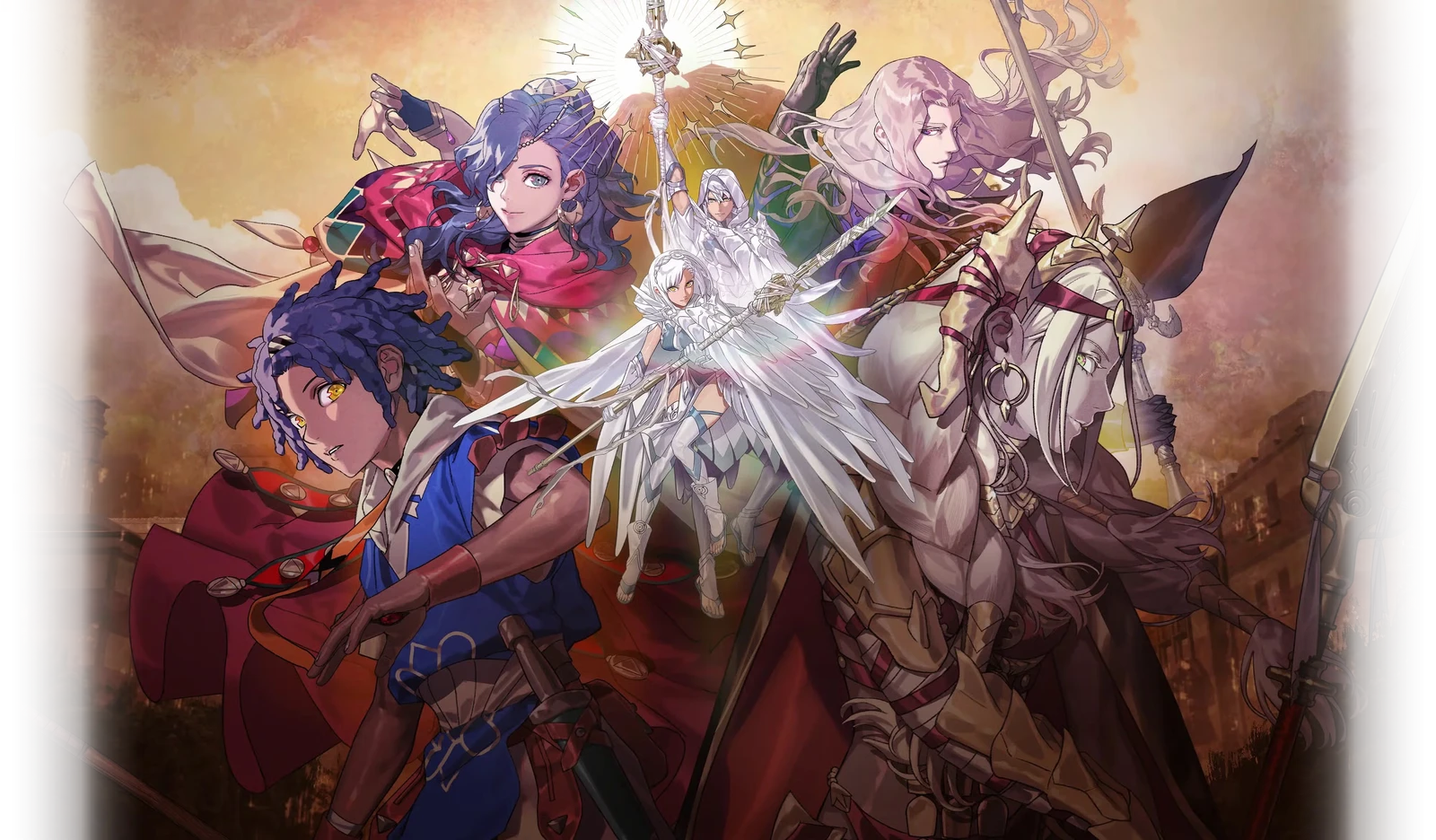
Three parts: Games, War, and the Promised One
Progression is divided into the Heroic Games, War, and Promised One's stories, with character stories followed by War. The Heroic Games take place in 1449 and the apocalypse in 1454; the story opens with the latter:
- 1454: Balor, King of the Underworld and Demon God, returns. Armies of risen dead burn cities and slaughter villages as the world faces destruction. A powerful Promised One appears: your character, default name Eshmel, with male and female options. Fortuna, goddess of fate, says one person cannot win; allies must be gathered.
- Fortuna chooses four warriors. All are already dead in the future shown at the opening, but they possess the power to change fate.
- Using Fortuna's power, the Promised One returns five years to 1449, intervening in their pasts to rewrite their fates so they can survive and fight together in the future.
- In 1449, the imperial capital Dagsion holds the Heroic Games. Four people enter with different wishes, while others act in secret behind the scenes.
Any of the four warriors whose story you finish can join you in the decisive battle against Balor. You can also bring none and challenge him alone.
Prologue: Descent (1454) → Part I: four protagonist routes, 12 chapters each (1449) → Part II: War → Part III: Salvation (returning to 1454). You can change protagonists partway through Part I by speaking to the white bird. See Chapter progression, starting with The White Bird. To avoid missing side stories, see Paralogues.
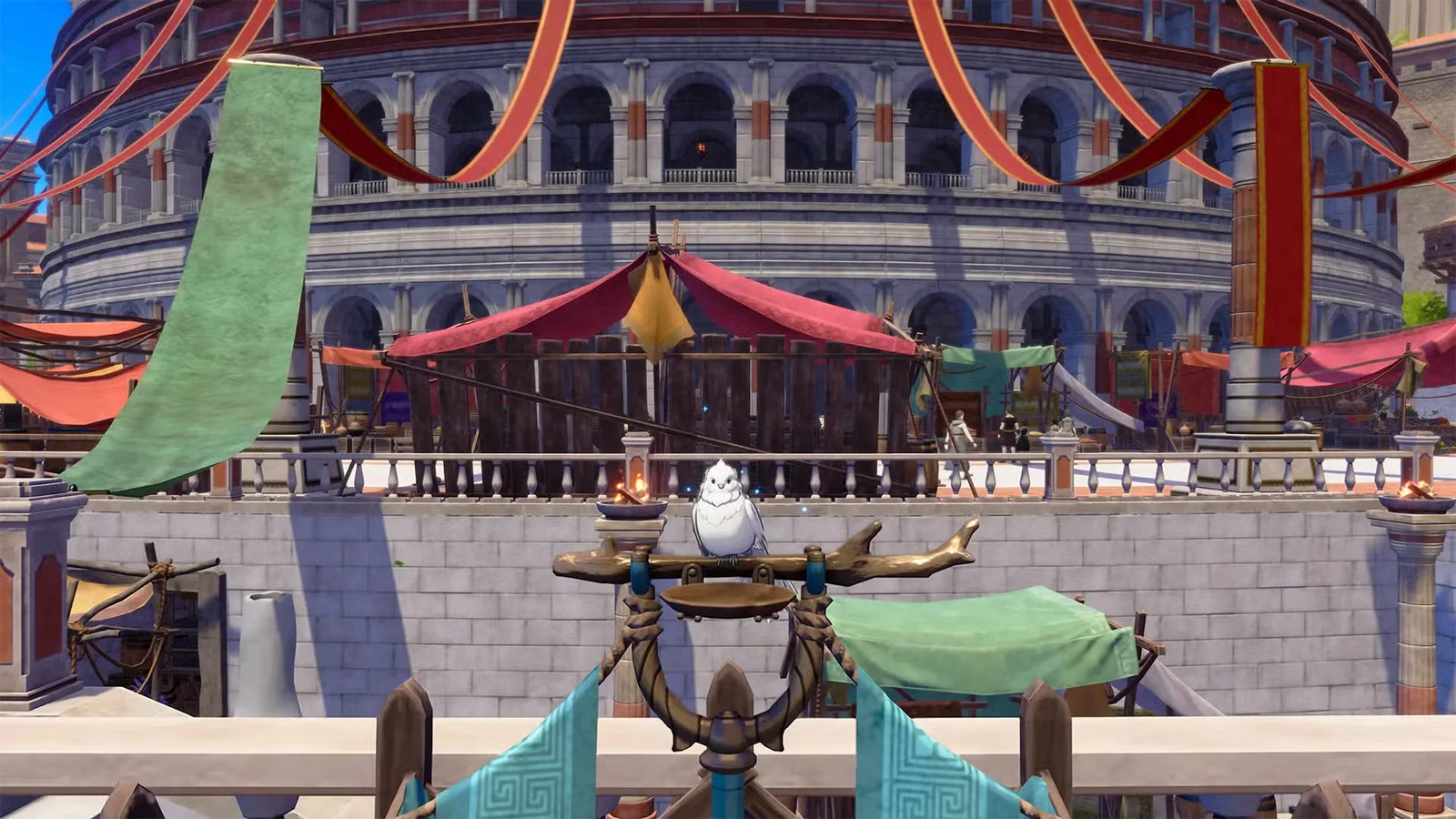
Originally, after choosing a protagonist, you followed that person's story to its end. The Promised One and return to the past were added later to connect all four experiences. Another change narrowed eight perspectives to four; see The protagonists.
Gods and humans live together in Dagda
Fódlan has strict rules of doctrine and noble lineage. Dagda is vibrant beneath blue skies and strong sunlight, with architecture inspired by the ancient Mediterranean. People worship several gods, and those gods live among them. You meet actual gods in temples and ask for blessings; see Blessings.
The empire and three kingdoms in northern Dagda, 1449:
| Power | Location | Description |
|---|---|---|
| Dagdan Empire | Northeast | Founded by the divine Emperor Dagda around 1400–1500 years ago. Its lakeside capital Dagsion has over a million inhabitants. The emperor now sleeps, and the sun god Solel rules in his place as Divine Sovereign. |
| Kingdom of Arago | Northwest | Founded by the demigod hero Arago; connected to  Leda's past. |
| Kingdom of Brezarant | Southwest | Its founding legend connects to the war god Mars's bloodline. |
| Kingdom of Saramis | Far south |  Theodora is its current queen. Writing is forbidden, and history survives entirely through oral transmission. |
All three kingdoms recognize imperial suzerainty while retaining sovereignty. The surface is peaceful and prosperous, but each harbors embers.
Gods: Dagdans worship Emperor Dagda, namesake of their land, and the gods connected to him. They include:
- Solel: Sun god, Divine Sovereign, and ruler of the empire.
- Fortuna: Goddess of fate, willful and averse to trouble. She manipulates fate within limits; rewinding is her power.
- Kalla: God of hunting and the arts, supporting artists and musicians.
- Mars: War god, exceptionally strong even among gods, who likes settling right and wrong through combat.
- Aurora: Goddess of stars and navigation. Her father Solel forbids contact with outsiders, so nobody can meet her.
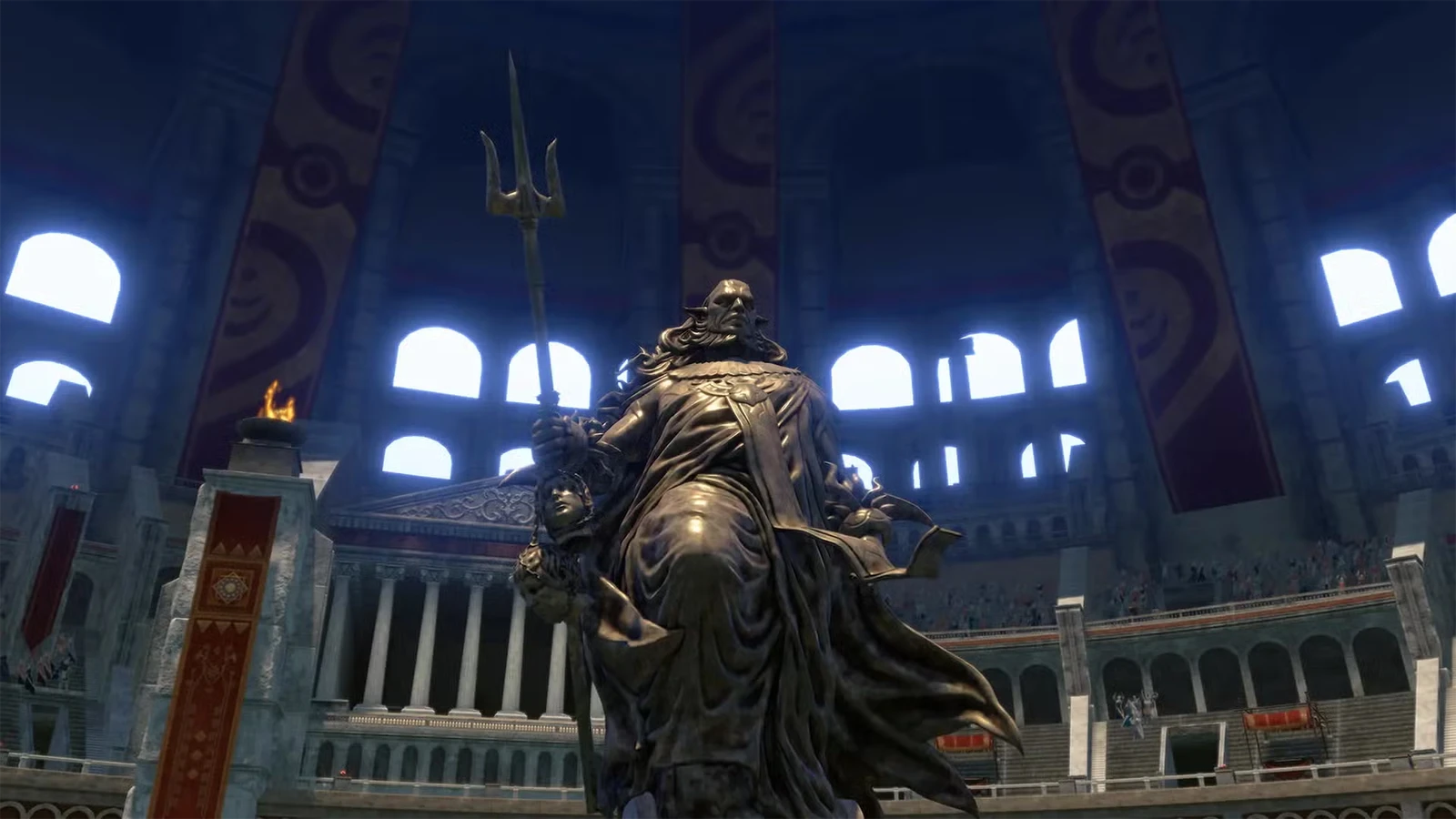
Four different wishes bring the protagonists to the Games
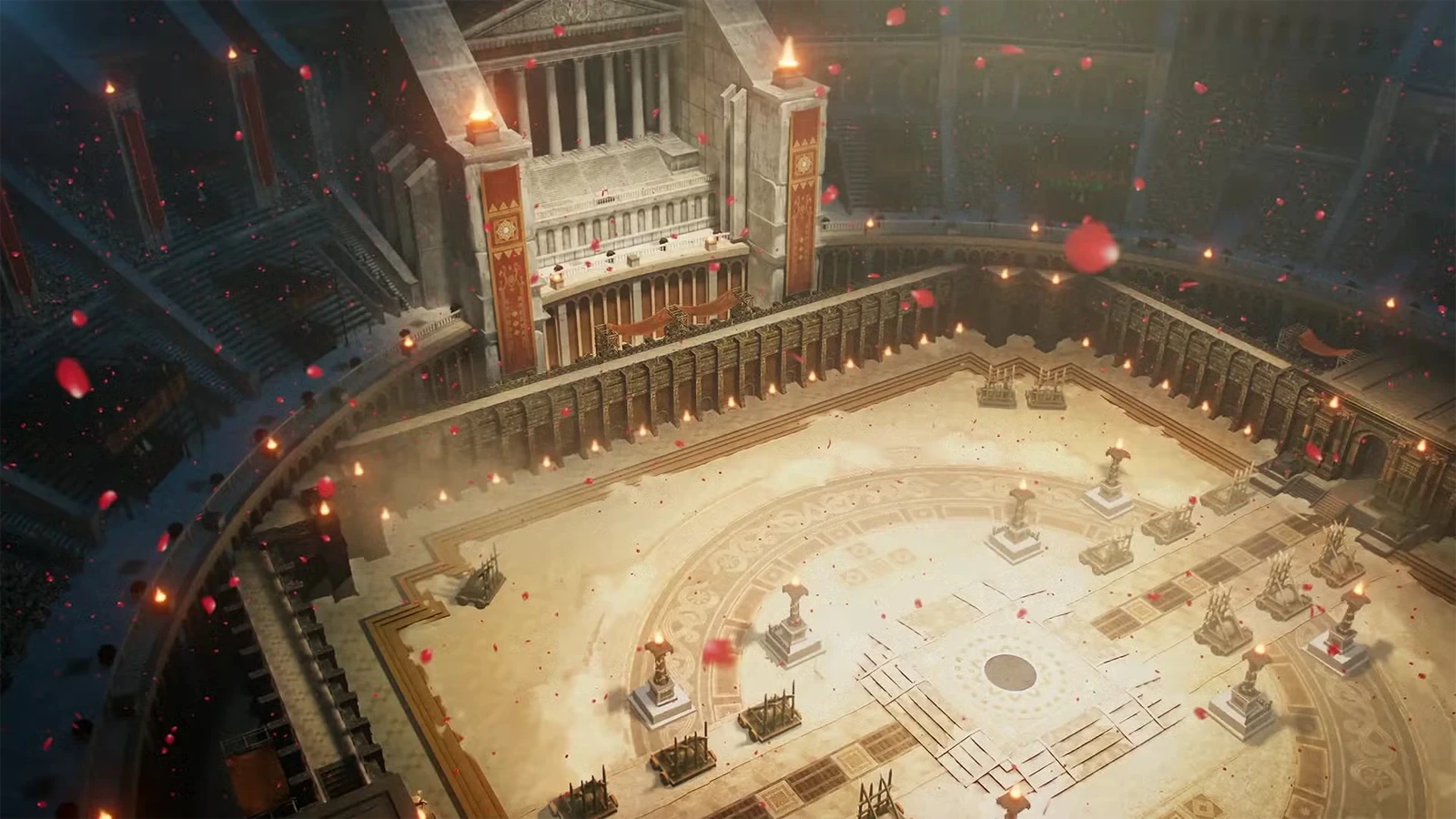
The Heroic Games, formally the Dagsion Heroic Games, are a festival of the century announced by the Divine Sovereign, presented as sacred battles dedicated to the sleeping Emperor Dagda. They last more than half a year, with entrants competing as teams. The tournament promises to grant the winner any wish. Granting a wish is the tournament's pledge. The four enter to save a father, find strong opponents, serve country and faith, or pursue revenge. They share an arena but seek different things.
The four protagonists and their teams:
| Protagonist | Team | Reason for entering |
|---|---|---|
 Cai | Ribeira Winds | A boy living an ordinary life with his father, with a ruby of mysterious power embedded in his left hand. His father is imprisoned, so he enters with two childhood friends to rescue him. |
 Dietrich | House Lamine | A handsome swordsman from Fódlan across the sea, lacking humanity and trusting only himself. He seeks stronger opponents to satisfy his desire for battle, carrying the demonic sword Answerer [note 1]. |
| Theodora | Megaira's Beacon | Saramis's young queen, whose right arm can shatter stone, enters to fulfill her homeland's centuries-old wish. |
| Leda | Rose Tempest | An accomplished vihuela player with a cheerful exterior and deep darkness within, devoted to revenge: personally kill her father's murderer and restore his honor. |
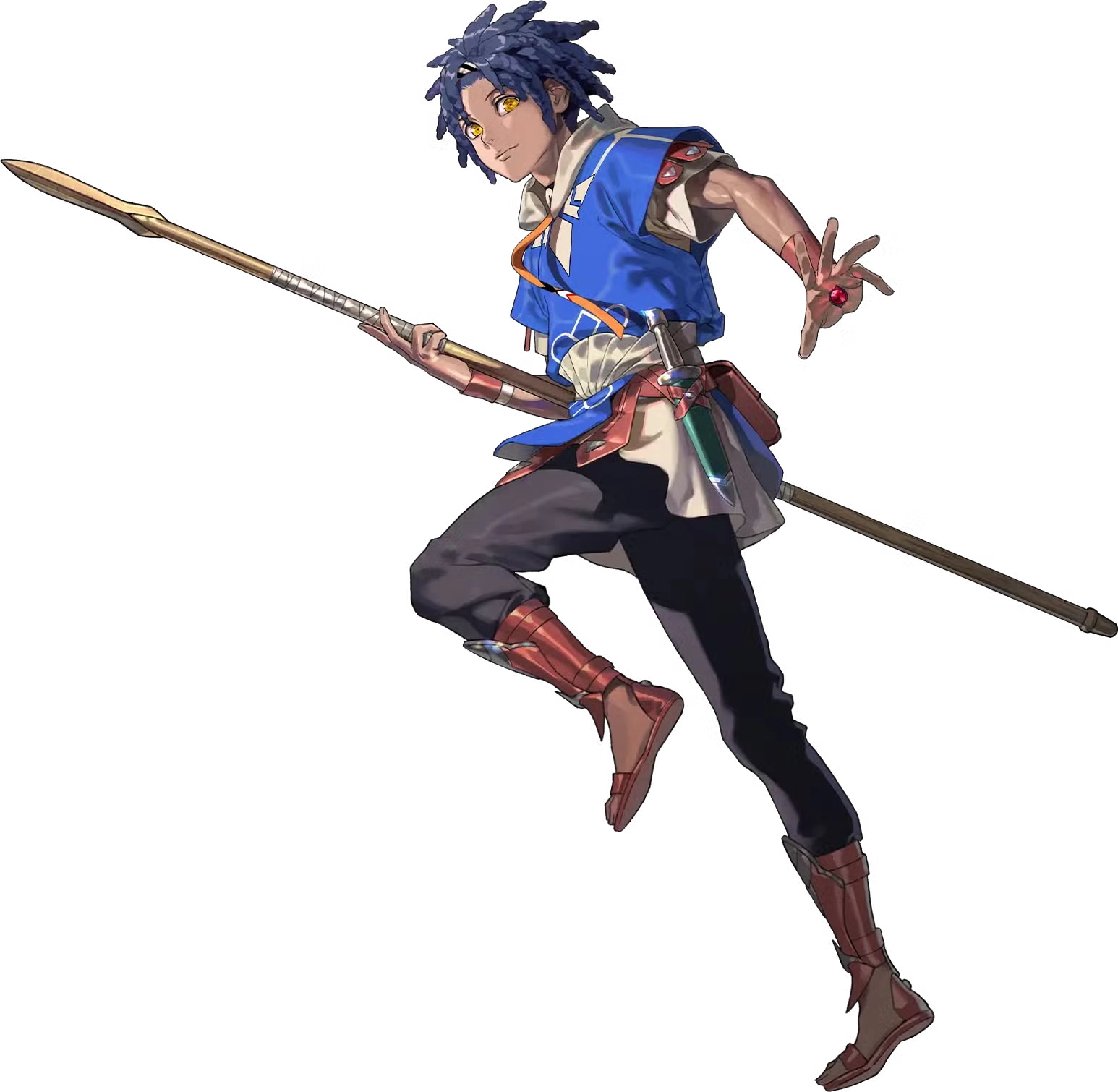
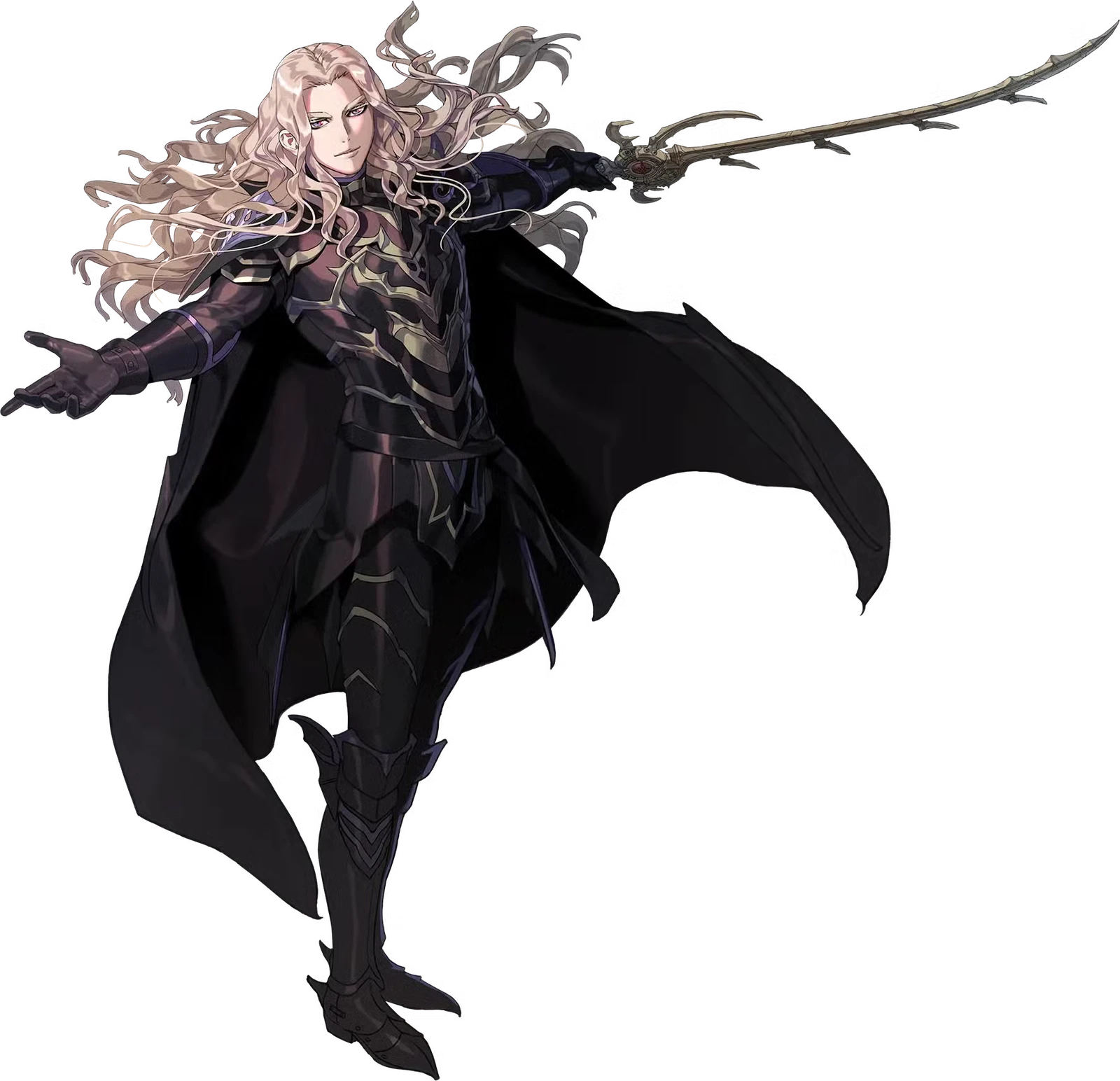
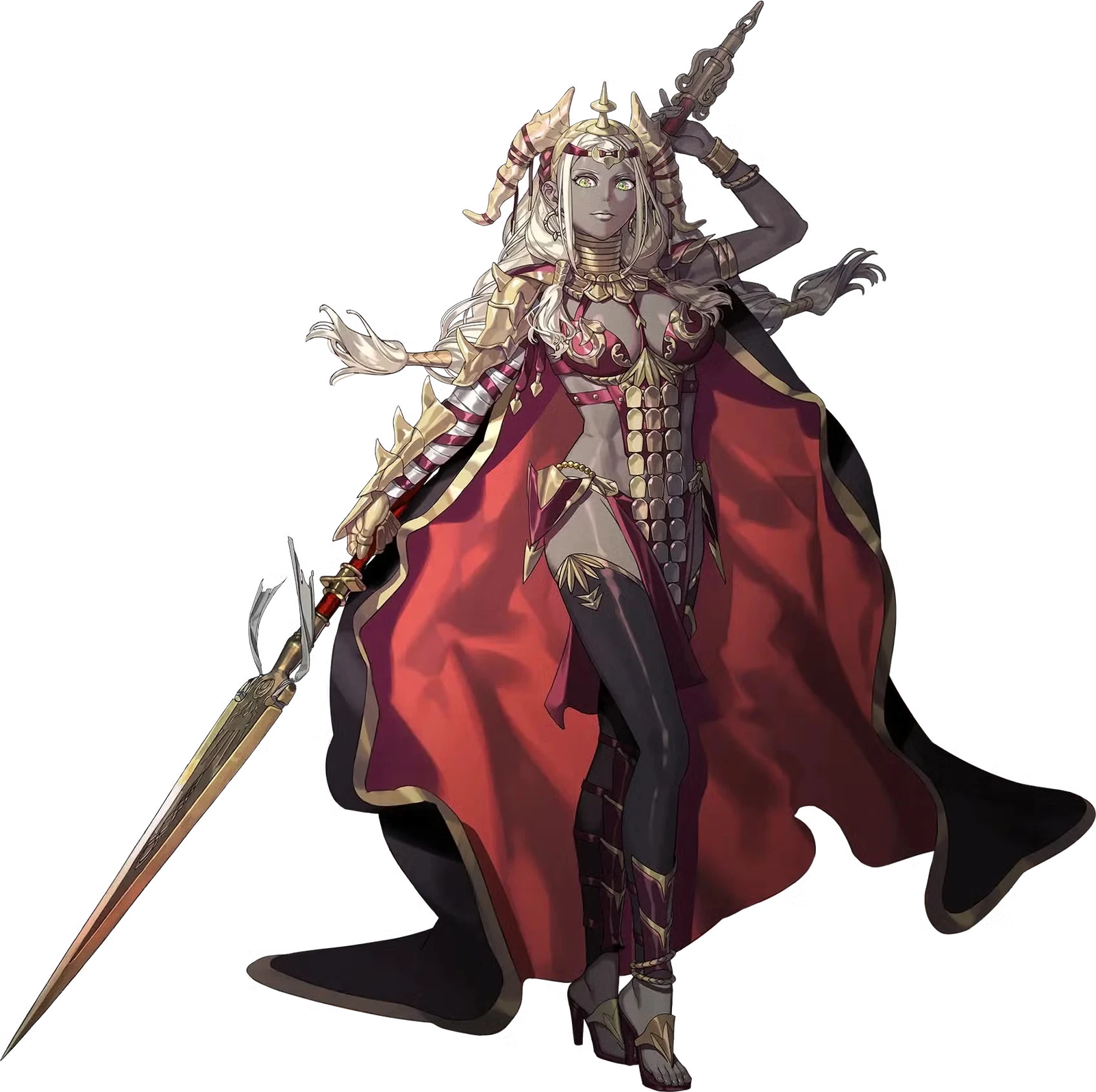
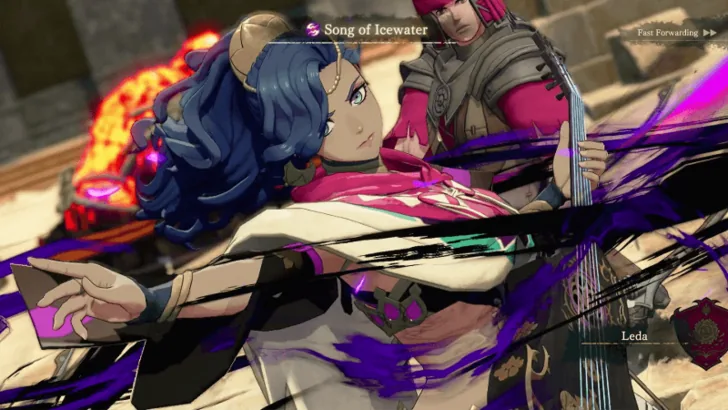
The four routes show the same Heroic Games from four angles. An opponent on Cai's route may be another route's protagonist. Playing more routes fills in causes absent from one perspective. Arrival and registration differ, for example: some arrive in time for normal entry, while Dietrich reaches the city later and gets in differently. A mysterious woman on Leda's route receives more explanation on Cai's.
Playing more routes fills out the story; you can also challenge the final battle alone.
The Promised One, Fortuna, and Sothis
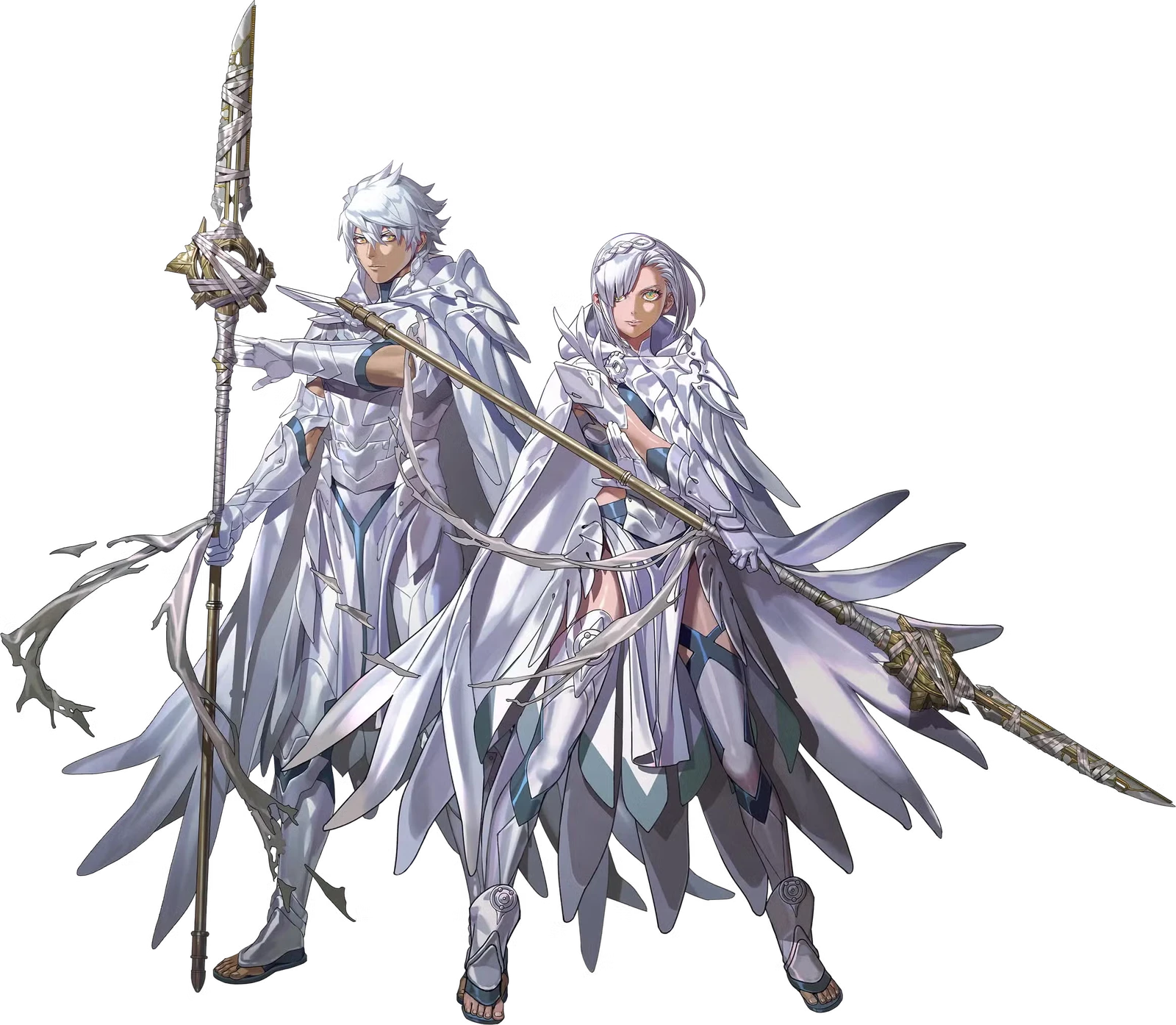
- The Promised One, Eshmel: Created in the Forbidden Land to bring light back to the world, with an unusual body and great power. Eshmel travels into the past with Fortuna to gather allies against Balor.
- Fortuna: Goddess of fate, who takes the Promised One back in time.
- Sothis: A great being called the Beginning. Facing the world's destruction, she awakens you and commands you to defeat Balor, King of the Underworld, as the Promised One. Three Houses players will recognize the name, but here she appears as an adult woman.
A prequel in the same world
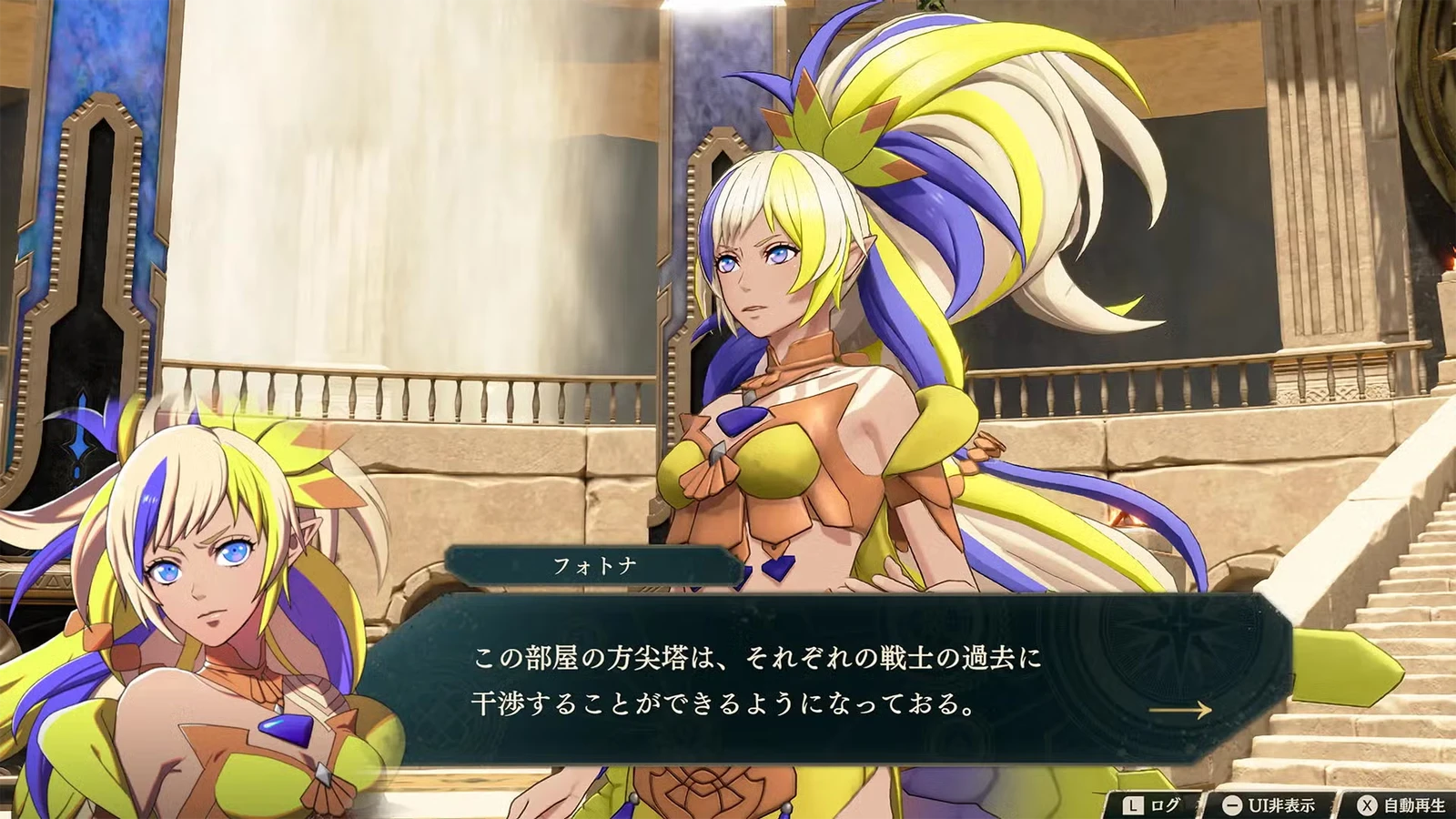
The two games share one world, different eras, and different continents. Treating their invasion records as the same event suggests the 1449 Heroic Games correspond approximately to Fódlan Imperial Year 453. Garreg Mach Monastery has then existed for only a little over two hundred years, and Three Houses will not begin for over seven hundred more. You therefore meet familiar faces who are centuries old in Three Houses, alongside noble families already extinct by that era. The developers want players to regard this as a new game.
For specific connections such as Seteth, Dietrich's ancestry, and Bloodmarks as Crests, continue to Connections to Three Houses, with spoilers in separate collapsible sections.
Familiar place names, calendars, and the four routes
- Dagda is not a new name: Shamir's homeland in Three Houses, which fought the empire, is this game's setting.
- Do not subtract the games' years directly: identify each calendar before matching shared events; see the Timeline.
- Sothis is not a little girl here: she appears as an adult. Part III explains why, covered on the spoiler page.
- The protagonists are not a mutually exclusive choice of one: unlike choosing a house in Three Houses, you can play all four routes, switch midway, and eventually bring them together.