

The five protagonists: their wishes and their connectionsMinor spoilers
Cai wants to save his father, Dietrich seeks battle, Theodora fights for her country, and Leda seeks revenge. Eshmel returns to the past to draw these four lives into a shared rescue.
Remember four wishes first: save a father, seek battle, serve a country, and take revenge. The four enter the same Heroic Games and become opponents. Eshmel instead seeks to change the deaths they were originally destined for and gather people who can oppose Balor. The fifth protagonist gives the four routes a shared future.
All four are answering what “home” means: Cai leaves home for the wider world; Dietrich learns to live with people who become like family; Theodora sees her country as home; Leda loses her family and initially defines herself through revenge.
Cai leaves home to save his father
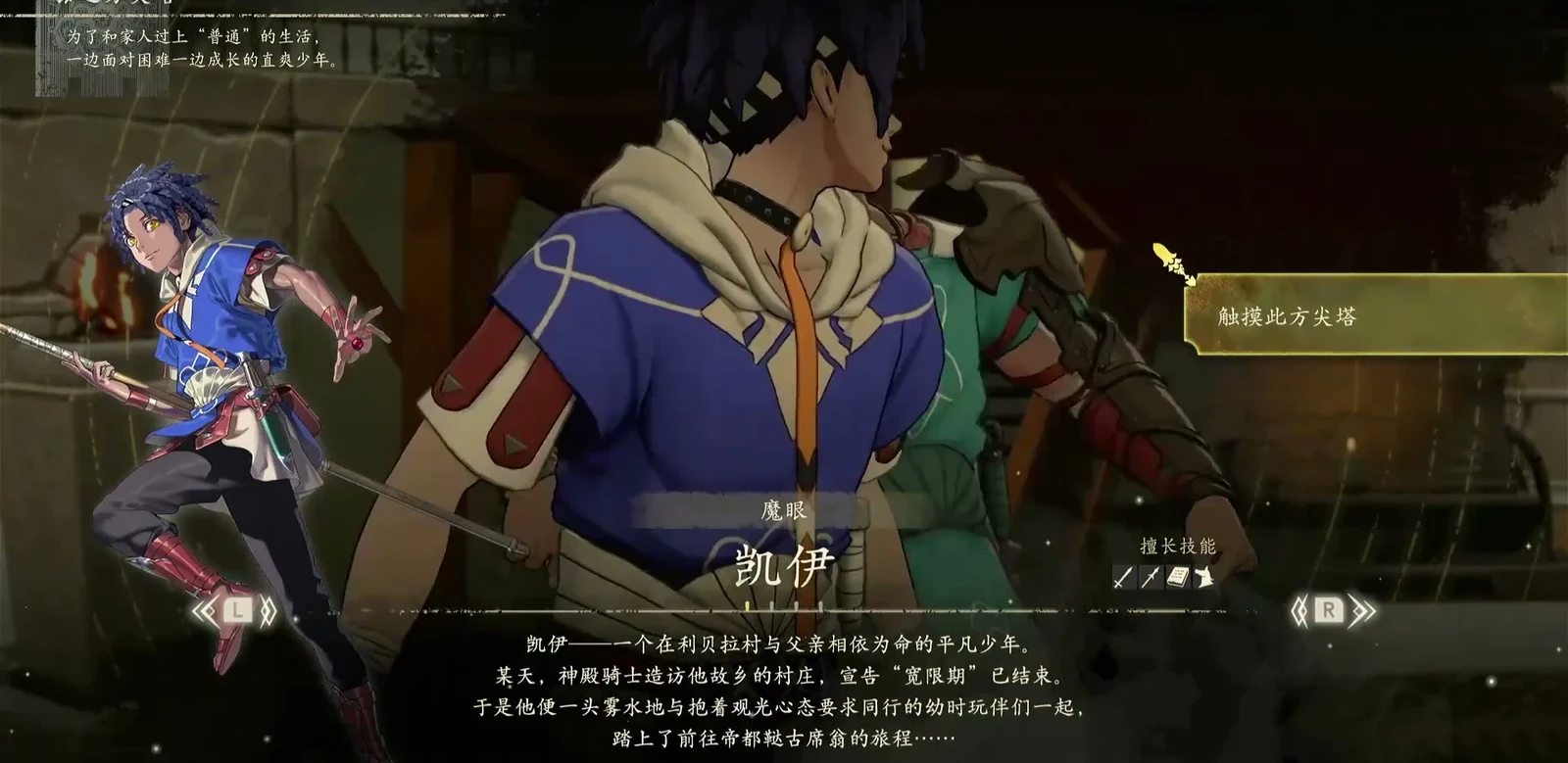
 Cai originally lived with his father in Ribeira. After his father is arrested, he enters the tournament with two childhood friends, hoping to use the winner’s wish to save him. Cheerful, earnest, and devoted to family, he first wants to protect the home he knows. The ruby in his left hand hints at more behind this ordinary life, but you do not need to solve it at the start.
Remember  Tialla and
 Peter first. Tialla is learned and skilled in strategy; Peter has excellent eyesight and archery, but his gentle, timid nature holds him back. Both keep Cai's journey connected to village life.
SpoilersCai's parents and the arrest on his fifteenth birthday
Cai is the son of Castor and the goddess Aurora. Castor worked at Aurora's temple and tried to elope with her, which the empire treated as abduction. Cai was born in Dagdan year 1434. The following year, his father received a reprieve until the child turned fifteen. The 1449 arrest is therefore an old reckoning his father always knew would come, rather than a sudden disaster. Only then is Cai forced into the order governing gods and humans.
Aurora's mother is Yu Phas, and her nominal father is Solel.
Dietrich’s ties beyond battle
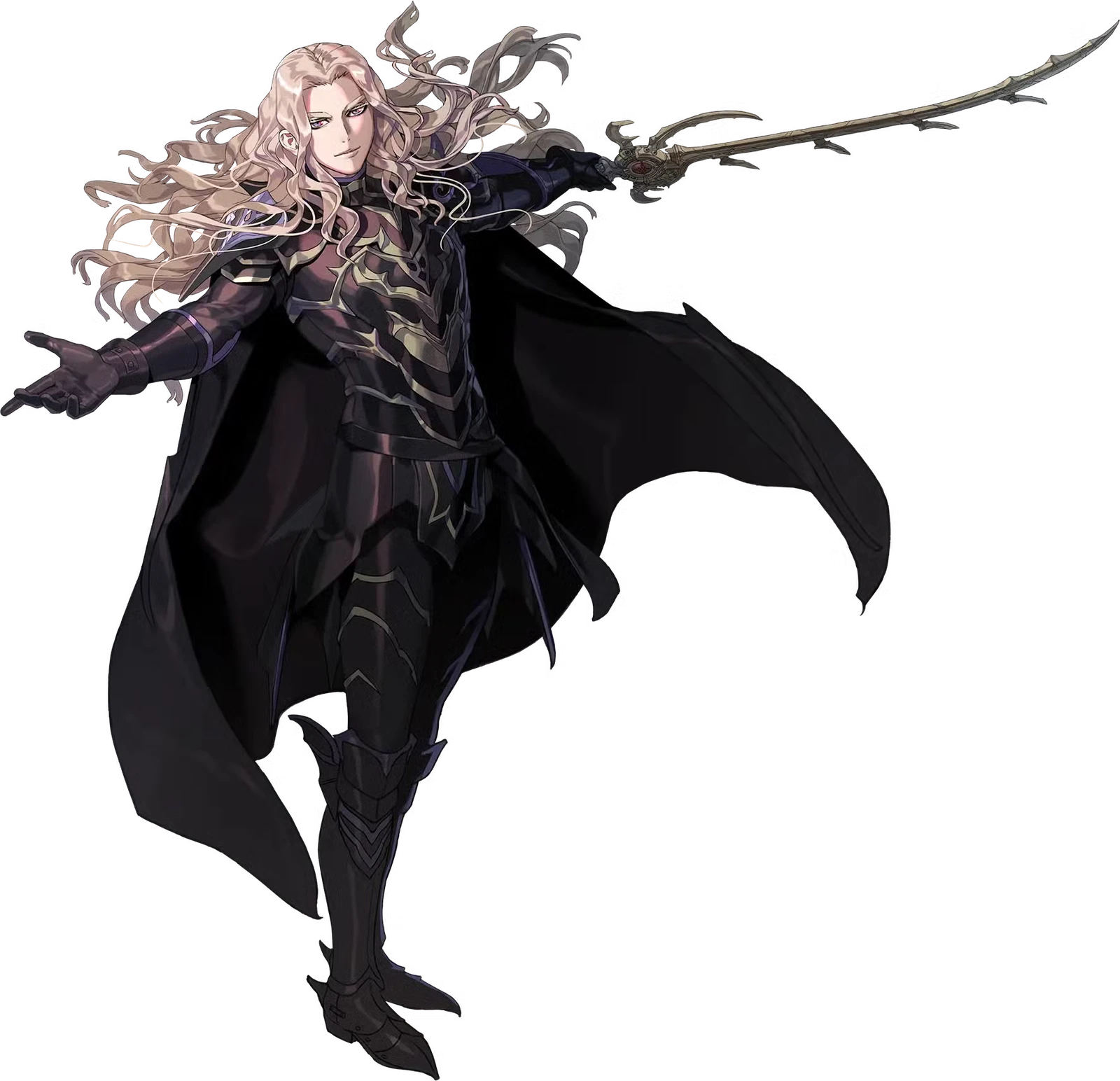
 Dietrich comes from Fódlan across the sea, wielding the cursed sword Answerer. Lacking humanity and trusting only himself, he enters chiefly to find opponents strong enough to challenge him and win the prize.
His specific wish also includes a ship capable of long voyages, so he can challenge the sea monster he encountered at the beginning again. A ship would let him keep seeking powerful enemies.
His route changes as he becomes willing to stop fighting for certain people.  Fabio, a missionary from his homeland, always brings conversation back to the old era.
 Esmeralda, whom he rescued from a sea-beast sacrifice, offers another way of life.
 Mikaela, who returns to mercenary work to pay for her daughter’s education, gives family a concrete weight. Through them, he gradually comes to understand family.
SpoilersLamine’s great-grandson and different later lives
His conversation with Fabio identifies Lamine of the Ten Elites as Dietrich’s great-grandmother. He has never met her.
In his solo ending, he keeps seeking battles in Dagda and eventually dies on a battlefield. His badly damaged sword returns to Garreg Mach and is sealed away as a “lost Relic.” Paired endings take other paths. With Esmeralda, he discovers that fighting giant fish is just as entertaining and lives with her afterward. With Fabio, the two fight side by side a hundred years later. His later life changes with the ending conditions.
Theodora carries her country’s wish for restoration
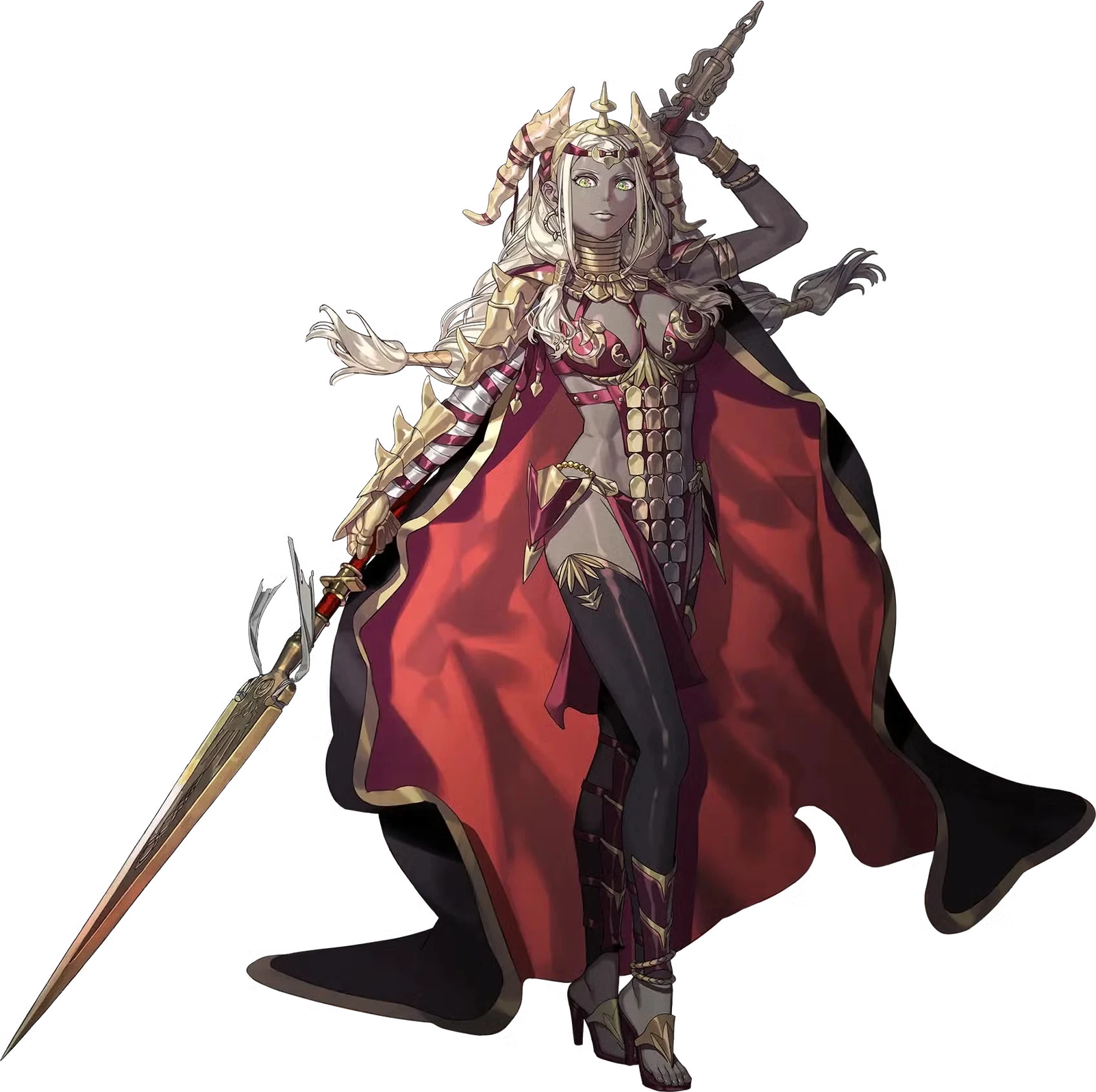
 Theodora enters for Salamis to fulfill a wish her homeland has held for centuries. Her right arm can shatter stone, and her resolve is equally unyielding. As queen, every decision she makes affects her people.
Beside her,  Bonaventure remembers the kingdom's history and wisdom;
 Tobias is a fierce general from the previous king's era;
 Lysander wants to prove his worth through his own achievements. A country that bans writing and preserves history orally places its past in these people's memories. The queen inherits much more than a throne.
SpoilersHer right arm, the ten-year limit, and her country's wish
The assassin Bahr Vahn killed her father, King Sergio, and she lost her right arm. Eligibility to inherit the kingdom is tied to wielding an axe, so the injury threatens her life, throne, and country at once. She accepts the arm left by her ancestor Mahadu and carries the spear connected to it.
The price of that strength is a ten-year limit on her remaining life and gradual erosion of her mind. Mahadu's legend already provides a warning, yet she demands secrecy. Her urgency becomes understandable: she is responsible for a people's long-held wish with limited time of her own.
How does she choose between the Games and her country? Her route gives a specific sequence. She retrieves ore to make a new necklace, temporarily suppresses the arm's power, and returns to continue competing. The necklace breaks again in the semifinal; she nears loss of control, breaks free through willpower, and wins. Before the final, news arrives of an invasion and a fallen fortress. She withdraws and returns home.
Winning is a way to fulfill her country’s wish; when her people face danger, she sets the championship aside. On her journey, she learns to think independently and shoulder a queen’s responsibilities. The necklace only suppresses the condition temporarily. It does not prove her arm is permanently healed or remove the ten-year limit. Do not present her withdrawal on this route as the result shared by every route.
After losing her father and arm, she accepts this power to take the throne, at a cost to her body. Nuada, the Irish mythological king who lost his hand, offers an interpretation of the creative inspiration. In the game, the cost is the ten-year limit and her ending.
The specific wish is to acquire Cybele, restore the holy land at Damascar's old capital, and rebuild Yu Phas's temple. Her solo ending records successful annexation and rebuilding, followed by abdication and seclusion as the arm worsens her health. The kingdom's revival does not erase her personal cost.
Leda returns from revenge to music
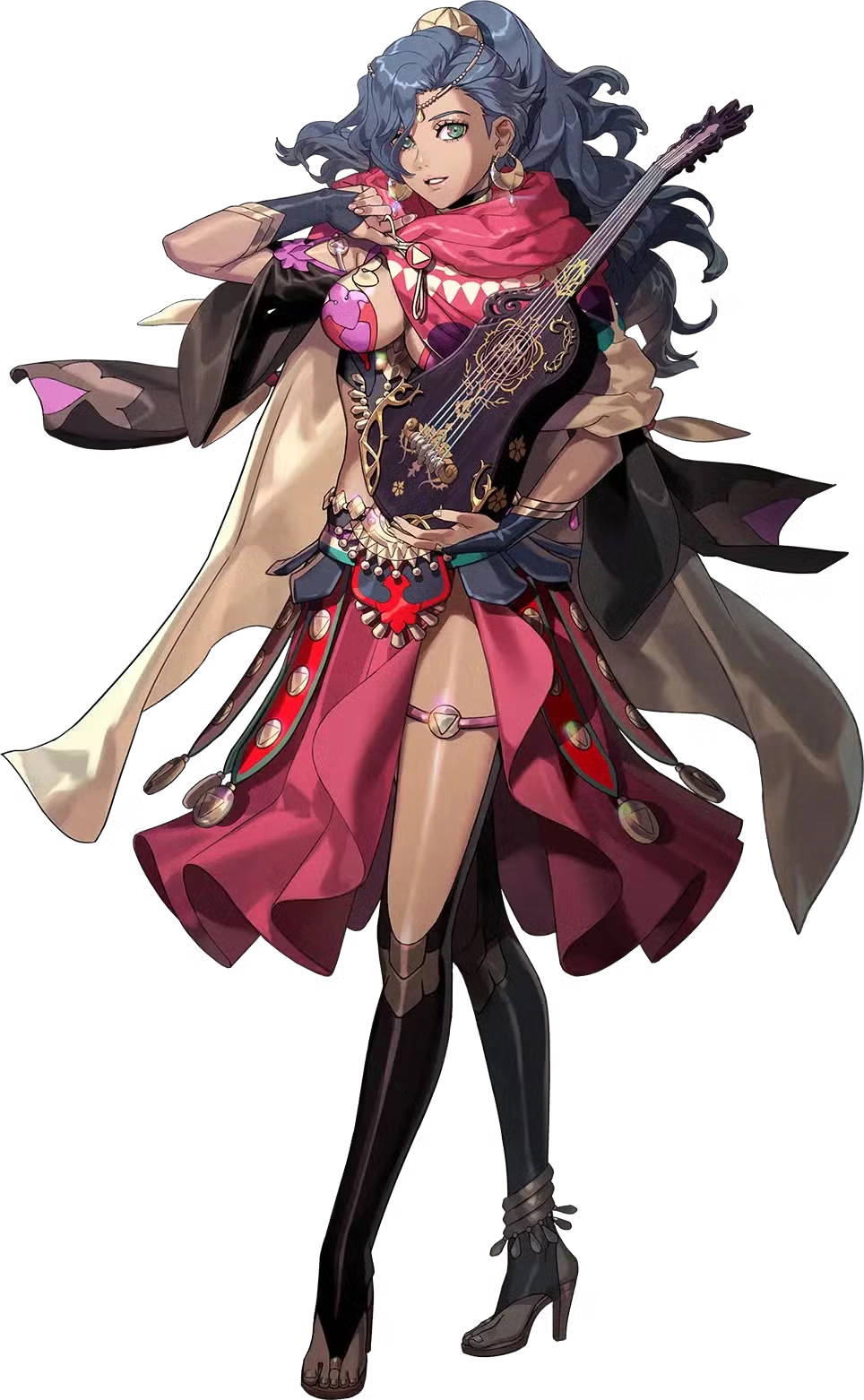
 Leda appears cheerful, but has staked her life on revenge. She wants to kill the person responsible for her father’s death herself and restore his honor. This darkness lies beneath her bright musician’s exterior.
 Buccar served her father for years and retains that bond with her.
 Sirocco hides insight behind a frivolous manner.
 Olympia shares an old artistic rivalry with her.
 Mu searches for her missing mother. This team continually returns Leda to the question of what else a person can live for.
SpoilersHer true name, the massacre, and her mentor's list
Her true name is Leilidahna Guillermo Cohendia. The Cydonia Massacre of 1444 took her father and her former life. Buccar carried her out of the flames. She later hunts those connected to it using a list left by her mentor Mahdel. Bertrand and Lechner are important targets in that pursuit.
The cruelest entry on the list is Mahdel’s own name. In the end, he remains in the temple and sets it ablaze. The object she uses to identify enemies also forces her to confront someone who once protected her. Her pursuit gradually uncovers these relationships.
In her solo ending, she settles her feud with Bertrand, seals the family vihuela Obsidian in Kalla’s temple, and continues traveling as a musician. Her ending with Olympia more explicitly frames the journey as mourning the dead and healing her heart. She has not forgotten the past; music can finally serve a purpose beyond revenge.
Eshmel brings the four together to save the future
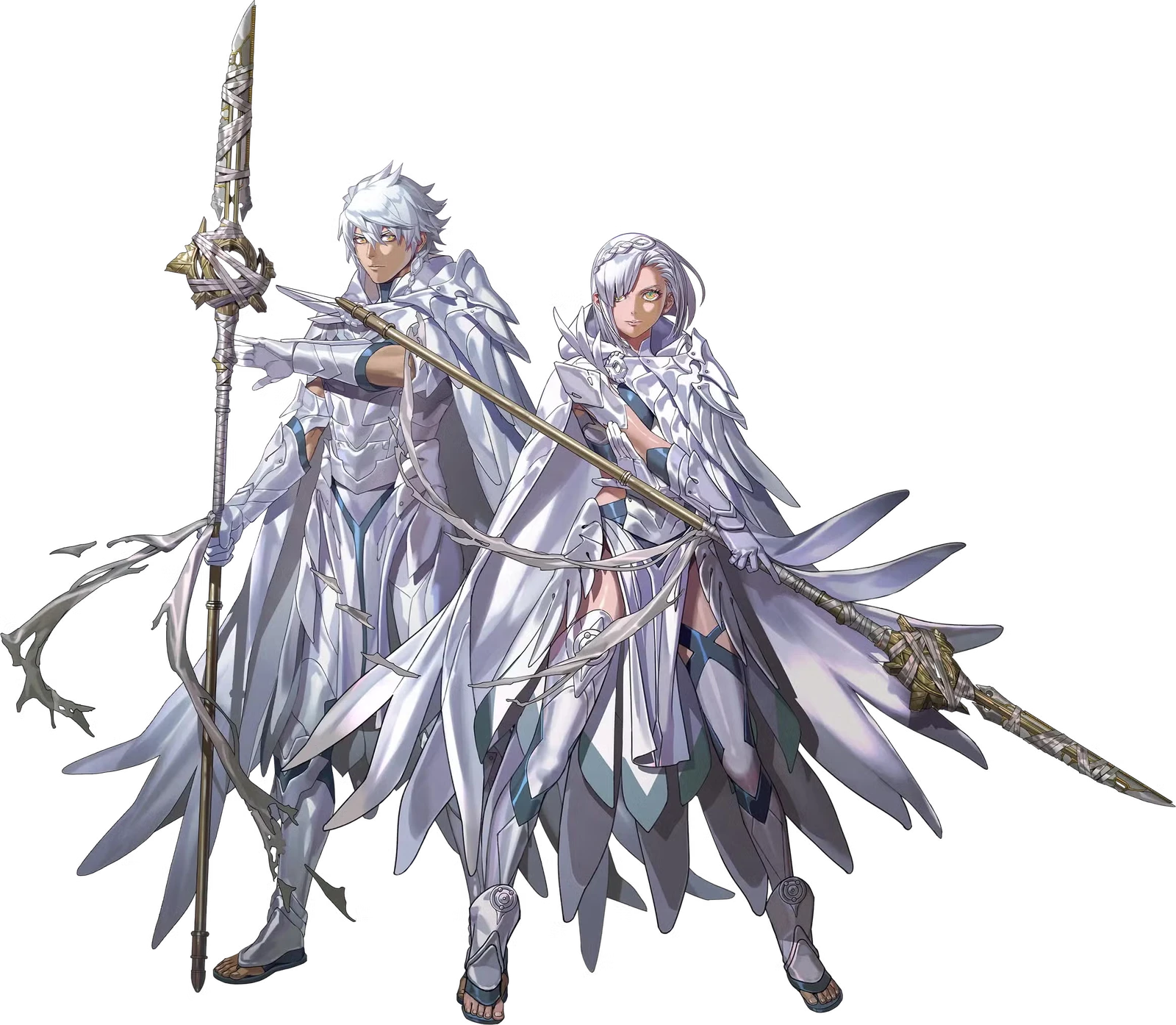
 Eshmel is born in the Forbidden Land with a special body and great power, then travels into the past with Fortuna. Eshmel intervenes in the four lives because the world of 1454 needs people who can fight together.
Eshmel observes and coordinates the four routes, acting as both a “camera” and a “tactician.” He guides four private wishes toward a rescue they undertake together.
SpoilersThe body's origin and the limits of the Solel reincarnation theory
Separate the body's manufacture from the soul's origin. Character-creation dialogue calls the body a Mediator, an artificial human made in ancient times for long voyages and conflict resolution. Zenon prepares the body in Kunlun and ultimately gives his own core to complete it.
Consider the clues about his body, weapon, and soul separately:
| Question | Identity clues | What this cannot establish |
|---|---|---|
| Who made the body, and how was it completed? | Zenon prepared the Mediator body and gave his core; Mediators have artificially designed bodies | A core from Zenon does not mean the soul is also Zenon's |
| How are the weapons and powers connected? | Identical exclusive motions, similar spear shapes, and other people's sense of familiarity | Similar powers alone cannot prove the same soul |
Heroic inspirations and family histories connect the five
SpoilersThe five-part structure and character relationships
One prerelease interpretation connects Cai’s mixed heritage and mystic eye, Theodora’s lost arm and royal duty, Dietrich’s divine sword and cloak, and Leda’s inspiring music to different parts of the Irish hero Lugh’s legend. Each of the four represents some of Lugh’s traits, while Eshmel organizes them. This interpretation of their inspirations fits the theme of convergence. The unlock conditions for a five-person combined attack require separate investigation.
In the finished story, Balor’s descendants are intertwined with Dagda’s family. Cai’s parents connect village life to the gods’ past. Leda’s inherited black instrument connects her private revenge to Maria and a performer from the old era. The four seemingly independent journeys keep passing through the same old conflicts.
Their inspirations explain the five characters’ roles, while their relationships connect the past. There are two views on the Solel reincarnation theory: one analysis of the finished game affirms it outright; a prerelease interpretation argues that similar weapons may only indicate inherited powers, while acknowledging its opposing evidence is weak. The creation of the body has a clear account, but the soul connection remains strongly implied.
How the four routes fill each other's gaps
First check whether another route reveals more about the same person. For example, the mysterious woman in Leda’s tavern is initially left unexplained, while Cai’s route reveals her identity and purpose. Questions from the queen’s route also receive answers on Cai’s route. Note unresolved mysteries, then look for answers on another route.
SpoilersThe Heroic Games do not have one fixed winner across routes
Compare tournament brackets across protagonists and the outcomes change. Cai usually defeats Leda; Dietrich usually loses to Bertrand; player involvement on the relevant route may change those results. Theodora also leaves the tournament because of war at home.
This leads to two counterfactual possibilities: if Theodora reached the finals, she might be the likeliest champion; if she withdrew, Bertrand might win by default. The game has no “unintervened canon” route, so include each route’s matchups and withdrawal conditions in such speculation.
SpoilersWhy four other team leaders also feel like protagonists
A developer interview mentions an early plan for eight perspectives, later narrowed to four. The finished game still gives Bertrand, Talimun, Orchel, and Anatolia their own teams, deputies, paralogues, and special Blaze Arts. Their paralogues often take up wishes they could not fulfill in the Games.
These four also have independent stories: Bertrand’s Mane of Flames, Talimun’s Moon’s Lie, Orchel’s Linaria’s Morning Dew, and Anatolia’s Brides of the Pale Raven.
The actual game has only four route entry points. Eight perspectives were an early development concept.
Follow one person continuously or compare the same Games
Focus on one route if you want to follow one person's emotional arc continuously. Alternate the four if you want to compare different views of the same Games. The rewind, accumulation, and convergence structure also accommodates following one person continuously, making causes and consequences easier to explain.
After reading a character's ending, return to their original wish. Remember that paired endings have conditions. For divine relationships and world-level causes, see Story revelations; for the two dating systems, see the Timeline guide.