

Character relationships and story explained: How the resurrection plan links all four routesMajor spoilers
Follow the divine family, powerful relics, and resurrection plan to connect Cai’s effort to save his father, Leda’s revenge, and the history of the queen’s people.
Original video: Best of the year! The clearest explanation of Fire Emblem’s major character relationships and story! One big loving family? Fire Emblem: Fortune’s Weave | Bilibili creator Kabi Eling
The plan to resurrect Balor connects old divine grievances, imperial power, and the four protagonists' personal wishes. Relationships depend not only on blood, but on who borrows whose power and who develops real feelings.
Ancient divine history and relic corruption
Trace the relationships down from ancient times, and many people fighting on the battlefield turn out to belong to the same enormous family. Sothis bestowed power, dividing twenty-one portions among seven progenitors. Later conflicts and descendants expanded this web further and further.
Dagda also has demigod sons with human women: one branch founded Bertrand's kingdom and another established a trading company. Nations, trade, and divine family affairs are not entirely separate; tracing them leads back to the same family tree.
Balor was defeated, and his scattered remains became powerful weapons and accessories. They are useful, with a direct cost: his power remains within them, and deeper use brings greater corruption. Consider power and corruption together when looking at relics. Many later characters’ fates connect to them.
Feelings disrupt the resurrection plan
Balor’s daughters wanted to resurrect their father and began planning long in advance. They refined lives into a potion that increased power, had Dagda drink it, and used his authority to advance the plan. His power increased, but his mind was corrupted as well. Eventually his tyranny became unbearable even to his children.  Solel led the overthrow of his father and became the new Divine Sovereign.
Their later plans circled back to Solel. Lady Clivia approached him in the form of someone he missed. He saw this as the resurrection of the person he had lost, so even when he noticed something wrong, he chose to indulge her. That emotional vulnerability repeatedly overrode his political vigilance.
Consider why she becomes angry when called by another person's name. If she were merely carrying out an impersonation, she would have no reason to care. Because she does care, I infer real feelings beneath the false identity; this comes from her reaction and the name used, rather than a direct admission in dialogue. Elsewhere, when offered the chance to leave,  Dietrich still cares most about the powerful enemy awaiting resurrection. He wants to stay and fight; his desire for battle outweighs someone else's feelings.
The black and white instruments and Leda's ancestry
 Maria kept the white instrument and gave the black one to someone close to her in the past. The black instrument's power also corrupts its user. Passed down through generations, it eventually reaches
 Leda. Leda descends from that earlier bearer, connecting the instrument's inheritance to blood ties. When Maria encounters it again, she sees a reminder of that person, explaining her particular care for Leda.
The resurrection plan continues through political power: first resurrect Dagda, then use the empire to gather lives, and finally sacrifice him along with the others to resurrect Balor. The tournament drawing people into the capital thus serves another purpose its competitors do not know about.
Personal wishes connect to a shared history
 Bertrand was once a general, later imprisoned and forced to seek freedom through battle prize money. Leda sees him as the enemy who killed her family, beginning her revenge story.
 Cai enters to save his father. His mother is
 Aurora, bringing the laws and power between gods and humans directly into this family.
Each opening has its own goal, yet following it leads back to the divine family, the empire, and past persecution. Looking only at each person’s immediate enemy makes the relationships seem scattered. Connect the older history behind them, and their reasons for competing, seeking revenge, and being imprisoned begin to explain one another.
Banning writing and cutting off technology
The ancient survivors split. One branch of the White Egg people lived in seclusion and preserved its technology, while another formed the queen's nation. Their technology included transferring life cores and creating artificial bodies: a body no longer defined a complete identity, and an old soul or life could continue in a new body. This underpins the later two puppet-identity threads. Dagda needed their lives yet feared their technology, so the persecution went beyond a conflict of faith.
Yu Phas sheltered the survivors, while banning writing severed the transmission of technology. Following that chain of cause and effect, abandoning writing meant giving up what frightened the rulers in exchange for the people’s continued survival. The oral tradition of the queen’s nation connects to this oppression.
The routes gradually reveal the cause of the catastrophe
The story begins with a crisis after destruction, then uses Fortuna's power over time to return to the past. Two apparently separate identity threads connect here: 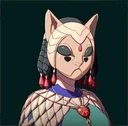 Orchel's body is a god-made puppet housing Yu Phas's soul, while
 Eshmel combines Solel's soul with a body made by the White Egg people. Fortuna preserves the soul and seeks a remedy through time, letting past relationships affect the world after destruction again.
The central chain of events can be explained clearly, but the narrative divides it into many perspectives. One route shows a result; another supplies its cause. An earlier action you did not understand takes on another meaning in hindsight. Piecing those fragments together is the most interesting part of this multi-route story.