

Choosing units and classes as a beginner: train early allies and cover the team’s rolesMinor spoilers
Low-level starting allies benefit from more growth under your control. Compare immediate class modifiers, growths, weapon access, and mastery, and prepare swords, healing, and magic damage first.
Original video: Fire Emblem: Fortune's Weave: Who should beginners train first? Character choices, growth rates, and class development | Bilibili creator YT Daer.
Train low-level starting allies first
After the prologue, choose a hero at the obelisk. For an easier start, try  Dietrich. For a more demanding opening with animal capture and training plans, choose
 Cai. Once the perch unlocks, return to the obelisk to switch stories or replay old chapters.
I began with Dietrich, whose starting allies are  Fabio,
 Esmeralda, and
 Mikaela. They join at low levels, so later level-ups benefit from classes you choose. They deserve early training. My level-eighteen Dietrich and level-fifteen Esmeralda both had better stats than
 Io, newly recruited at level twenty. Recruit desired characters early instead of leaving them outside the team until high levels.
Current stats and growth priorities
Open Information, then the roster, and press ZL to display growth rates. A higher growth makes that stat more likely to increase. Esmeralda readily develops strengths in HP, Strength, and Defense, though each level remains random.
HP measures health. Strength governs physical damage, Magic magical damage, and Dexterity affects Hit and Critical. Defense and Resistance reduce physical and magical damage respectively, Luck affects Critical and Dodge, and Charm affects gambit Hit. Speed relates to Avoid and Attack Speed, but weapon Weight and Build also affect Attack Speed. High Speed alone does not guarantee follow-ups.
Physical attackers want Strength, while consecutive attacks also require Attack Speed. Understanding each stat’s battle role before reading growth tables helps identify what is missing.
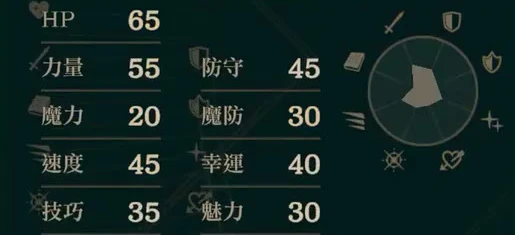
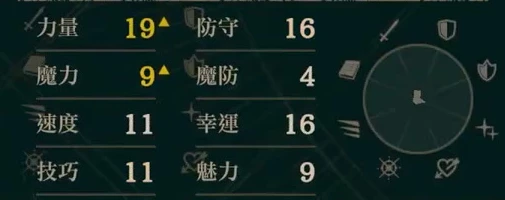
Separate immediate class modifiers from mastery
Compare immediate stat changes and growth bonuses separately, then check class abilities, mastery, and weapon experience bonuses. This shows what promotion fixes now and develops later.
Certification Exams preview post-change stats. Some rise and others fall. Switch information views to inspect growths. Train requirements early if you want later levels to use the new class’s bonuses. Passing below full success is possible, but failure consumes exam resources.
 Charioteer has high total growths. Units not prioritizing Speed can use it temporarily before returning to their final class. Consider class abilities, mastery, and weapon experience bonuses too. Pair
 Myrmidon with swords,
 Brigand with axes,
 Pugilist with gauntlets, and
 Archer with bows to use their benefits.
Skill strengths and team roles
The unit list shows skill strengths. These skills train faster, and learned combat arts and abilities change a unit’s uses. Dietrich lacks magical talent, so do not force training into black or white magic. Io’s personal ability needs a mount, making mounted paths the easiest way to realize it fully.
Every team job needs someone. If unsure what to train first, prepare Myrmidon and  Priest. Golden mummies reduce damage from attacks without effectiveness. Sword users with
 Cleansing Blade and white-magic users with
 Seraphim can defeat them for money. Cleansing Blade is exchangeable at the merchant association in Part 1 Chapter 5. Learning Seraphim depends on the character’s white-magic list. Even without Seraphim, Priest still handles routine healing.
Add black magic for armor, flyers or  Armored Ornius Rider for terrain,
 Light Cavalry for quick clears, and Rogue for exploration returns. Physical units needing Strength can consider Brigand, while Charioteer offers broader growth.
Cover different weaknesses across routes
When the same character joins several hero routes, train different classes and stats, then merge in Part 3 to take the higher value in each stat. Train Strength on one route and cover other weaknesses on another to make multi-route development worthwhile.