

Six factors in character training: Axe cavalry or gauntlets and white magic for Majide?Minor spoilers
Growths set the starting point; learnable abilities and army needs set the destination. Axe cavalry saves resources for Majide, while gauntlets with Freeze and Warp require focused investment.
Original video: “How do you avoid training mistakes? Fire Emblem: Fortune's Weave character development guide—basics” | Bilibili creator Feiqiu Dailuo.
Consider six factors together: growths, skill strengths, combat arts and magic, abilities, unique value, and army composition. Recommending physical combat because someone has high Strength gives a basic direction, but does not yet explain what they contribute to the army.
1. Choose a class direction through growths
First understand growth rates: each value is the probability of gaining that stat on a level-up. The screen separates base, class, and granted growths. Base belongs to the character, class changes with your class, and extras such as mounts appear under granted growths.  Charioteer's Path provides extra growths at key levels and also affects mount growths, so
 Charioteer often has very high total growths.
First separate the combat bonuses. You follow up when Attack Speed exceeds the enemy’s by at least 4, and sword follow-up damage is multiplied by 1.2. Gauntlets gain Avoid +15 against weapons other than gauntlets. Bonus Attack and damage reduction can apply to both physical and magical combat. Effective damage is doubled, while super-effective damage is tripled. Spears against mounted units and bows against fliers can therefore produce very different results from the same stats.
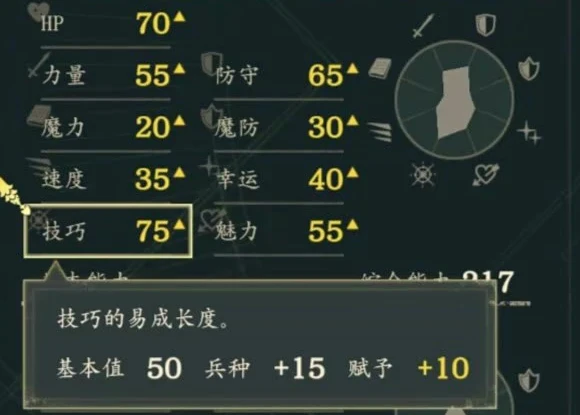
2. Weak skills cost more to train
A yellow background indicates a strength and faster experience gain; purple indicates a weakness that takes more resources to raise.  Majide is weak in white magic, so developing it costs extra books, training, and time.
3. Check learnable combat arts and magic first
Although Majide has outstanding Strength and low Magic, he can learn Freeze and Warp. Check what he actually learns before training him. Growth rates alone do not determine what he can do.
4. You do not need every personal-skill bonus
 Hellbent Axe rewards using axes, and
 Fear Nothing+ rewards initiating. You do not have to maximize every personal ability. If lighter gauntlets enable follow-ups, applying the initiation bonus twice can outweigh keeping the axe's Strength bonus.
5. Find value that alternatives do not offer
As a pure tank, Majide competes with units who have stronger defensive abilities. Combining damage, control, and Warp gives him a different unique role. Look at the job a finished build can fill, beyond whose stats are higher.
6. Let army needs determine investment
This combination deserves investment when the army actually needs Freeze to hold a boss or Warp to send a main attacker for a boss kill. If someone already does the same job, Majide can take a less expensive physical route.
The value of Majide's white magic
Freeze holds a boss in place while allies clear nearby enemies; Warp sends your main attacker in for a boss kill. These are the roles Majide aims for by training white magic.
Freeze requires White Magic B and Warp requires A. Majide trains it slowly, so reserve training, books, and time in advance.
Mounted axe offense and effectiveness risks
| Ability | Condition | Benefit and cost |
|---|---|---|
| Hellbent Axe | Equip an axe | Strength +3 |
| Fear Nothing+ | Initiate combat | Attack +6, Avoid −30 |
On an armored unit, the lost Avoid hurts less. Both  Castle Knight and
 Great Knight can use these bonuses.
If you only want someone to absorb hits, Castle Knight can do that. But Majide's abilities lean offensive, making it hard to distinguish him as a pure shield from units with defensive abilities. I prefer finishing in Great Knight for three reasons: more Movement to reach enemies, sword access for  Cleansing Blade in the Promised One's story, and mount stats and growths. Damage means nothing if you cannot reach your target.
The cost is vulnerability to lance enemies while mounted. Master Castle Knight first, then switch to Great Knight. Dismount under pressure, or use a Ferghanan Horse with  Canto. Against armor, bring an effective axe and combine it with initiation damage. He can kill enemies from a position sturdier than an ordinary mage's. Late armored enemies often carry two-range weapons, making attacks unsafe for fragile mages.
Different investment levels for axe cavalry
For a low-investment path, take  Brigand, Warrior, and Great Knight. At level 35, get Warrior's
 Practiced Art first and rely on higher-accuracy axe combat arts. Mounts and assistance from linked combat arts make sufficient Hit easier to reach.
For focused training, visit  Archer at level 20 for
 Crescendo, then take Warrior, Castle Knight, and Great Knight to improve both accuracy and tanking. Outside armor, gauntlet, sword, and bow enemies often have higher Avoid. If he will be a core unit, improving Hit early is worthwhile. You can also train an HP-restoring combat art for sustain.
Gauntlet follow-ups into white magic
Majide is also strong in gauntlets, opening another path through  War Monk and
 Wiseman, which use both gauntlets and white magic. Switching to gauntlets sacrifices Hellbent Axe's 3 Strength, but you need not use every personal bonus. Gauntlets are lighter, making Attack Speed easier to raise, and War Monk and Wiseman have Speed modifiers. When he follows up, Fear Nothing+'s initiation bonus applies twice, totaling 12 extra attack—better than insisting on the axe's 3 Strength.
At Gauntlet C, he learns an anti-armor combat art, so he can still handle armor after switching. I recommend War Monk as the destination: its stat modifiers suit his growths, and its mastery lets him use support magic after attacking. He can hit one enemy and then control another with Freeze.
Wiseman mainly offers magic gauntlets, but Majide has low Magic and those gauntlets have tight durability. Against enemies with Underworld Boon, both combat arts and durability become restrictive. Forcing up Magic consumes even more resources in the first two parts.
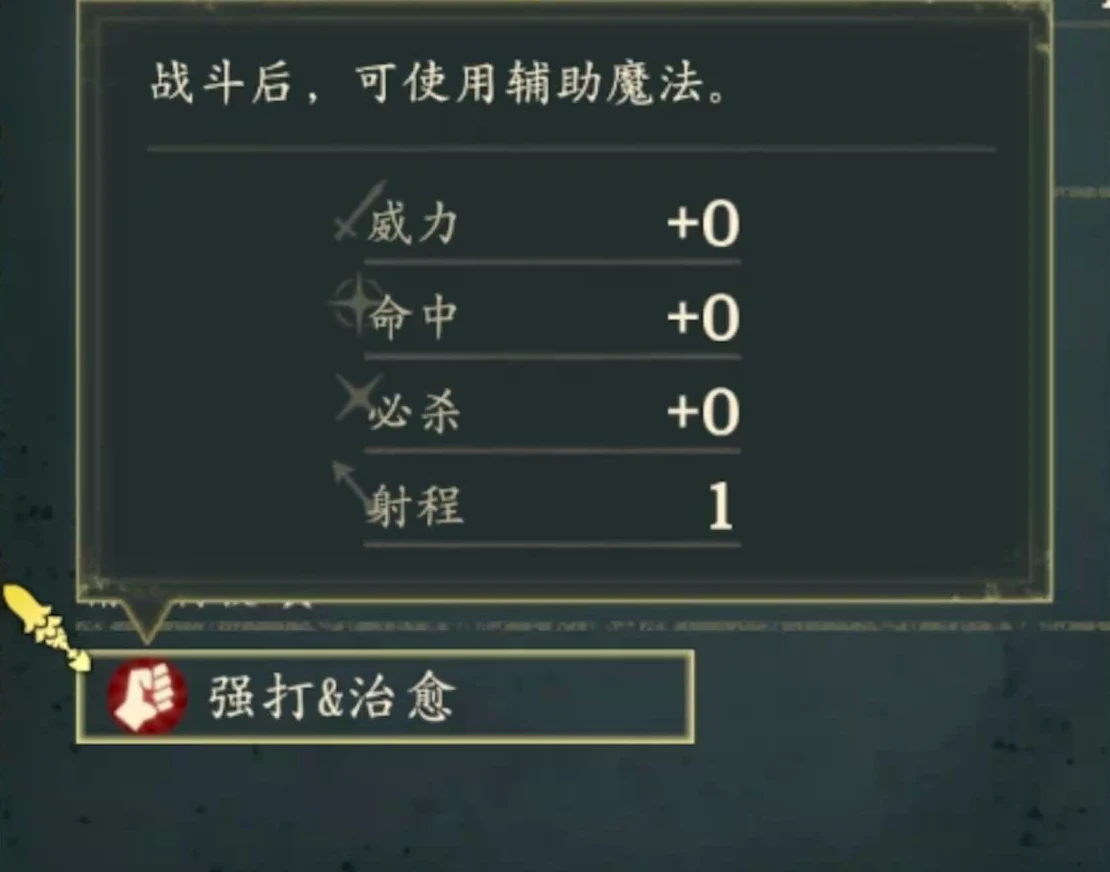
The training cost of the War Monk path
At level 20, start with  Pugilist to save resources and gain suitable growth modifiers. For accuracy, train Archer first for Crescendo. If you can afford it, take both. Switch to Warrior at level 35 while prioritizing white-magic books and training for Majide, raising the rank needed to transition into War Monk.
Once developed, he can use gauntlets, Freeze, and Warp. The cost is concentrated white magic training during the first two parts.
A character learns very different things as each skill rises. Check that learning pool before choosing a destination. Looking only at growths or personal abilities can easily hide a genuinely useful path.