After 132 hours: Engaging interwoven stories, but exhausting late-game preparationMajor spoilers
Four routes complete one another and shared progress reduces repetition. The war story focuses on tactics, while managing the merged roster and the ending leave room for disappointment.
Original video: Cleared in 132 hours! Fortune's Weave is the best Fire Emblem, surpassing Three Houses! Overall impressions, including flaws and shortcomings.; Bilibili creator Laodai Old_Bag
Playtime and route order
I finished in 132 hours on Normal Casual. It is my longest single playthrough of a Nintendo game, but at least 100 hours were enjoyable. The length did not dilute the satisfaction; the game is simply enormous.
| Stage | My approximate time |
|---|---|
 Theodora’s story + her war story | 25 + 15 hours |
 Dietrich’s story + his war story | 35 + 10 hours |
 Leda’s story | 10 hours |
 Cai’s story | 10 hours |
| The Promised One’s story | 30 hours |
These stage times are rounded; the completion record is 132 hours. I played a second war story to recruit people unavailable on the queen’s route. Without an all-character collection goal, there is no need to repeat it the same way.
I played  Theodora and her war story, then
 Dietrich and his war story, followed by
 Leda and
 Cai. The second route took longer because I began pursuing every recruit. Knowing the systems made the final two much faster: I recruited the remaining people and watched the story. I also left Cai late because he seemed to have more management.
Interwoven stories complete different perspectives
The interwoven narrative is my favorite part. Four people begin separately, meet, cooperate, sometimes oppose one another, then finally fight together. Different viewpoints give the same event another layer of meaning.
A main story continuation may hide in a support conversation. Spectating reveals scenes between two other teams. A question pursued on one route may find its resolution in another route's paralogue. The world's truth is scattered rather than delivered at once. Different play orders create different processes of discovery, making me want to finish all four.
Shared progress and war story pacing
Divine levels, achievement points, support, and other progress are shared. Completed work lightens later routes. Leveling, spending, and side quests become less demanding as you continue, rather than starting from zero each time.
Just when I thought I understood the rhythm, the war story removed daily routines and left large-map tactical battles. Equip weapons and items using military funds, then fight. Difficulty rose sharply too. What had seemed fairly easy revealed another side of its tactical design. Finally gathering everyone and hearing the four protagonist themes combined was deeply satisfying.
Reduce collection goals when exploration becomes tiring
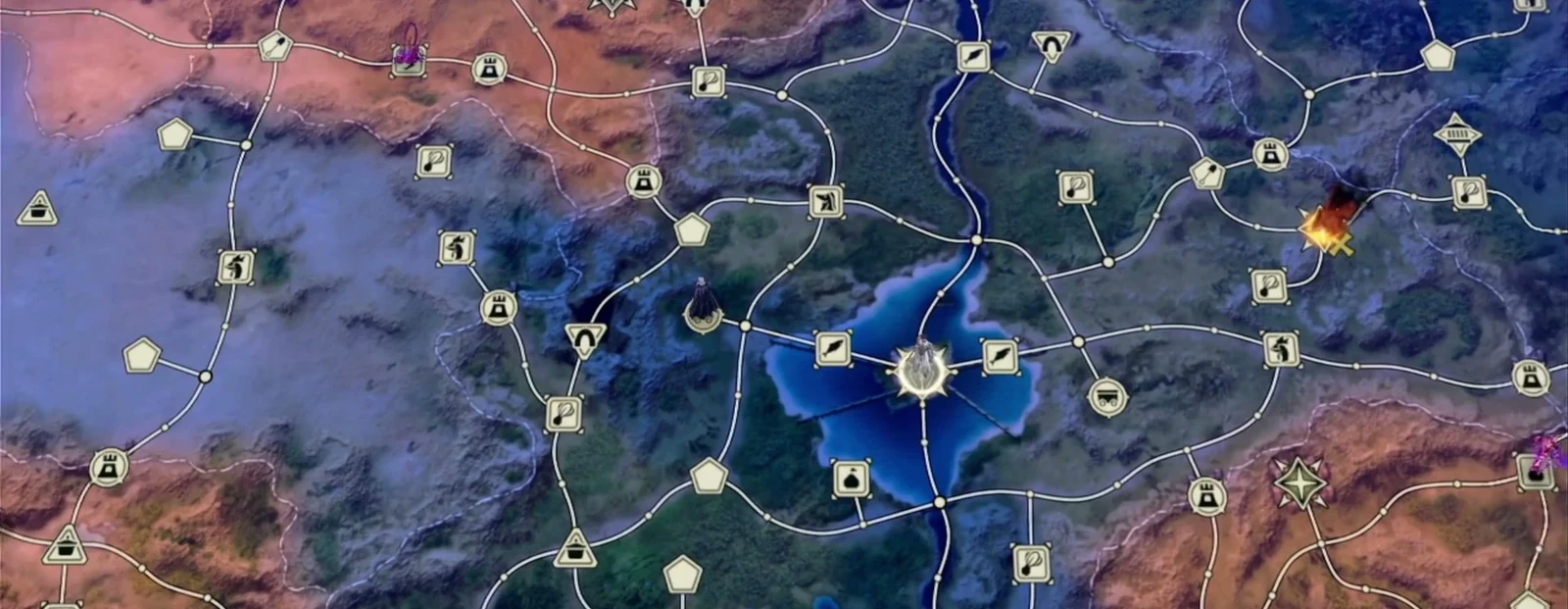
I enjoy world map exploration. The protagonists collect different things, all preparing for later stages. Repeated dungeons can be confusing and did become tiring later. Their substantial resources and EXP kept me willing to continue.
When tired, reduce collection goals. Use the map list to focus on the material you lack. You do not need to maximize every weekly activity. I also prefer not to let rankings determine my roster.  Lilian was excellent on my final team; personally developed performance deserves a look.
Meeting points and escape objectives
The scale is a barrier for people with little time. Some characters also have interesting early appearances without enough later development, which disappointed me.
I dislike the cost of replaying an entire chapter after a mistake. Visit the required main-story rendezvous once before exploring elsewhere to avoid redoing progress after running out of time.
I restarted twice: once after missing  Gaitz and going back from Part 3, and once in a war story escape map. I thought I could defeat everyone, made the situation unwinnable, and had to restart. Check the victory condition on such maps rather than always seeking a rout.
Merged-roster preparation and the story's conclusion
Part 3 suddenly combines several teams. Splitting forces, rescues, and collecting appear simultaneously, often leaving me unsure where to begin. Items, abilities, and classes take considerable effort to organize. Meals and training involve pages of characters, entirely changing the earlier small-team rhythm.
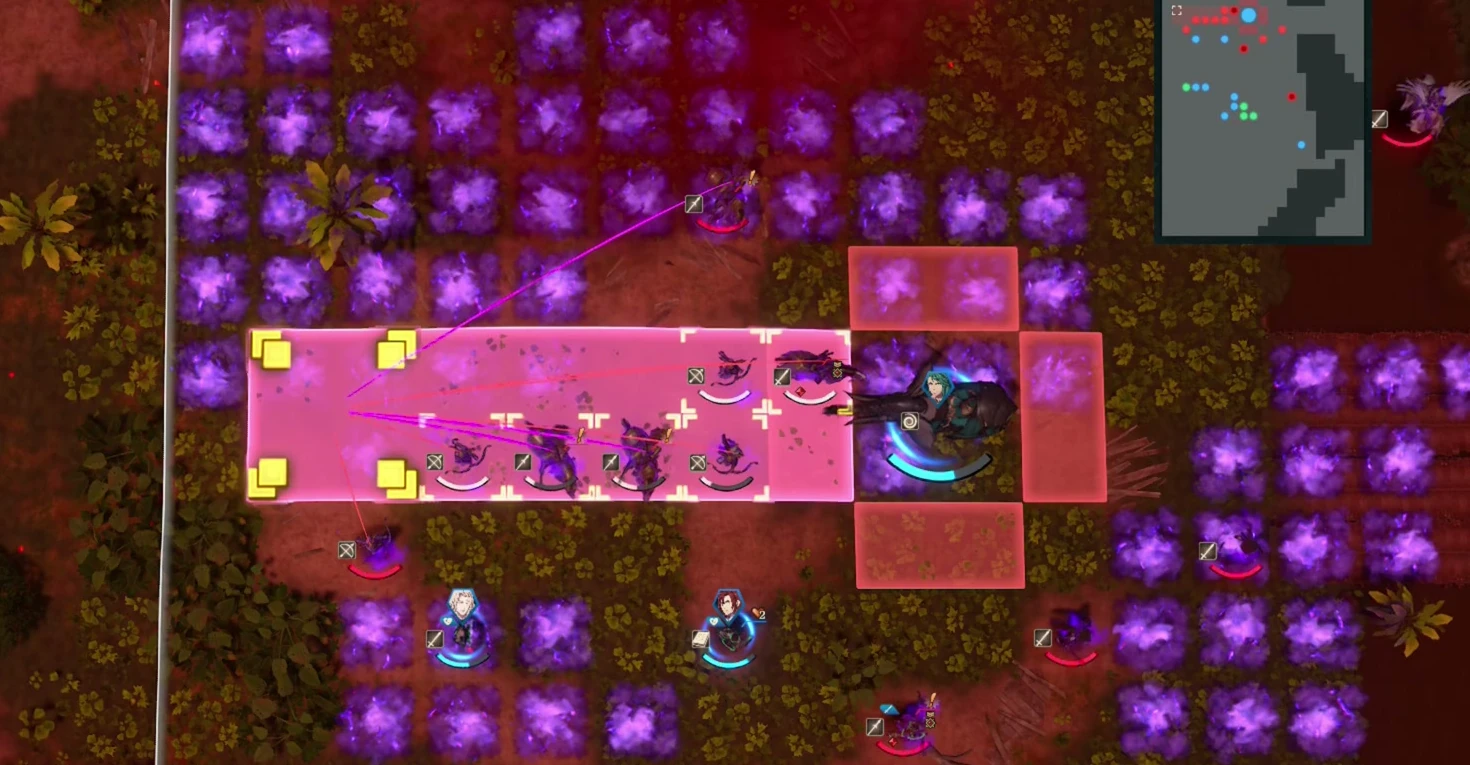
Purple terrain and Underworld Boon also recur in battles. Use  Eshmel to open a path, or rely on Leda's buffs, Aurora's Blessing, and
 Cleansing Blade. A map or two is fine, but solving the same preliminary obstacle every map becomes tiring.
The conclusion also fell below my expectations. Heavily established villains exit quickly, the sections around the final battle are short, and the ending presentation feels insufficient. Looking back, though, most of the experience remained excellent. These complaints did not erase more than a hundred enjoyable hours.