

Prerelease highlights and tradeoffs: Four-route stories, labyrinths, and time managementMinor spoilers
Four routes share one save, with extensive development, social activity, and exploration. Set route-switching frequency and preparation pace around your own preferences.
Original video: “Prerelease information and points to consider”; gaming channel KENT for Nintendo Game Reviews; 2026-09-07. https://www.youtube.com/watch?v=c8Iqj8FODzM
The four-route ensemble, companion development, and labyrinth exploration are the highlights. Preparation has substantial weight, so choose your own route-switching frequency and progression pace.
Each protagonist has unique activities
 Cai seeks to save his father,
 Dietrich seeks strong opponents,
 Theodora fights for her homeland, and
 Leda pursues her father’s killer. All enter the Heroic Games, with different positions and wishes.
More interestingly, the differences go beyond the story. Cai helps people and catches and raises mounts; Dietrich seeks powerful enemies and learns stronger combat arts; Theodora equips battalions; Leda performs in taverns around the land. Between matches, you can train, take exams, recruit, explore the continent, and enter 3D dungeons. There is much more than a string of tactical maps.
Switch four routes in one save and rewind fate
All four stories switch within one save, avoiding another opening playthrough just to see someone else’s experiences. Play Cai for a while, return to base and switch to Theodora, then visit Dietrich. One playthrough can follow several people.
The same event may mean something very different from another protagonist’s perspective. The opening also reveals that all four are dead five years later, and  Eshmel must return to 1449 to change fate. The question shifts from “Can they win?” to “Why did they reach that ending, and where can I change it?”
Support conversations reveal companions’ personalities
Characters appeal through more than strength. Someone initially strange may become understandable and likable through Support.  Peter is gentle and timid but a gifted archer with longer-reaching bow Combat Arts.
 Tialla loves books, wears glasses, and can strengthen companions and heal with magic.
 Fabio’s arrogance,
 Esmeralda’s extraordinary strength, and
 Orchel’s mask and love of housework stand out even in introductions. Their capabilities differ too: distant sniping, extended healing Range, or moving through enemies. Start with meals, gifts, and recruitment to know the people who will become your core team.

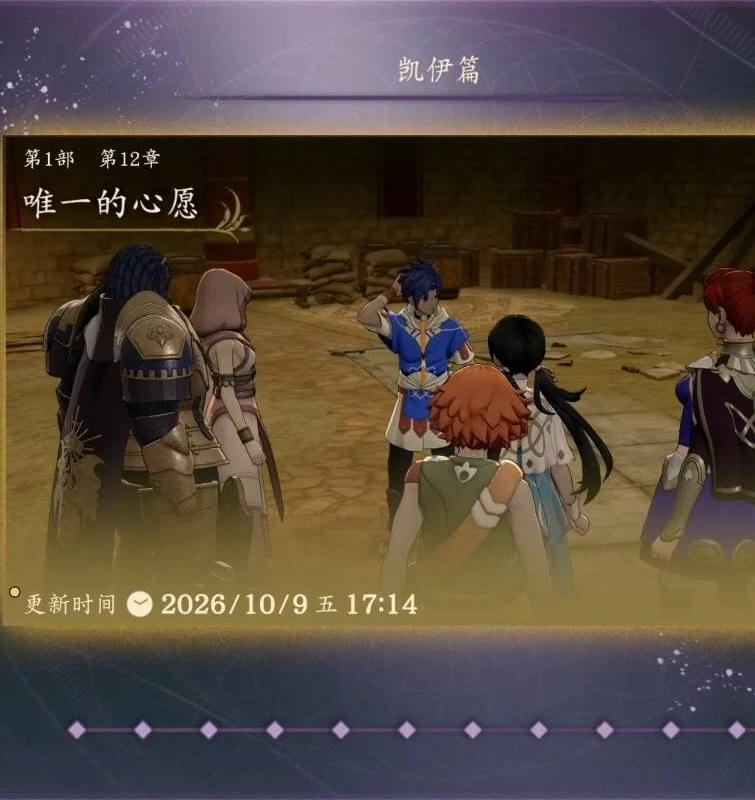
Clashes keep labyrinth exploration moving
Exploration expands from the capital across the continent: shop in other towns, accept requests, enter temples, and explore 3D labyrinths for chests and materials from breakable crates and jars. Enemy contact triggers Clashes with attacks, Linked Attacks, and Combat Arts, closer to a command-based RPG.
That division makes sense. A full grid battle for every weak enemy would slow exploration. Labyrinths keep collecting brisk, while important battles use full maps for careful terrain, Range, and action-order decisions.
Weapon traits and combat costs
There is no traditional sword–spear–axe triangle. Each weapon has distinct traits, and classes determine available weapons, so consider both when assigning roles.
| Weapon | Trait |
|---|---|
| Sword | 1.2-times follow-up damage |
| Axe | Minimum damage 5 |
| Spear | Effective against cavalry |
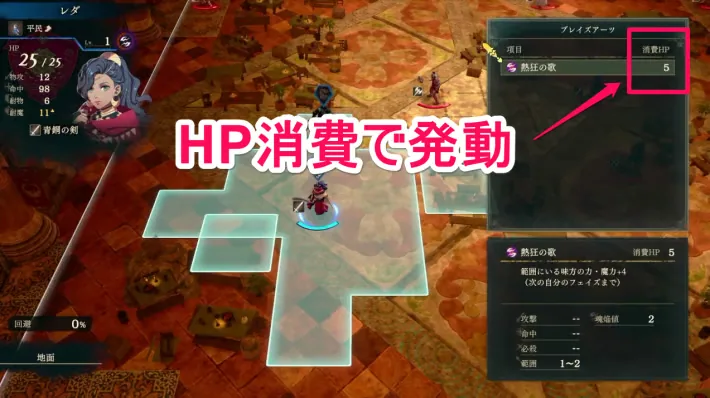
Regular attacks do not consume durability; Combat Arts do. Durability therefore resembles the remaining uses of that weapon’s special moves. Magic has limited uses too. Blaze Arts spend HP for area attacks, warping, and buffs, while increasing the Blaze Gauge. Passing halfway grants enhancement, but filling it causes penalties such as reduced maximum HP. Manage these costs before pursuing damage.
Newcomers can use Casual mode and Rewind to learn forecasts and enemy ranges before attempting more complex approaches.

Connections between Fódlan and Dagda
Sothis sends Eshmel into this world,  Seteth appears, and Dietrich arrives from Fódlan. Dagda is not an isolated new setting: familiar people and powers connect with new wishes.
I wonder which old relationships will truly drive the new story. Similar faces alone are insufficient. What each character knows and has done is what connects the worlds.
Use automatic actions to pace extensive preparation
The game is exclusive to Switch 2 and cannot run on the original Switch. The larger gameplay barrier is the volume outside battles: training, recruitment, meals, gifts, tasks, materials, labyrinths, spectating, and protagonist-specific activities.
Players who enjoy development and conversation will find rich content. Those wanting one grid battle after another may feel impatient. Use options such as Auto-earn to advance the schedule and fit preparation to your pace.
Route-switching frequency and chapter-rewind costs
Frequent switches can make you forget the current task or who a companion is. Consider playing to a natural story pause before switching, rather than forcing a change every chapter to keep all routes synchronized.
Chapter rewinding returns to a cleared chapter to start again. Before deciding, consider whether you want to replay the following progression.
The development team also differs from Three Houses. I will be watching how the new team connects this large set of systems and its narrative.