

Theodora Chapter 5 free time: Return on weekends and separate growths from class modifiersMinor spoilers
Plan trips around weekend returns. Reclassing changes both future growth and the Speed or Defense available immediately for the next battle.
Original video: [Fire Emblem: Fortune's Weave] First-playthrough walkthrough—Theodora, Chapter 5 free time 2; Bilibili creator JeM_TraDer. Watch the original
Return on weekends to train and recover
During An Ominous Clash,  Theodora first fights an aberrant creature, raises Renown to level two, recruits, unlocks worship, and visits the tavern to recover. Link outdoor tasks into a loop and try to return within a week, leaving Saturday or Sunday in the capital for training. Fishing on a high-tide day also requires planning departure and return dates together, beyond counting spaces to the next target.
Restarting the chapter for a nighttime quest means repeating temples, pickups, and traveled routes, with sparkle locations changing too. Account for companions' condition: worship being available does not guarantee a suitable participant. If depleted resources require sleep, connect recovery with weekend preparation.
Compare classes from the same baseline
Return to Noble before inspecting each class's growths.  Myrmidon adds Speed and Dexterity for units with decent base Strength who need Speed.
 Brigand has a clear Strength modifier and fits axe users.
 Pugilist offers broader growths: HP and Strength alongside Speed, Dexterity, and Defense make it attractive for leveling.
 Archer's bow accuracy helps, while Rogue combines Locktouch and exploration benefits. Keep someone for those functions, but distinguish utility from direct damage. Rogue improving Speed does not also fix an archer's missing Strength.
Armored counters and cavalry mobility
 Armored Knight's Defense and Strength bonuses when attacking second are valuable, and Theodora suits learning them. Linked Attacks in labyrinths also build class mastery. Get the needed abilities before choosing the next step. Good HP, Strength, and Defense growths come with reduced Speed and Resistance; use its strengths during the transition.
 Light Cavalry has balanced growth and mobility without cutting Speed, and remains useful for Riding training.
 Charioteer has a skill that raises growth rates with level. I would check its formula before judging the gains from this training stage. “Higher levels mean higher growth” alone does not establish the benefit per level.
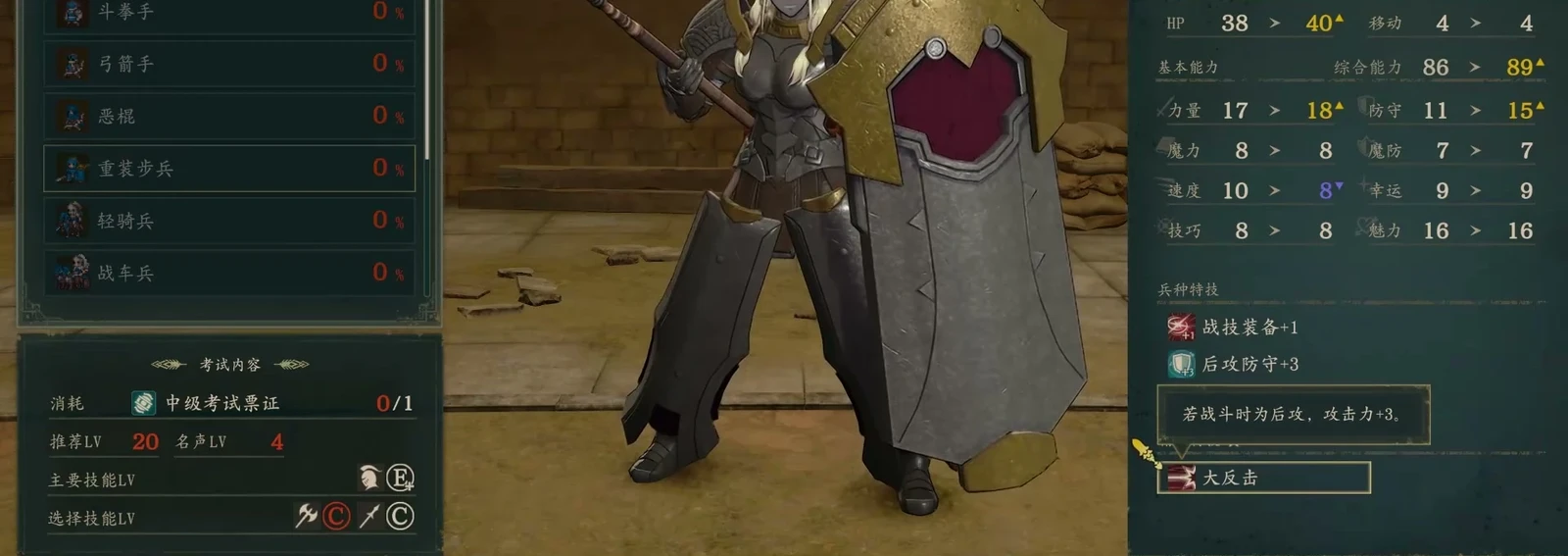
Wing Soldier modifiers and mage roles
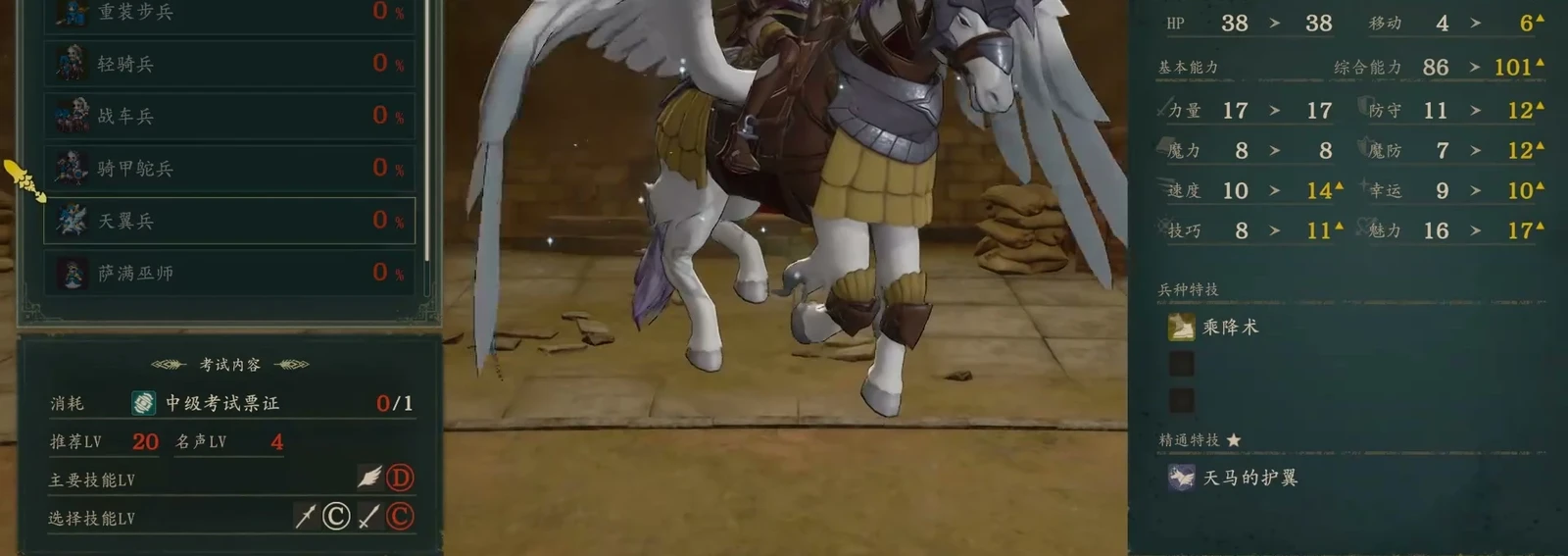
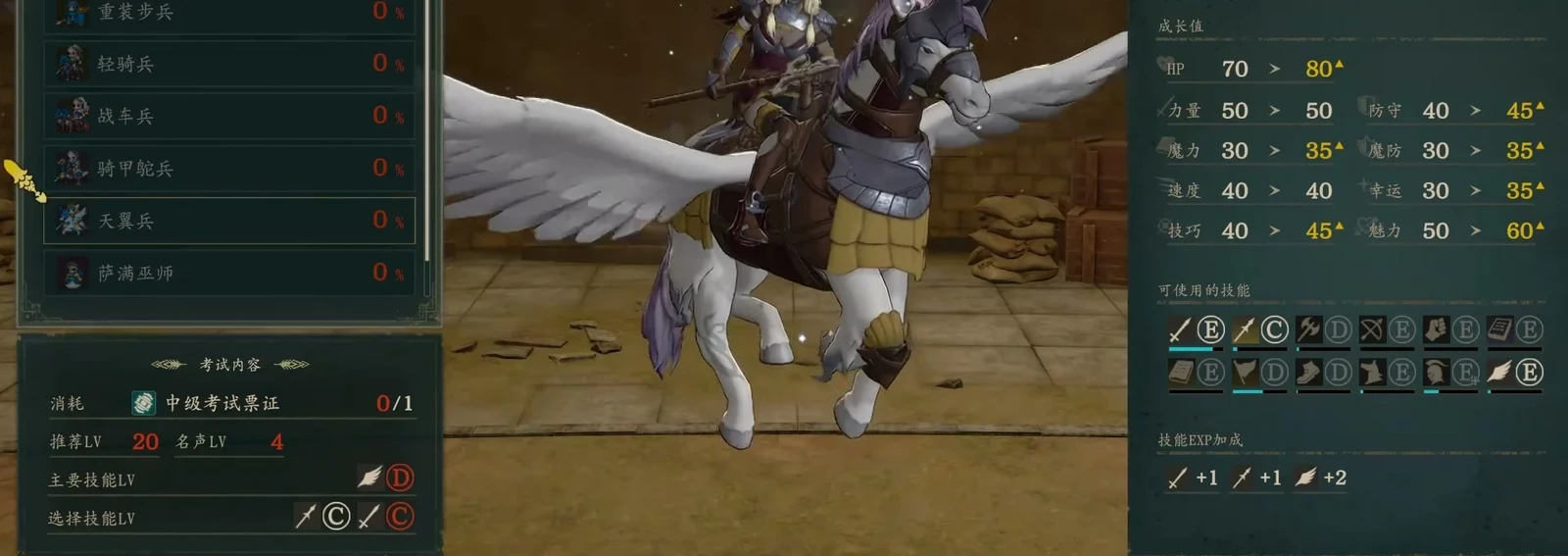
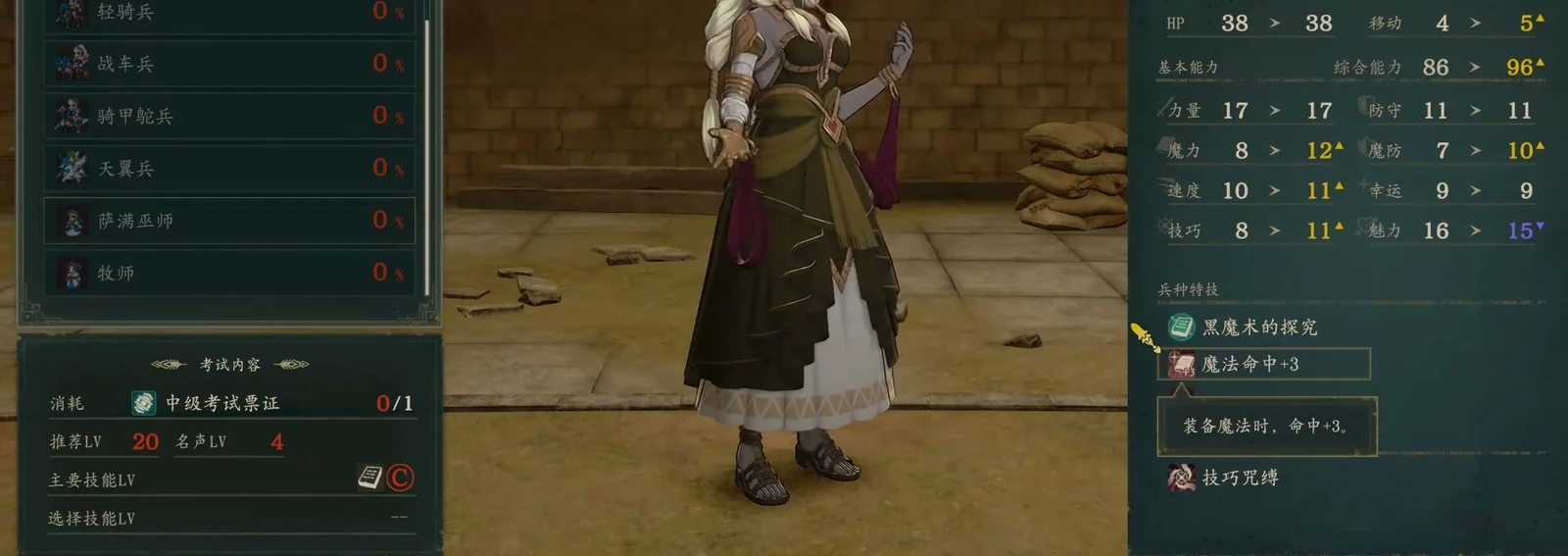
The Speed gained immediately on entering  Wing Soldier differs from future Speed growth. Compare from the same baseline, then return to the planned class before leaving.
Initially, Wing Soldier's growths seem to offer less Speed than expected. The base modifiers explain it: much of that Speed arrives immediately on reclassing. Luck, Resistance, and Speed all receive substantial bonuses, useful for crossing a follow-up threshold in a particular chapter. Long-term leveling growth is a separate question.
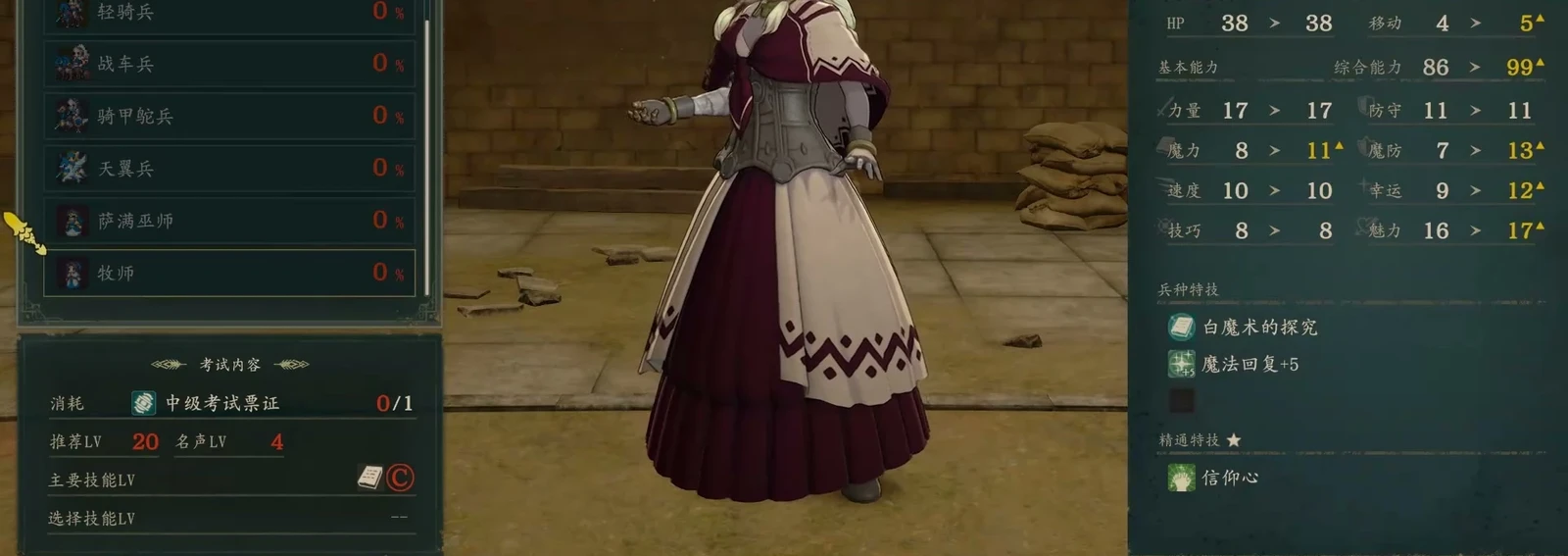
Magic classes work similarly.  Shaman's Magic modifiers and growths appeal for damage. Characters focused on tools such as
 Physic and Warp can choose
 Priest and reserve spell uses for support. A utility role need not chase damage and growth by the same measure.
Temporary class changes and recruitment timing
After temporarily changing classes for comparisons, confirm you switched back to the intended class before leaving. Do not rush high-Renown recruits either. Higher levels require more points; gaining only a little during the first week or two naturally places level-seven or level-eight requirements later. Scheduling this week's activities and intended return date is easier than chasing everyone separately.